


Hair transplants have come a long way, but the myths around them haven’t quite caught up. Walk into any salon, scroll through a few Instagram reels, or ask a friend who heard something from his cousin’s barber, and you’ll hear all kinds of stories. Some are wildly exaggerated. Some are completely outdated. And most of them stop people from getting the help they actually need.
If you’ve been considering a hair transplant in Mumbai but keep second-guessing yourself because of something you read or heard, this one’s for you. Let’s go through the five biggest myths and clear them up — straight from the experience of Dr. Viral Desai, a celebrity hair transplant surgeon in Mumbai with over 20 years in the field.
Myth 1 – Hair Transplants Are Painful
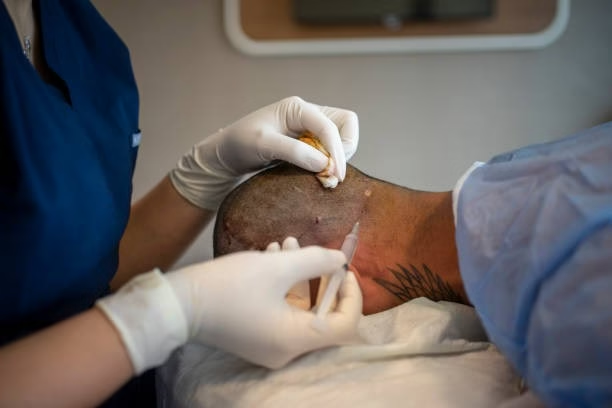
This is probably the most common fear, and honestly, it’s the one that holds people back the most. The picture in most people’s heads is something out of a horror film — needles everywhere, scalpels, hours of agony. The reality is nothing like that.
Modern hair transplants are done under local anaesthesia. That means your scalp is numbed before anything starts. Most patients describe the procedure itself as boring rather than painful. You can watch a movie, listen to music, scroll through your phone, or have a conversation with the team. There’s a quick pinch when the anaesthesia is administered, and after that, very little.
Newer techniques used at CPLSS, such as the FUE hair transplant method and NHDT, have made the process even more comfortable. Recovery? A bit of tenderness for a couple of days, mild swelling that fades quickly, and that’s mostly it. Most people are back at their desks within 3 to 5 days.
Still anxious about the procedure?
Get all your doubts cleared in a one-on-one consultation with Dr. Viral Desai.
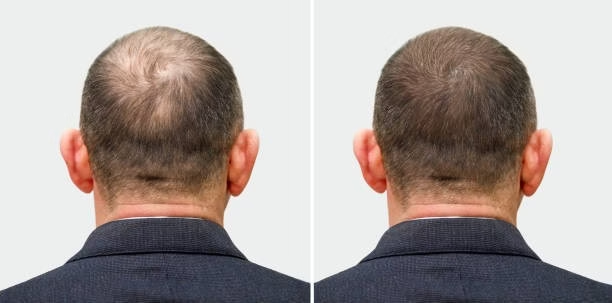
You’ve probably seen photos floating around of celebrities with strange, doll-like hairlines. Straight rows of hair, an obvious change between bald and not-bald, plugs that scream “transplant.” That kind of result was common 20 years ago. Today, it’s a sign that someone went to the wrong place.
A good hair transplant surgeon in Mumbai thinks about your face shape, your age, your existing hair pattern, and even how your hair will look 10 years from now. The angle, depth, and direction of every single follicle matters. So does the design of the hairline — it should be slightly irregular, the way natural hairlines actually are. Done right, no one will be able to tell.
Dr. Viral Desai also uses 3D hair transplant simulation technology so patients can see what their new hairline will look like before the surgery even begins. No surprises, no guesswork. For those who want to enhance other facial features, the same precision applies to eyebrow transplants and beard hair transplants as well.
The myth of the unnatural transplant is really a myth about bad transplants. With the right surgeon, the result blends so well that even your barber might not notice.
Myth 3 – Hair Transplants Are Only for Men
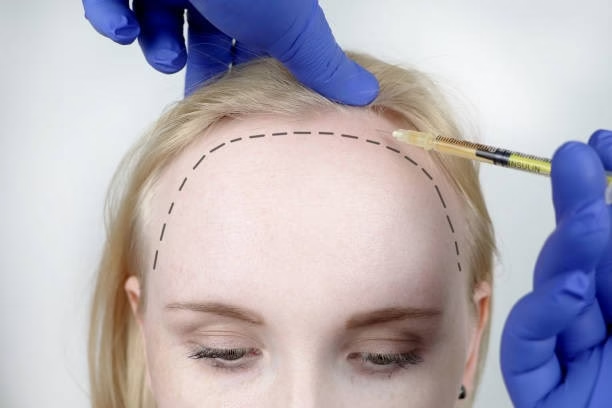
This one’s been around forever, and it has stopped a lot of women from even exploring the option. The truth is, female hair loss is more common than most people realise. It just shows up differently — usually as diffuse thinning across the scalp, a wider parting, or reduced volume rather than a receding hairline.
Women are absolutely eligible for hair transplants, and hair restoration for women is a growing area at Dr. Viral Desai’s clinic. The technique is slightly different — the goal is usually to add density rather than rebuild a hairline — and the planning needs more care because of the pattern of female hair loss. But the results can be life-changing.
For women not ready for surgery, or whose hair loss is still in early stages, there are other options too:
- PRP hair treatment – uses your own blood plasma to stimulate follicles
- GFC hair treatment – a next-generation growth factor concentrate
- Exosome therapy – advanced cellular treatment for hair regrowth
- Mesotherapy for hair – nutrient injections directly into the scalp
Whether you’re a man or woman, the right plan depends on your specific cause of hair loss, not your gender.
Myth 4 – Hair Transplants Are Temporary
This is one of the most damaging misconceptions out there. People assume the new hair will fall out in a few years and they’ll be back to where they started. That’s not how it works.
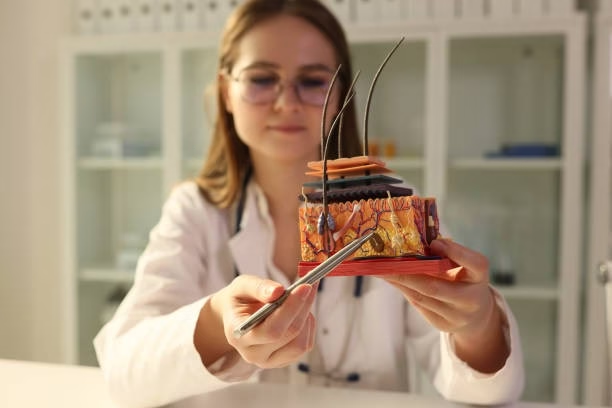
Here’s the science in plain English: the hair follicles taken from the back and sides of your scalp (the donor area) are genetically resistant to the hormone that causes pattern baldness. When those follicles are moved to the thinning areas, they keep their original genetic behaviour. They don’t suddenly start behaving like the hair around them. Once they grow in, they stay.
There’s one thing that confuses people, though. In the first 2 to 3 weeks after surgery, the transplanted hair sheds. This is completely normal — it’s called shock loss and it happens because the follicles need time to settle into their new spots. New growth begins around month 3, fills out by month 6, and the final result is visible at 9 to 12 months. You can see the full month-by-month picture on the hair transplant results timeline page.
Your surrounding native hair may still thin with age, which is why a good surgeon plans your transplant with the long term in mind. But the transplanted hair itself? That’s there to stay.
Curious how your results will look in a year?
Speak to a celebrity hair transplant surgeon in Mumbai who has done thousands of successful procedures.
Myth 5 – Hair Transplants Are Too Expensive and Not Worth It
Cost is a real concern, no doubt. But the way most people think about hair transplant pricing is upside down.
Think about how much money goes into hair loss every month for an average person. Shampoos that promise miracles. Oils. Supplements. Online consultations. The occasional treatment at a clinic. Then there are the temporary solutions — toupees, hair fibres, hair systems — that need maintenance and replacement constantly. Over five years, that adds up to a number that surprises most people when they actually sit down and calculate it.
A hair transplant in Mumbai is a one-time investment. You pay once, you get results that last a lifetime, and you stop spending on temporary fixes. The cost varies depending on the number of grafts, the technique (FUE, FUT, or others), and the complexity of your case. But when you compare it against the long-term cost of doing nothing, it usually works out cheaper.
There’s also the question of value beyond money. The confidence shift after a successful transplant is something almost every patient mentions — at work, in photographs, in social situations, in dating. That’s not something a hair fibre can give you.
For those exploring non-surgical alternatives, options like scalp micropigmentation and laser therapy for hair loss can be helpful too — sometimes as a standalone solution, sometimes alongside a transplant.
Conclusion
Most of the myths around hair transplants come from outdated information, bad results from inexperienced clinics, or honestly just gossip. The procedure today is safe, comfortable, natural-looking, and permanent — provided you choose the right surgeon.
Don’t let half-truths decide something this personal. If hair loss is affecting how you see yourself, the best thing you can do is have an honest conversation with someone qualified. Dr. Viral Desai, a leading celebrity hair transplant surgeon in Mumbai, offers transparent consultations where you can ask anything, see real before-and-after results, and walk away with clarity. No pressure, no sales pitch — just facts.
Your hair, your decision. But at least let it be an informed one.
Frequently Asked Questions
Q1. How long does a hair transplant last?
Hair transplants are permanent. The transplanted follicles are resistant to balding and continue to grow for life.
Q2. Is hair transplant safe?
Yes. When done by an experienced surgeon like Dr. Viral Desai, it’s a safe procedure with minimal risks and quick recovery.
Q3. How much does a hair transplant cost in Mumbai?
The cost depends on the number of grafts and the technique used. You’ll get a clear, personalised quote during your consultation.
Q4. How many days of rest are needed after the surgery?
Most patients return to work within 3 to 5 days. Strenuous activities like gym workouts should be avoided for 2 to 3 weeks.
Q5. Will the transplanted hair fall out?
There’s a temporary shedding phase in the first month — this is normal. New, permanent growth begins from month 3 onwards.
Q6. Can women get hair transplants?
Absolutely. Hair restoration for women is offered at Dr. Viral Desai’s clinic, with techniques tailored to female hair loss patterns.