

Hair Restoration for Women in Mumbai
Hair loss in women hits differently. It isn’t just about the hair, it’s the slow realization every morning, the way you style things to compensate, the moment you stop wearing your hair down because it feels like too much to explain.
Female hair loss is far more common than it appears. Most women spend years trying products that don’t work before consulting a specialist. At CPLSS Clinic, Dr. Viral Desai and his team have spent over two decades working with women at every stage of hair loss, from early thinning to significant density reduction.
Here’s what genuinely works for hair restoration for women in Mumbai.
What Causes Hair Loss in Women?
Female hair loss has multiple causes, and the pattern, rate, and location all tell a specific story that needs to be read correctly before treatment begins.
Female Pattern Hair Loss
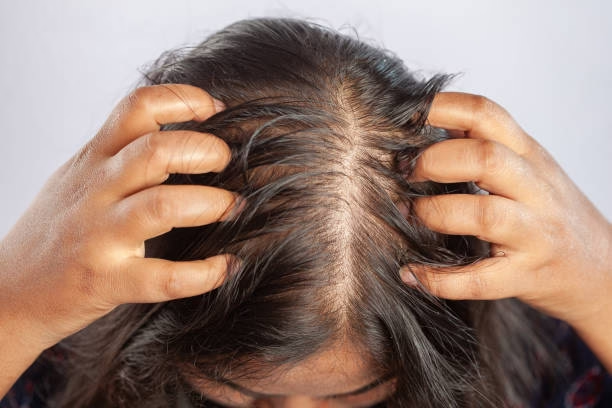
The most common and most underdiagnosed cause. It starts at the crown and part line while the hairline stays intact. It’s driven by androgen sensitivity and strongly hereditary. Responds well to PRP hair treatment and surgical hair transplant when approached correctly.
Hormonal and Thyroid Imbalance
Thyroid disorders, oestrogen shifts during perimenopause, and PCOS all trigger diffuse shedding. Hair follicles shorten their growth cycle when androgens are elevated, and thinning often shows up at the temples or crown first.
Postpartum Hair Loss
Oestrogen drops sharply after pregnancy, triggering intense shedding around three to four months postpartum. Most women recover in six to twelve months, but some need support. GFC hair treatment and mesotherapy for hair meaningfully support regrowth during this phase.
Nutritional Deficiencies
Iron deficiency is the most underappreciated cause, especially in India. Low ferritin, vitamin D, B12, and zinc all impair the hair growth cycle. A proper consultation checks for these at baseline.
Stress and Telogen Effluvium
Major physical or emotional stress pushes follicles into a resting phase, causing diffuse shedding weeks or months later. Surgery, illness, crash diets, and prolonged overwork all trigger it. Usually reversible, but hair needs active support to recover full density.
Alopecia Areata and Traction Alopecia
Alopecia areata is autoimmune and creates sudden patchy bald spots. Traction alopecia comes from years of tight hairstyles and affects the front hairline, an area where hair transplant in Mumbai delivers excellent results.
Hair Restoration Solutions We Offer
There is no one-size-fits-all protocol for female hair restoration. The right treatment depends on the cause, degree of thinning, scalp health, and individual goals. Dr. Viral Desai’s clinic offers the full spectrum so the treatment matches the patient, not the other way around.
Not Sure Which Treatment Is Right for You?
Every woman’s hair loss is different. Dr. Viral Desai’s team will identify the cause and build a plan specific to your scalp and goals.
Recovery and Results After Hair Restoration
Recovery depends on the treatment. Worth knowing upfront, because expectations often swing between overnight miracles and endless waiting. The reality is somewhere in between.
After Surgical Hair Transplant
First week: mild redness and swelling, small scabs that resolve on their own. Around weeks three to six: shock loss, when transplanted hairs fall out. This is normal, not failure, the follicle is resting before producing permanent new hair.
New growth starts at three to four months. Meaningful results by six months. Full results at twelve months. Reference the hair transplant results timeline for a month-by-month picture. Most women return to desk work within three to five days. Sweating, sun, and swimming are restricted for a few weeks.
After Non-Surgical Treatments
PRP, GFC, exosome, and mesotherapy have minimal downtime. Mild redness for 24 to 48 hours, then back to regular life the same day. Results build over weeks to months, with shedding reducing first, then thickness, then overall density.
What Results Look Like
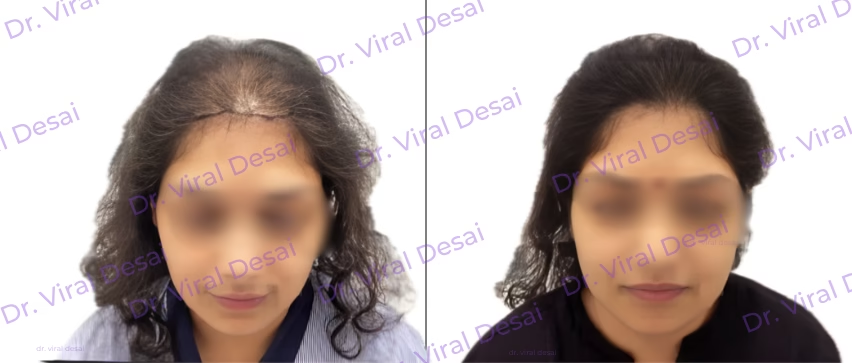
Results are designed to look completely natural. Hairline and density match your face, age, and hair type. Transplanted hair is permanent and behaves like your own hair because it is. Browse the gallery section for before and after outcomes.
What to Expect During the Process
Step One: Initial Consultation
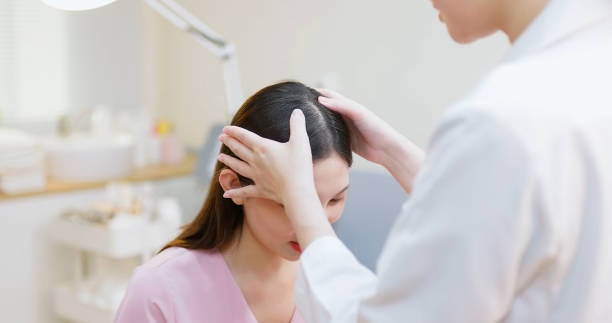
A detailed assessment covering hair loss history, family history, hormonal and medical background, and scalp condition. Blood tests and trichoscopy may be recommended. A personalised treatment plan follows. 3D simulation is available at this stage if you want to visualise surgical outcomes.
Step Two: Pre-Treatment Preparation
Surgical candidates receive pre-op instructions covering medications, supplements, and hair care. Non-surgical treatments require little prep, mainly avoiding blood thinners and alcohol a few days before PRP or GFC.
Step Three: Treatment Day
Surgical procedures are done under local anaesthesia. Scalp is fully numb, the procedure takes four to eight hours depending on graft count, with breaks as needed. Non-surgical sessions take 30 to 60 minutes with minimal discomfort.
Step Four: Aftercare and Follow-Up
Written aftercare instructions and scheduled follow-ups monitor healing and progress. Ongoing treatments, including cyclical medicine protocols, are managed as part of the long-term plan.
Ready to Start? Here’s Your First Step.
Book a consultation at CPLSS Clinic, Mumbai. Dr. Viral Desai will assess your hair loss, explain your options, and tell you exactly what to expect.
Why Choose Dr. Viral Desai for Hair Transplant in Mumbai?
Mumbai has plenty of clinics offering hair transplants. The quality range is enormous, and the consequences of choosing wrong, poor graft survival, unnatural results, misdiagnosed causes, are significant. Here’s what sets CPLSS Clinic apart.
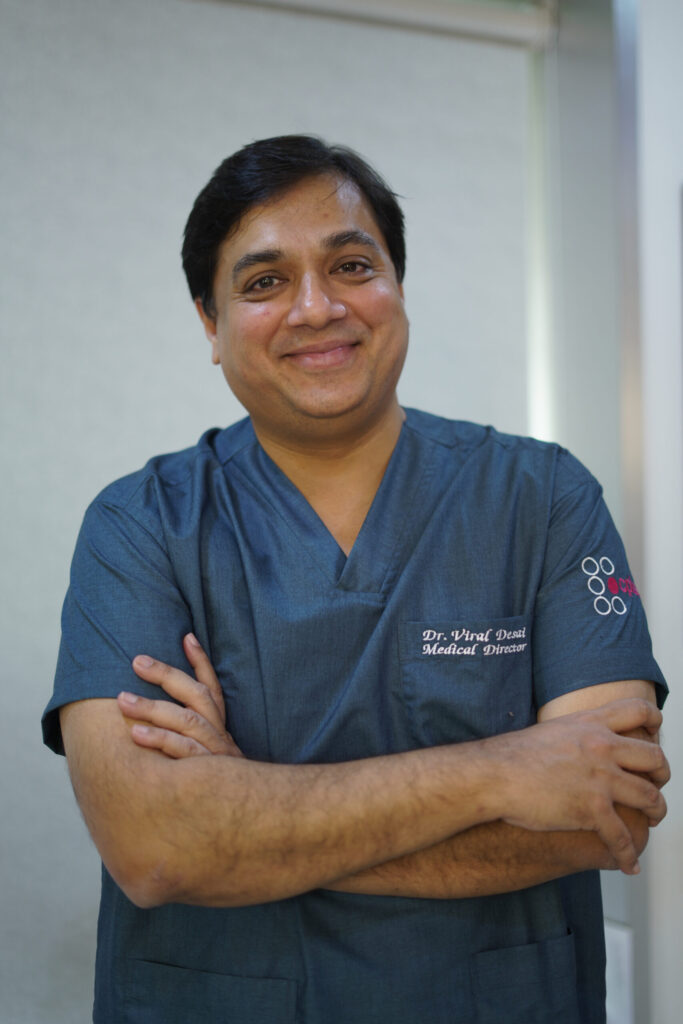
Two Decades of Surgical Experience
Dr. Viral Desai holds an M.Ch. and D.N.B. in Cosmetic and Plastic Surgery, one of the few formally qualified plastic surgeons in India specialising in hair restoration. Over twenty years of hair transplant experience in Mumbai, with memberships in ISAPS, ISHRS, and IAAPS. Learn more on the about Dr. Viral Desai page.
Specialist Approach to Female Hair Loss
Female hair restoration differs genuinely from male surgery. Causes, aesthetic goals, hairline design, and donor assessment all need a different lens. Dr. Viral Desai has developed specific protocols for female patients built around these differences.
Full Spectrum Under One Roof
Surgical procedures, PRP, GFC, exosome therapy, mesotherapy, laser, scalp micropigmentation, and medical management are all available in one practice. Women benefiting from combination approaches get coordinated care from a single team that knows their case.
Celebrity Trust and Track Record
Dr. Viral Desai is one of Mumbai’s most trusted cosmetic surgeons, with a clientele that includes public figures who rely on natural-looking, discreet results. Patient testimonials and video testimonials speak to the consistency of care.
Transparency in Process and Pricing
Everything is discussed upfront during consultation. No hidden costs, no vague plans, no over-promising. Review the patient care philosophy for the values that guide every consultation.
3D Simulation Technology
For the first time in India, our 3D hair transplant simulation uses augmented reality to show likely results before proceeding. Removes the uncertainty that stops many women from deciding.
Fill the form below to book an appointment
Frequently Asked Questions:
Will a hair transplant require me to shave my head?
Not necessarily. In most female cases, only the donor area is trimmed and can often be concealed by surrounding hair. Full head shaving is not a standard requirement at Dr. Viral Desai’s clinic.
How do I know what's causing my hair loss?
A proper clinical assessment, not a guess. The team evaluates your pattern, medical history, and recommends a blood panel for thyroid, ferritin, vitamin D, B12, and hormone levels. Only then is a treatment plan designed.
What is the best non-surgical treatment for hair loss in women?
Depends on cause and stage. PRP and GFC are among the most effective. Exosome therapy works for specific follicle damage. Mesotherapy helps when nutrition or circulation are involved. Most women benefit from a combination protocol.
How long does it take to see results after a hair transplant?
First signs appear at three to four months. Meaningful results at six months. Full results at twelve months. The hair transplant results timeline walks through each stage clearly.
Is hair transplant surgery safe for women?
Yes, with a qualified experienced surgeon. Dr. Viral Desai is a board-certified plastic surgeon with over twenty years in hair restoration. Complications are rare and manageable when they occur.
What happens if I don't treat my hair loss?
Conditions like androgenetic alopecia and chronic telogen effluvium progress if left unaddressed. Follicles miniaturised for too long eventually stop producing hair permanently. Early intervention keeps more options open.
What happens if I don't treatCan I see what my results will look like before surgery? my hair loss?
Yes. The 3D hair transplant simulation uses AR to show likely hairline and density outcomes at the consultation stage.