


Peptide Treatment in Mumbai
Hair thinning usually starts slowly with a receding hairline, reduced hair volume, or just by noticing increased visibility of one’s scalp. Though there are individuals who may need surgical hair restoration, others may wish to explore non-surgical options. A peptide-based therapy is one such approach being studied for its potential role in supporting scalp health and hair follicle activation, although evidence for consistent hair regrowth remains limited.
As explained by Dr. Viral Desai, an expert hair transplant surgeon in Mumbai, establishing what caused hair loss is important before deciding which treatment would be effective. There may be reasons such as genetics, hormonal fluctuations, nutritional deficiencies, and scalp conditions. A scalp assessment can help determine whether peptide therapy may be considered or if another treatment would be more appropriate.
Dr. Viral Desai possesses 24+ years of experience in cosmetic and reconstructive procedures. He specialises in various hair restoration methods such as Follicular Unit Extraction (FUE), Follicular Unit Transplantation (FUT), among others. For those considering peptide treatment in Mumbai, he first evaluates the cause of hair loss and then offers possible treatment options for the best outcomes.
How Does Peptide Treatment Work?
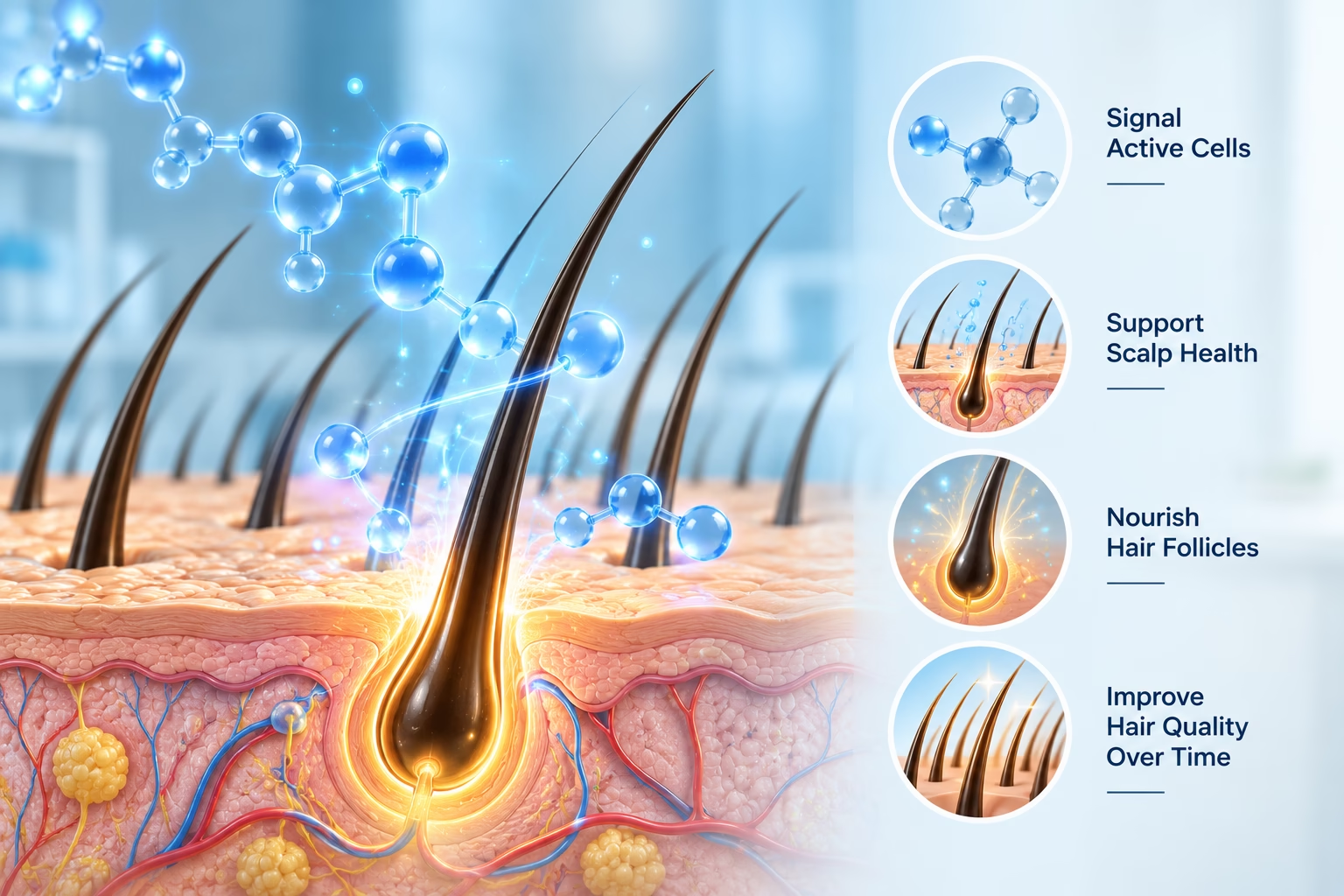
A peptide refers to a short chain of amino acids involved in various biological processes. The potential of certain peptides is being studied for their possible effects on hair follicles and scalp.
Depending on the formulation, their proposed actions include:
Cell-signaling: Some peptides may influence processes associated with follicle activity.
Scalp support: Topical formulations of some peptides contain compounds that help maintain scalp hydration.
Follicle activity: Selected peptides have shown effects on some biological pathways involved in hair development.
Hair appearance: Some cosmetic formulations may help improve the texture or appearance of hair through their peptides.
Not every peptide therapy produces the above effects. Clinical evidence of most peptides remains limited compared to known therapies against patterned hair loss.
Can everyone experiencing hair thinning consider peptide therapy? Let’s understand who may be suitable.
Ideal Candidate for Peptide Treatment
Peptide therapies can be discussed with individuals who have just begun losing their hair or experiencing changes in the density of their hair. But this would depend upon the reason for hair loss and the formulation being considered.
People who may seek an assessment include those with:
Early hair thinning: Gradual loss of density in hair.
Pattern hair loss: Genetic hair thinning affecting the hairline or crown.
Scalp problems: Conditions requiring evaluation before treatment.
Preference for non-surgical options: People exploring non-invasive options.
Realistic hopes: Those aware that peptide therapy may not restore lost hair.
Those with sudden hair loss, patchy hair loss, scalp infections or inflammations should first go through medical evaluation before considering treatment.
Unsure whether peptide therapy is appropriate for your hair loss? Connect with a qualified hair restoration specialist for an individual assessment.
What changes might peptide formulations support? Let’s discuss their potential benefits and limitations.
Benefits of Peptide Hair Treatment
Peptide formulations are being investigated for several possible applications in hair and scalp care. Their effects vary according to the ingredients and method of administration.
01
Non-surgical application
Some peptide products are applied directly to the scalp without requiring surgery. Injectable formulations involve different procedures and risks.
02
Scalp conditioning
Certain topical products contain ingredients intended to improve scalp hydration and comfort.
03
Potential follicle support
Laboratory studies suggest that selected peptides may influence hair follicle activity. More clinical research is needed to establish their effectiveness.
04
Supportive hair care
Some formulations may be considered alongside established hair loss management, depending on medical suitability.
05
No surgical downtime for topical products
Topical application generally does not require the recovery period associated with hair transplantation. However, irritation or allergic reactions may occur.
Are all peptide hair treatments alike? Let’s explore the different formulations used in hair care.
Types of Peptide Treatments Offered by Dr Viral Desai

Fill the form below to book an appointment
How much does peptide therapy cost in Mumbai? Let’s look at the factors that influence treatment expenses.
Cost of Peptide Treatment in Mumbai
The cost of peptide treatment in Mumbai varies according to the formulation, treatment method and number of sessions recommended.
Factors that may affect the price include:
Type of formulation: Different peptide products have different costs.
Treatment method: Topical applications and injectable procedures may have different charges.
Number of sessions: Repeated treatments can increase the total expense.
Consultation fees: Scalp assessment and investigations may be charged separately.
Follow-up care: Additional appointments may affect the final cost.
There is no standardised price for peptide hair treatment across Mumbai. Patients should request a written estimate covering the proposed treatment, additional charges and follow-up visits.
Want to understand which hair treatment options are medically appropriate? Speak with a qualified specialist to discuss the available evidence and possible risks.
What to Check Before Choosing a Doctor for Peptide Treatment
It is necessary to ensure that you choose a licensed medical practitioner if you are opting for any treatment for hair loss.
Medical qualifications:
The qualifications and medical registration of the doctor should be checked.
Experience:
The doctor should be knowledgeable enough to distinguish between various factors responsible for hair thinning and suggest the correct treatment procedures.
Information on treatment procedure:
Information on the ingredients, route of administration, regulatory status and clinical evidence related to efficacy can be sought about the peptide formulation.
Patient safety:
Possible adverse effects, contraindications and alternative treatment methods should be discussed.
No undue expectations:
A realistic treatment approach shouldn’t promise guaranteed hair growth and permanent results.
Cost:
Consultation costs, prices for the treatment, and follow-up appointments should be clarified.
People interested in hair transplant treatment in Mumbai may also consider which method would be better – surgery or a non-surgical treatment. A qualified hair transplant surgeon can help to assess the necessity and discuss the methods of the procedure.
Frequently Asked Questions:
1. Is peptide treatment effective in treating hair loss?
2. Is peptide hair treatment painful?
3. How many sessions of peptide treatment are required?
4. Can peptide treatment replace a hair transplant?
5. How long does it take for peptide treatment to work?
References:
Disclaimer: The information shared in this content is for educational purposes and not for promotional use.
