

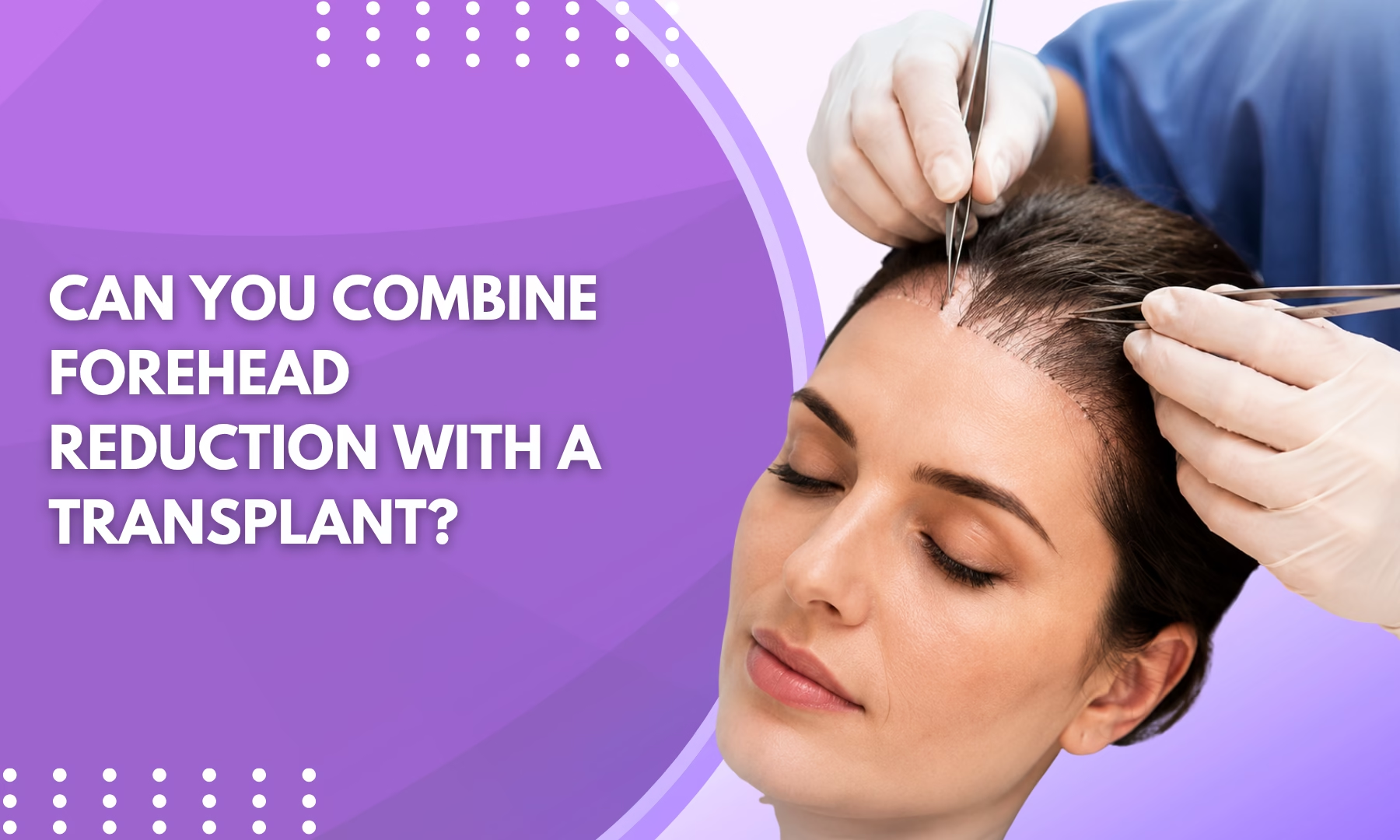
Forehead reduction (also called hairline lowering) can absolutely be combined with a hair transplant. Surgeons often recommend pairing the two for a more natural and complete result. Reduction surgery lowers the hairline structurally while the transplant adds density and softens the edge that surgery alone tends to leave sharp. Each procedure covers a gap the other one has on its own.
According to Dr. Viral Desai, hair transplant surgeon in Mumbai, “Forehead reduction moves the hairline to where you want it structurally. But on its own it can leave a straight and slightly artificial edge. Adding a transplant afterward breaks up that line with irregular density the same way a natural hairline actually grows. Neither procedure alone gives you that.”
Wondering if you’re a candidate for combining these procedures?
When Does Combining These Two Procedures Make Sense?
Not every case needs both. The decision usually comes down to how much the hairline needs to move and what the final texture should look like.
Very high or receded hairlines: When the hairline sits significantly higher than desired reduction surgery can advance it further than a transplant alone could achieve without using an unrealistic number of grafts.
Scalp laxity allows for it: Forehead reduction depends on how much the scalp can stretch forward. Patients with sufficient laxity can often reach a meaningful advancement before a transplant is even needed to finish the look.
Softening a surgical hairline: A reduction procedure alone can look too clean and too uniform. A transplant adds the irregular density along the new hairline that makes it read as natural instead of drawn on.
Donor supply supports both stages. Combining procedures still depends on adequate donor hair. If the donor area is limited the plan may need to prioritize one procedure over the other or stage them further apart.
A hair transplant consultation is where scalp laxity, donor supply, and hairline goals actually get measured against each other.
How Are the Two Procedures Typically Staged?
Combining them doesn’t usually mean doing both on the same day. Sequencing matters here.
Reduction surgery generally comes first: The scalp needs time to heal and settle into its new position before a transplant is layered on top of it. Operating on an unhealed area raises risk for both procedures.
A healing window sits between them: Most surgeons wait several months after forehead reduction before starting transplant work. This lets the scar mature and the scalp stabilize fully.
Transplant refines the final line: Once healing is confirmed grafts get placed along and just behind the new hairline to break up any visible uniformity left by the reduction scar.
Some cases skip reduction entirely. If the required advancement is modest a transplant alone may achieve a similar result without the added surgical step. That option is worth ruling out before committing to both.
Our piece on designing a new hairline with a transplant covers how hairline shape and placement get planned for a natural result on their own.
Why Choose Dr. Viral Desai for Combined Hairline Procedures?
Dr. Viral Desai brings 24 years of experience and over 10,000 hair transplant procedures performed with fellowship training at Singapore General Hospital. Combination cases are planned around scalp laxity and staging rather than treated as a single default package.
Rushing both procedures together is one of the most common mistakes patients run into elsewhere. His approach sequences each step around what the scalp can actually support. Call +91 98338 77001 to book your consultation.
Let’s figure out the right sequence for your case.
Frequently Asked Questions
Can forehead reduction and a hair transplant be done together?
They’re usually staged, with reduction first and transplant added later.
Why combine the two procedures?
Reduction advances the hairline, and a transplant softens its edge.
How long is the gap between the two surgeries?
Typically several months, to allow full healing and scar maturity.
Does everyone need both procedures?
No, modest advancements can sometimes be achieved with a transplant alone.
Disclaimer: This article is for educational purposes only. Whether forehead reduction and a hair transplant should be combined depends on individual scalp anatomy, so an in-person evaluation is essential before any decision.