

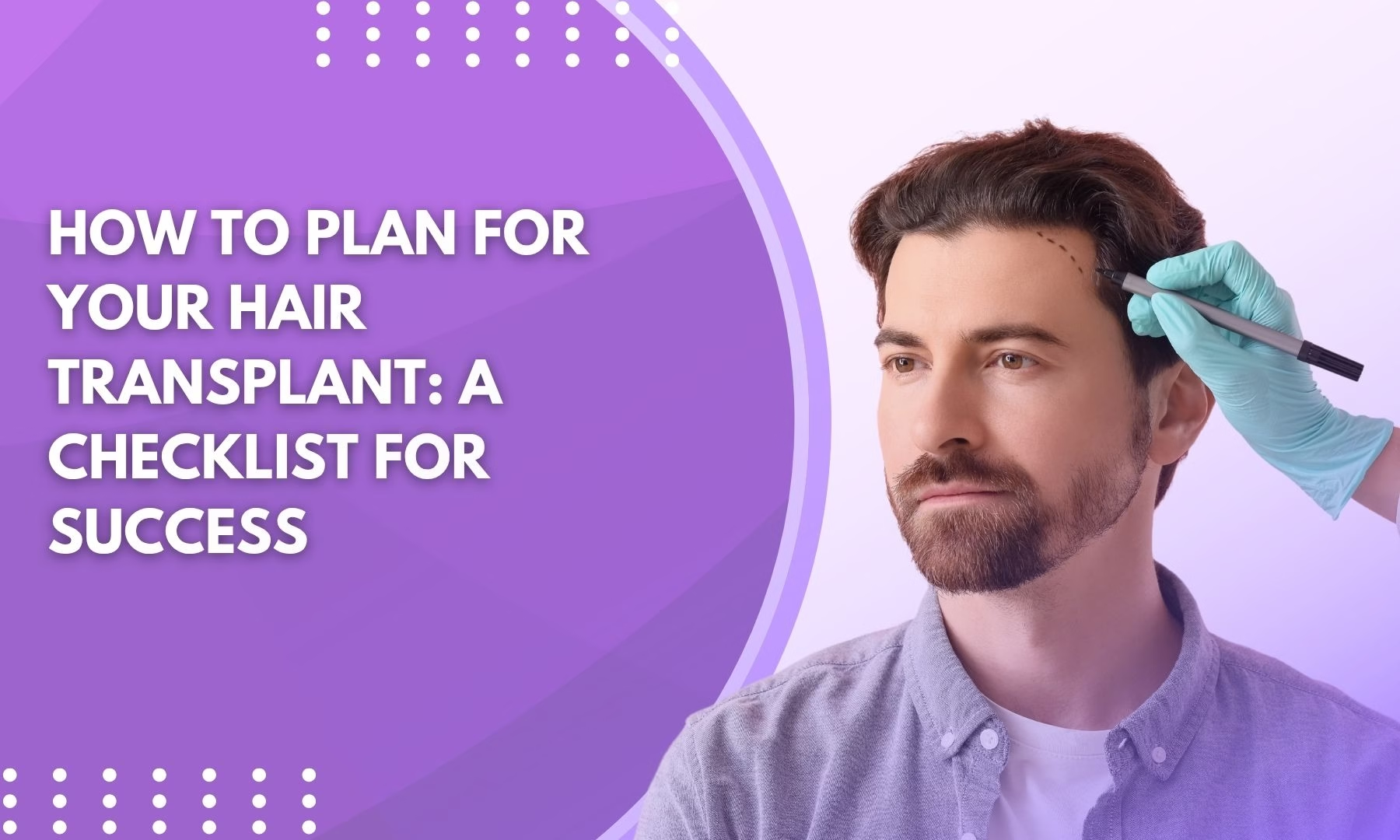
If you’ve been thinking about a hair transplant in Mumbai for a while, you probably already know it isn’t the kind of decision you make on a Tuesday afternoon. It needs planning. Not just the surgery itself, but everything around it: who you pick, what technique they use, what your scalp can actually take, how you’ll handle the two weeks after. Most of the regret you’ll hear about hair transplants comes from skipping this part.
This checklist walks you through what to sort out before you book anything. No filler. Just the things that actually move the needle.
Why Planning Matters Before a Hair Transplant
A hair transplant is permanent. That’s the bit nobody fully internalises until it’s too late.
Your donor area, the hair at the back and sides of your scalp, only holds so much. Roughly 6,000 to 8,000 grafts in a lifetime, and that’s being generous. So if your first surgeon wastes 2,500 of them on a hairline that’s too low, or a density pattern that doesn’t suit your face, you can’t just grow them back.
And for people considering a hair transplant in Mumbai, this matters more than usual. Mumbai has maybe 40 odd clinics doing hair transplants. Maybe ten of those are run by board-certified plastic surgeons. The rest? Mostly technicians with a doctor’s name on the wall. The difference doesn’t show up immediately. It shows up four months later when the new growth comes in and something looks off.
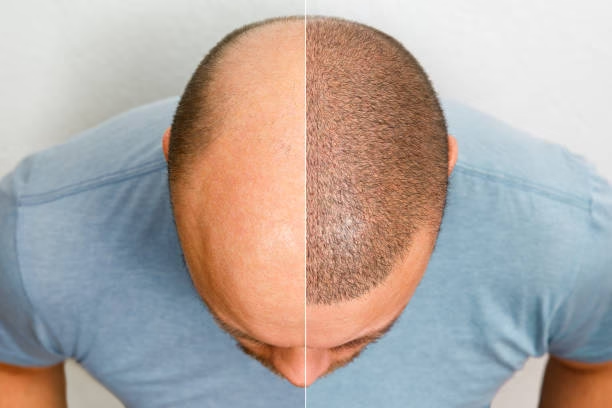
Step 1: Understand Your Hair Loss Condition
Before you book anything, before you even start asking for prices, you need to know what’s actually causing your hair loss.
Here’s the deal. Not all hair loss is the same.
Male pattern baldness is one thing. Telogen effluvium (the kind triggered by stress, illness, post-COVID fallout, even a particularly nasty fever) is something completely different. Alopecia areata is autoimmune. Traction alopecia is from years of tight man-buns or ponytails.
Surgery only solves one of these. The others need different treatment, and forcing a transplant onto the wrong cause is how people end up worse off than when they started.
A proper consultation should include a Norwood or Ludwig grading, a pull test, and ideally a trichoscopy. If a clinic skips this and goes straight to “we can give you 3000 grafts, when do you want to book?”, you’re in the wrong place.
Dr. Viral Desai usually spends the entire first consultation just figuring out the cause. Sometimes the answer isn’t surgery at all. PRP might do the job. Or GFC. Or exosome therapy. Women in particular respond surprisingly well to non-surgical hair restoration, because their hair loss pattern is usually diffuse rather than receding.
Bottom line: don’t assume surgery is the answer until someone qualified actually examines your scalp.
Get a proper diagnostic check before you commit. Book a consultation with Dr. Viral Desai and find out what’s actually happening with your scalp.
Step 2: Choose the Right Hair Transplant Clinic and Surgeon
This is where most people slip up.The same FUE technique can give you a hairline you’re proud of for 20 years, or a pluggy mess you spend the next decade hiding under caps. Same name, same machines, very different hands.
So when you’re picking a hair transplant surgeon in Mumbai, forget the marketing for a minute. Check these instead:
- Are they actually a board-certified plastic surgeon? Not a “trichologist.” Not a dermatologist who took a weekend course. A real M.Ch. or D.N.B. plastic surgeon.
- Do they personally do the surgery? Or does the doctor “supervise” while three technicians do the actual extraction and implantation? Some of the cheaper clinics in Mumbai are basically technician shops with a doctor on speed-dial.
- Have they done your kind of case before? Ask. Specifically. Not “do you do hair transplants” but “have you done a Norwood 5 with curly Indian hair, and what did the result look like at month 12.”
Dr. Viral Desai is M.Ch. and D.N.B. certified, with 20+ years of practice. The CPLSS clinic runs differently from most places. The surgeon does the key steps personally. No handing off to assistants halfway through. Yes, it costs more. Yes, it shows up in the results.
Spend 20 minutes on the testimonials and photo gallery pages before you decide. Don’t only look at the three best results. Look at five or six average ones. That tells you what your result will probably look like, not the marketing-poster version of it.
Step 3: Decide the Right Technique for You
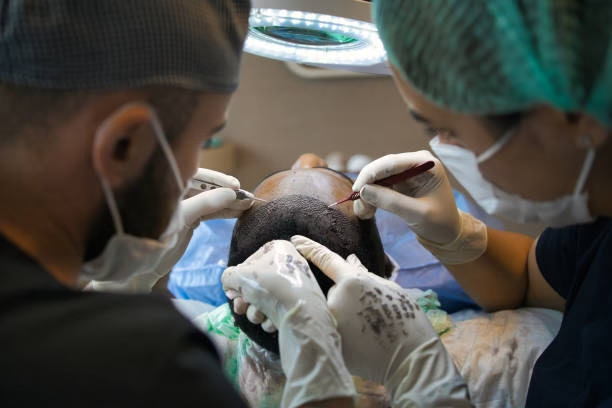
There are two main techniques. Anyone pushing one without examining your scalp first is selling, not advising.
FUE. Individual follicles extracted with a tiny punch. No linear scar. Faster recovery. The standard for most modern transplants. More on FUE here.
FUT. The strip method. A thin slice of scalp comes out, gets dissected under a microscope, and follicles get implanted. Leaves a linear scar. Higher graft yield in one session. Better for advanced cases. More on FUT here.
For most cases at CPLSS, Dr. Desai uses the NHDT (No-Holes No Damage Technique), which is a refined FUE variant that minimises punch trauma. The clinic also offers 3D Hair Transplant Simulation, where you literally see your projected hairline on your own face before booking.
Honestly, that one feature solves a lot of the post-surgery anxiety people otherwise carry around for months.
If it’s a beard transplant or eyebrow transplant you’re after, you’re almost always looking at FUE only. Visible-area transplants can’t take FUT scarring.
Step 4: Budget Planning and Cost Considerations
Hair transplant cost in Mumbai usually runs ₹40 to ₹150 per graft. So a 2000-graft session can be anywhere from ₹80,000 to about ₹3 lakhs. The wide range isn’t random. It tracks with surgeon experience, technology, and how much of the work is done by the surgeon versus delegated to assistants.
And the per-graft price isn’t the whole picture. You’ll also pay for:
- Pre-op blood tests and consultations
- OT and anesthesia (sometimes built into the package, sometimes not, just ask)
- Post-op meds for the first 10 days
- Follow-up hair transplant results timelinecheck-ins through the first year
- Travel and stay if you’re flying in from outside Mumbai
If you’re coming in from out of town for hair transplant surgery in Mumbai, ask whether the clinic supports medical tourism logistics. CPLSS does. Saves a lot of running around when you don’t know the city.
One honest filter. If a clinic quotes you 50% lower than three other established surgeons, that gap is showing up somewhere. Either in graft survival, hygiene standards, or the experience level of the person actually doing the surgery.
Cheap hair transplants are the single biggest reason people end up needing corrective surgery later. And corrective surgery is harder. More expensive. Uses up more of your donor area. Not a great spot to be in.
Talk to Dr. Viral Desai’s team and get a personalised quote based on your actual scalp, not a generic price list.
Step 5: Pre-Transplant Medical Evaluation

This part is non-negotiable. Any clinic offering “no tests needed, just walk in” should immediately set off alarm bells.
Standard pre-op tests usually include CBC, blood sugar, ECG, viral markers like HIV and Hepatitis B/C, and sometimes a thyroid panel.
If you’re diabetic, on blood thinners, or have any history of poor wound healing, the surgeon needs to know weeks before, not on the morning of surgery. Some medications need pausing 7 to 14 days prior. Aspirin. NSAIDs. Vitamin E. Even fish oil. Tell the doctor everything you take, including supplements you don’t think count.
And about smoking. Just stop. Two weeks before, two weeks after, minimum.
Nicotine constricts the small blood vessels feeding your fresh grafts and graft survival drops noticeably in active smokers. If quitting for a month feels too hard, the bigger question is whether you’re ready for the long-term care a transplant actually requires.
Step 6: Lifestyle Changes Before the Procedure
Two to three weeks before surgery, start tightening up the basics. Nothing dramatic:
- Cut alcohol for at least a week before. It thins blood and slows healing.
- No aggressive scalp treatments. No bleaching, no chemical straightening, no harsh dyes for at least four weeks before.
- Sleep more. Hydrate more. Eat properly. Yes, all the boring advice. It works.
- Don’t crash diet trying to “look better in pre-op photos.” Your body needs nutrients to heal those tiny incisions, not a calorie deficit.
Some patients also start cyclical medicine for hair loss or PRP sessions a couple of months before surgery. The idea is to strengthen the existing follicles around the transplant zone before you get to the OT. Whether you actually need this depends on your scalp, and Dr. Desai will flag it if it’s relevant.
Step 7: Post-Transplant Recovery Planning
The first 14 days after surgery decide a lot of how the result actually turns out.
Block out at least 7 to 10 days where you’re not heading into the office. No parties. No gym. No weddings. The scabbing phase is visible. People will ask questions. Better to be at home or working remotely.
Things to keep ready before you walk into the OT:
- A neck pillow. You’ll be sleeping semi-upright for the first 4 to 5 nights to avoid pressure on the grafts.
- A button-down shirt for the ride home. Don’t pull anything over your head for at least 10 days.
- Painkillers, antibiotics, saline spray. Pick them up before surgery day, not after.
- A clean, dust-free room. No house cleaning that week. No construction next door if you can help it. Pets shedding heavily? Keep them out of your room.
No flying for at least 3 weeks. No swimming for 4 weeks. No gym for 2 weeks, and even then start with light cardio, not weights. Hair washing has very specific rules in the first 14 days. Don’t improvise. The clinic will give you a written protocol. Follow it line by line.
Reach out to Dr. Viral Desai’s clinic for a complete pre-op and post-op care plan tailored to your case before you commit to a surgery date.
Step 8: Set Realistic Expectations and Visualise the Outcome
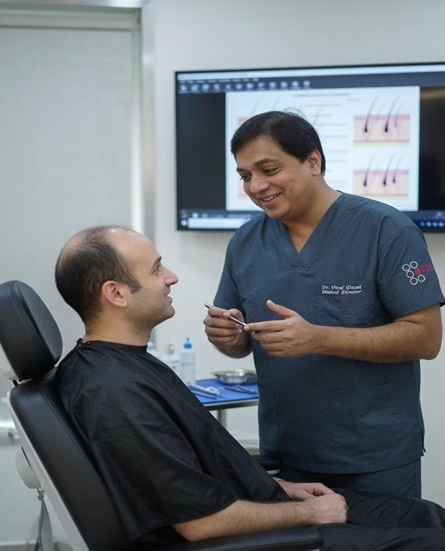
This step is where a lot of people fail themselves.
A hair transplant doesn’t give you back the hair you had at 19. It redistributes your remaining donor hair into the thinning zones. Density in a single session is typically 50 to 60% of fully native density. That’s the standard. People expecting “thick like a college kid” coverage from one surgery end up disappointed even when the surgery itself was perfect.
The 3D Hair Transplant Simulation at CPLSS is honestly one of the more useful tools out there for this. You see your hairline projected on your own face, in 3D, before you book. No more imagining it. No more “I thought it would look different” conversations later.
Also, talk to your surgeon about hairline design before the morning of surgery. Not on the table.
A natural hairline isn’t a straight line. It dips. It has irregularities. It has lighter zones near the temples. If a clinic is showing you a Photoshopped, perfectly even, drawn-on hairline as the “design” for a 45-year-old man, the result is going to look transplanted. Forever. People will know.
Step 9: Timeline for Hair Growth and Results
Hair transplant results are slow. Almost annoyingly slow. Knowing the timeline ahead of time saves you from panicking in the middle of it.
Roughly:
- Week 1 to 3.Scabs fall off. The transplanted hairs shed almost completely. This is shock loss. It’s normal. Everyone freaks out anyway.
- Month 1 to 3.Scalp looks more or less back to baseline. No new growth yet. This is the longest, most psychologically frustrating window. Don’t post on Reddit asking why nothing’s happening. It’s working.
- Month 4 to 6.New hairs start coming in. Wispy, thin, slightly weird-looking at first. Don’t worry, they thicken.
- Month 7 to 9.This is when you start getting compliments. Density looks real now.
- Month 12.Pretty much your final result. Some maturation continues till month 18, but the big growth is done.
Dr. Desai shares a detailed hair transplant results timeline with each patient so you know what each month should look like. Mark them on your calendar. People who track the months stay calm during the slow stretch. People who don’t track tend to spiral around month three.
Step 10: Long-Term Hair Care After Transplant
The transplanted hair is permanent. Your native hair isn’t.
This is the trap people fall into. They get the transplant. Look great at month 12. Stop all the supportive treatments. And then 4 years later there’s an obvious patch of healthy transplanted hair in the front and thinning everywhere else. Looks weird. Avoidable.
Long-term care typically includes:
- Finasteride or dutasteride if your surgeon prescribes it (with periodic blood-test monitoring)
- Topical minoxidil to support the existing native hair
- 1 to 2 PRPor GFC sessions a year for maintenance
- Exosome therapy, an advanced regenerative treatment that helps improve hair density, strengthens follicles, and supports long-term scalp health
- Gentle hair care. No daily heat styling. No harsh shampoos.
- An annual scalp check-up so any new thinning gets caught early
If you do start seeing thinning outside the transplanted zones two or three years later, options like scalp micropigmentation, laser therapy for hair loss, or mesotherapy for hair can patch things up without you needing another full surgery.
Frequently Asked Questions
1. Am I a good candidate for a hair transplant in Mumbai?
Usually yes if your hair loss has stabilised, you have enough density in the donor area, and you’re in decent general health. Active alopecia areata, very recent diffuse loss, or uncontrolled diabetes need to be sorted before any surgery. Dr. Viral Desai will tell you straight up after a physical scalp exam and basic blood tests. No mystery, no upselling.
2. Is hair transplant surgery in Mumbai painful?
The procedure itself is under local anesthesia, so you don’t feel pain during it. Some scalp tightness and mild soreness for 2 to 4 days after is normal. Most patients tell us it was easier than they expected.
3. How long does the surgery actually take?
For a 1500 to 2500 graft session, plan for 6 to 8 hours including breaks. Larger sessions can run longer, or sometimes get split over two days.
4. Will it look obvious that I've had a transplant?
Done well, no. The whole point of going to a senior hair transplant surgeon in Mumbai instead of the cheapest option in town is that the result looks natural. Bad transplants are obvious. Good ones aren’t.
5. Can I have a second session if I want more density?
Yes. Usually 12 months after the first one, once you’ve seen the full result and your donor area has recovered properly.
6. Will my native hair keep falling after the transplant?
Often, yes. The pattern baldness doesn’t stop just because you got a transplant. That’s why long-term medical management is part of the plan, not optional.
7. How soon can I get back to work after hair transplant surgery in Mumbai?
Desk job: 3 to 5 days. Physical work or any job involving helmets, hard hats, or headgear: 2 to 3 weeks minimum. Always confirm with your surgeon based on your specific situation, not a generic answer.