


yes. Stress can absolutely cause hair loss. Because not all stress-related hair loss is the same, and not all of it needs a transplant. Some of it grows back on its own. Some of it doesn’t. The trick is figuring out which kind you’ve got before doing anything drastic.
This blog walks through what stress actually does to your hair, the different patterns it can cause, when it’s reversible, and when surgery is the right call.
Understanding the Link Between Stress and Hair Loss
Hair has a growth cycle. Three phases. Anagen (growing), catagen (transitioning), telogen (resting and shedding). On a normal day you lose 50 to 100 hairs and never even notice.
Then stress hits. Cortisol spikes. The body decides growing hair isn’t a survival priority right now and pushes a big chunk of your follicles out of the growth phase prematurely. Three months later, all those follicles enter shedding at roughly the same time. That’s when you start seeing handfuls of hair on your pillow, in the shower drain, on your shirt collar.
Why three months? Because the shedding phase takes around 90 days to complete after the trigger. So if you crashed through a brutal work quarter in January, you’ll start losing hair in April. Most people don’t connect the two events because they happened months apart.

And stress here doesn’t just mean “work stress.” It includes:
- A bad illness or hospitalisation, including post-COVID
- A major life event (job loss, divorce, bereavement)
- Crash dieting or sudden weight loss
- Major surgery or anesthesia
- Chronic sleep deprivation
- Pregnancy and post-partum (which is technically physical stress)
Anything that yanks the body out of its baseline can trigger this.
If you’ve recently been dealing with any of the above and you’re seeing more hair fall than usual, this is probably what’s happening. The good news is it’s almost always reversible. The bad news is, if it’s left untreated for too long, the cycle can lock in and become permanent.
Get a proper scalp examination before you assume the worst. Book a consultation with Dr. Viral Desai and find out what’s actually going on.
Types of Hair Loss Caused by Stress
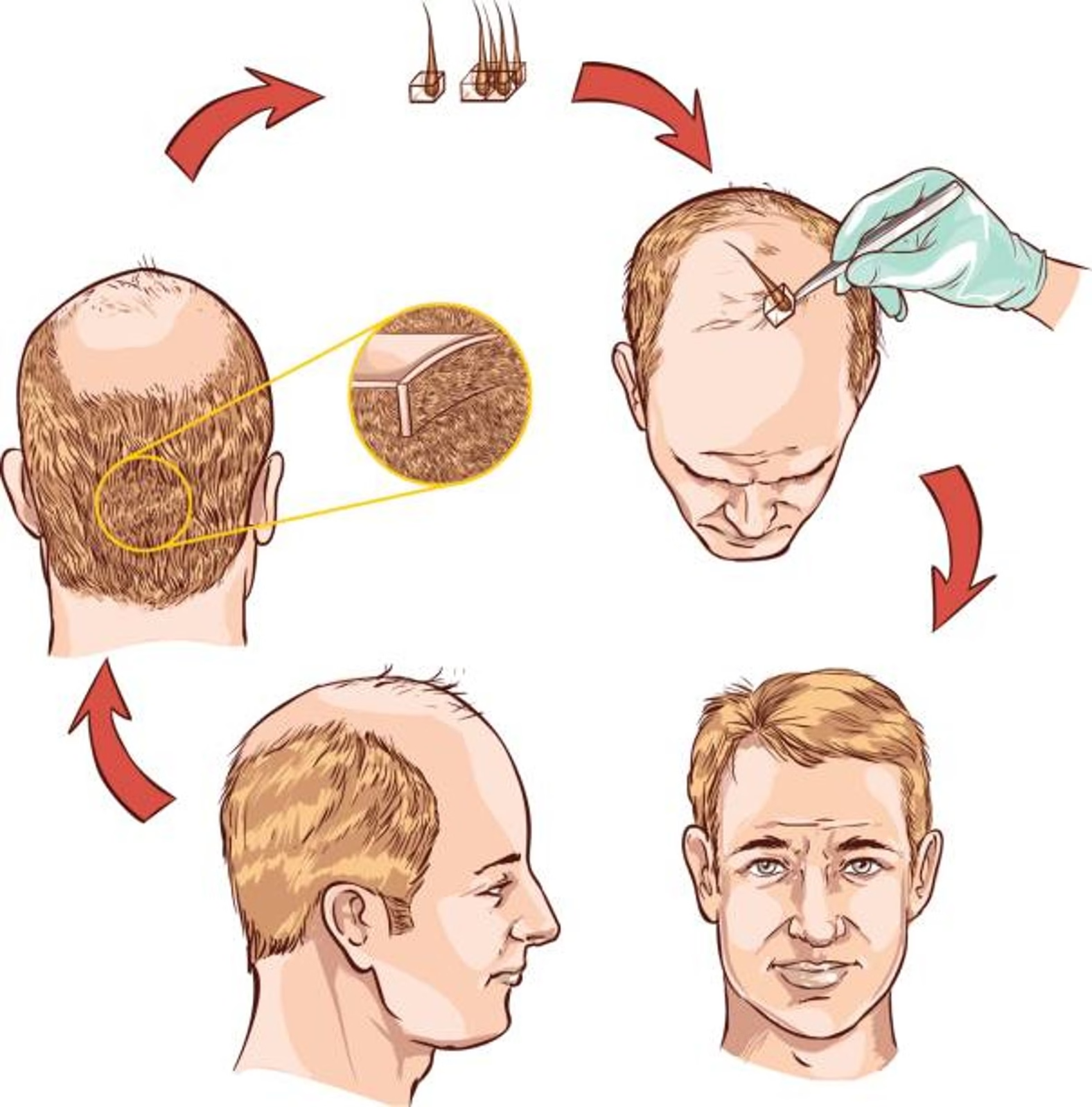
Stress doesn’t cause one kind of hair loss. It causes several, and they each behave differently.
1. Telogen Effluvium
This is the big one. The most common stress-related hair loss by a wide margin.
Diffuse shedding across the entire scalp. Not a receding hairline. Not bald patches. Just thinner everywhere. You’ll notice your ponytail is half its old thickness, or your scalp shows through more than it used to under harsh light.
Trigger usually shows up 2 to 4 months before the shedding starts. Most cases resolve in 6 to 9 months once the trigger is removed, with treatments like PRP or GFC therapy speeding up regrowth.
2. Alopecia Areata
This one is autoimmune, not just stress, but stress is a known trigger.
Round, smooth bald patches show up suddenly, usually on the scalp but sometimes on the beard or eyebrows. The patches can be coin-sized or much larger. In severe cases it can progress to alopecia totalis (full scalp) or universalis (entire body), but those are rare.
Most cases respond to medical treatment. Steroid injections, topical treatments, sometimes cyclical medicine for hair loss. Surgery is generally not recommended for active alopecia areata because the autoimmune process can attack transplanted follicles too. Stable, long-resolved patches are sometimes candidates for surgery, but that’s a case-by-case call.
3. Trichotillomania
This is a stress-related compulsive disorder where the person pulls out their own hair, often without realising. Patchy loss in the front, sides, or eyebrows. Repetitive damage over years can scar the follicles permanently.
If trichotillomania has caused permanent scarring and the underlying behaviour is treated and resolved, transplant becomes an option. But not before. Surgery on someone still actively pulling will just lose those grafts the same way.
4. Stress-Accelerated Pattern Baldness
If you already have the genetic predisposition to androgenetic alopecia (male pattern baldness or female pattern thinning), stress can speed it up. Doesn’t cause it, but pours fuel on it.
This is the type that most often ends up needing surgery. The genetic loss isn’t reversible, and stress just pushes you further along the timeline faster than you would have gone otherwise.
Is Stress-Induced Hair Loss Permanent or Reversible?
Depends on the type. And depends on how long it’s been going on.
Telogen effluvium and acute alopecia areata are usually reversible. The follicle isn’t dead, it’s just dormant. Remove the stress trigger, support the scalp with the right treatment, and most people see regrowth in 6 to 12 months.
Trichotillomania-related loss is reversible early on, but if the same follicles get pulled repeatedly over years, the damage scars and becomes permanent.
Pattern baldness, even when stress-accelerated, is genetically programmed and not reversible. Medical treatment can slow it. It can’t undo it.
Now here’s the part most people miss.
Even reversible stress-related hair loss can become permanent if it’s left untreated for too long. The longer follicles stay dormant, the higher the chance they miniaturise and stop producing hair entirely. So the window matters. Catching this in month 4 is very different from showing up in month 18 with two years of denial behind you.
If you’re in the early stage, options like PRP, GFC, exosome therapy, mesotherapy, and laser therapy for hair loss can reactivate dormant follicles. Women specifically often respond well to non-surgical hair restoration, because their pattern of loss tends to be diffuse rather than receding.
If the follicles are gone, no amount of cream or injection will bring them back. That’s where surgery comes in.
Talk to Dr. Viral Desai’s team before your stress-related hair fall turns into permanent loss. Early treatment changes the entire trajectory.
When Should You Consider a Hair Transplant?
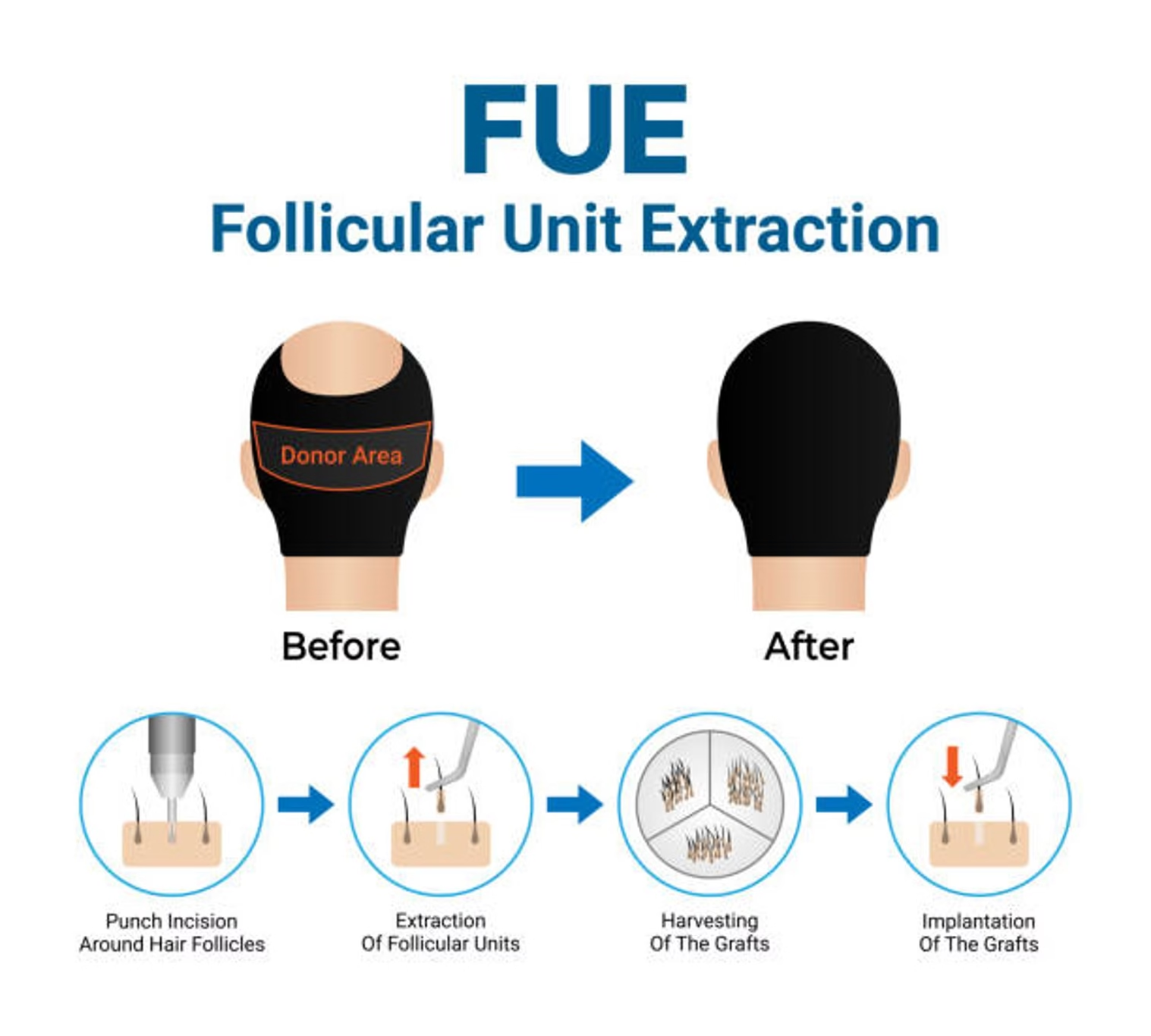
Not every case of stress hair loss needs surgery. Most don’t.
But there are specific situations where a hair transplant in Mumbai becomes the right call. The signs to watch for:
- Hair loss has been going on for over 12 to 18 months despite removing the stress trigger and trying medical treatment
- There’s visible scalp showing through in well-defined zones, not just diffuse thinning
- A clear receding pattern (M-shape, crown thinning) has set in, suggesting stress accelerated underlying genetic loss
- Trichotillomania has stopped but left permanent scarring
- Resolved alopecia areata patches have been stable for 1 to 2 years and the scalp is otherwise healthy
- Density has stabilised after stress fall, but you’re still left with a hairline that bothers you
And there are situations where surgery is a bad idea even if you really want it:
- Active, ongoing stress trigger
- Telogen effluvium that’s still in the shedding phase
- Active alopecia areata or other autoimmune flare-ups
- Active trichotillomania
- Severe untreated anxiety or depression
A good hair transplant surgeon in Mumbai will tell you straight up if you’re in one of those bad-timing categories and ask you to wait. A bad one will book you anyway.
Dr. Viral Desai has been doing this for 20+ years. M.Ch. and D.N.B. certified plastic surgeon. He’ll tell you when surgery is the right move and when it isn’t, and the difference between those two answers is what protects your donor area for the long haul.
The CPLSS clinic offers both FUE and FUT, along with the NHDT (No-Holes No Damage Technique) refined by Dr. Desai. There’s also 3D Hair Transplant Simulation, which lets you see your projected hairline on your own face before booking. Useful if the stress hair loss has done a number on your confidence and you need to actually see what the result will look like before deciding.
For those wanting to address other concerns at the same time, beard transplant and eyebrow transplant are also done at the clinic.
What Results Can You Expect After a Hair Transplant?
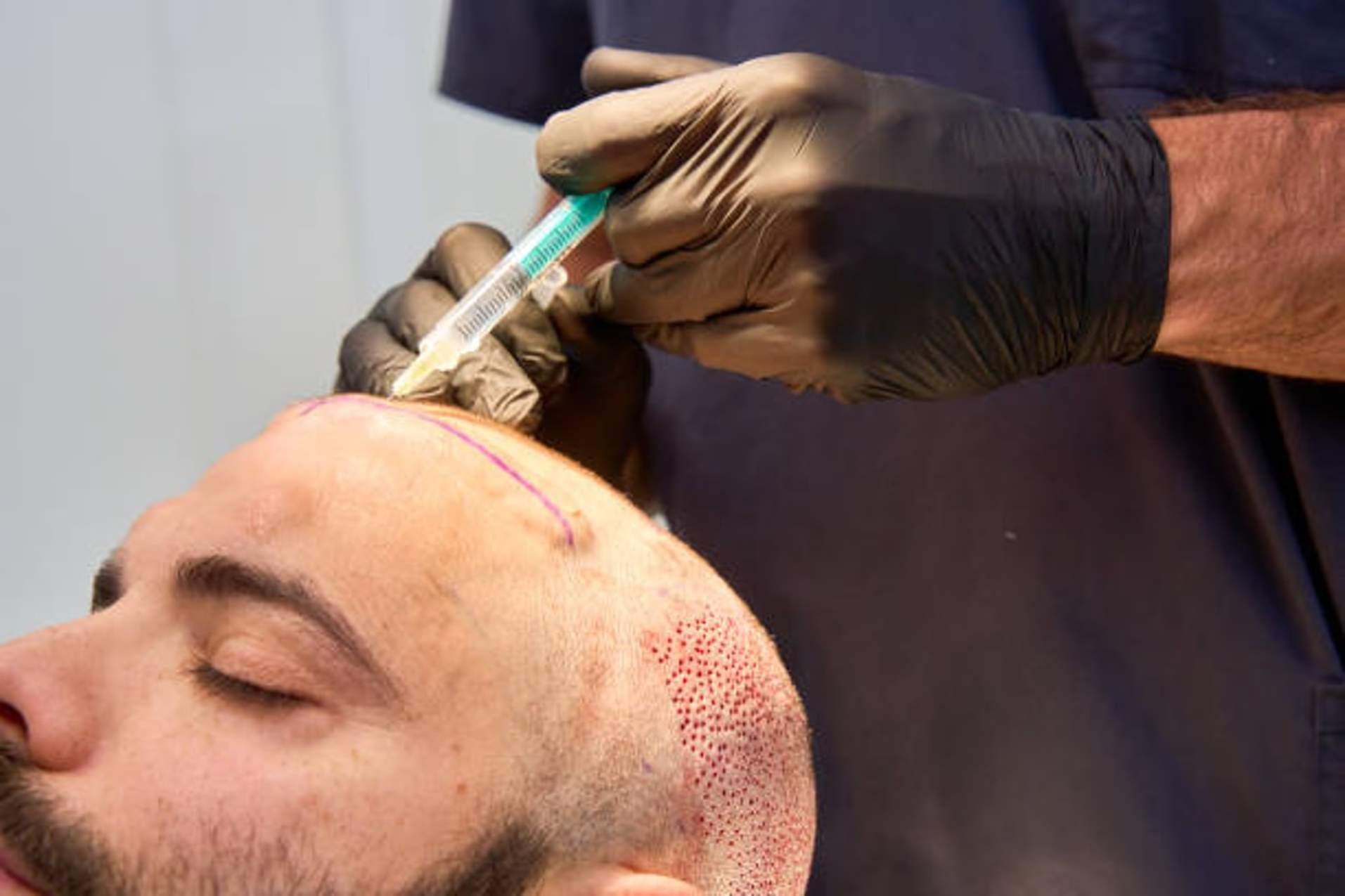
A hair transplant doesn’t give you back the hair you had at 20. It redistributes your existing donor hair into the thinning zones, with density that’s typically 50 to 60% of full native density per session. That’s the ceiling. People who walk in expecting “thicker than my college days” coverage from one surgery end up disappointed even when the technical work was excellent.
The hair transplant results timeline is slow. You shed almost all the transplanted hair in the first 3 weeks (this is normal, it’s called shock loss). Months 1 to 3 look like nothing’s happening. Month 4 onwards is when real growth kicks in. By month 9 most patients are getting unsolicited compliments from people who don’t even know they had surgery.
One thing worth saying clearly. Stress can cause hair loss outside the transplanted zones in the future too. So even after a successful hair transplant surgery in Mumbai, you’ll likely need to manage your underlying stress, take medical maintenance like finasteride or minoxidil if prescribed, and do periodic PRP or GFC top-ups. Otherwise the transplanted zone holds while everything around it keeps thinning, which leads to a strange uneven look over time.
Real before-and-after results are on the photo gallery and patient testimonials pages. Look at average cases, not just the showcase ones, to set the right expectation.
Conclusion
Stress and hair loss are connected, but the connection isn’t always permanent. Most stress-induced hair fall, especially telogen effluvium, will reverse on its own once you remove the trigger and give your scalp time to recover. Treatments like PRP, GFC, and exosome therapy can speed things up considerably. Surgery only enters the picture when the loss has stabilised, the follicles are gone, and a clear pattern has set in that creams and injections can’t fix. The mistake most people make is waiting too long to get checked. The earlier you act, the more options you have, and the less of your donor area you end up needing later. If you’re seeing fall that hasn’t slowed down in 12 months, or you’re noticing a clear receding pattern alongside the diffuse shedding, talk to a qualified hair transplant surgeon in Mumbai before you assume the worst or settle for the cheapest option. Dr. Viral Desai and the team at CPLSS can tell you exactly where you are on the curve and what the right move is, whether that’s surgery, medical management, or just patience and the right scalp care. Book a consultation and get clarity, not guesswork.
Frequently Asked Questions
1. Can stress alone cause permanent hair loss?
Usually no, if it’s caught early. Telogen effluvium is reversible. But chronic, untreated stress can push reversible hair loss into permanent territory by allowing follicles to stay dormant too long, or by accelerating underlying genetic baldness. The window matters.
2. How do I know if my hair loss is from stress or genetics?
Stress hair loss is usually diffuse (everywhere) and starts 2 to 4 months after the trigger. Genetic hair loss has a pattern (receding hairline, thinning crown, M-shape) and progresses gradually. Often they’re happening at the same time, which is why a proper scalp examination by an experienced hair transplant surgeon in Mumbai matters. You can’t always tell from the outside.
3. Will reducing stress alone bring my hair back?
If the loss is purely telogen effluvium and hasn’t been going on too long, often yes, with some patience. Combine with proper nutrition, sleep, and treatments like PRP for faster regrowth. If genetic factors are also playing a role, just reducing stress won’t be enough.
4. Is hair transplant surgery in Mumbai safe for someone with anxiety?
Yes, as long as the anxiety is being managed and the consultation rules out any active mental health concerns that would interfere with recovery. Surgery isn’t done on patients in active mental health crises. That’s not a moral judgment, it’s a medical one.
5. How soon after a stressful event can I get a hair transplant?
Wait at least 12 months after the stress trigger has resolved and the hair fall has stabilised. Operating during active shedding is pointless because more hair will fall after surgery anyway, and it becomes nearly impossible to judge the actual extent of permanent loss.