


Pick up a few strands off your pillow one morning and start counting, and it doesn’t take long before the question creeps in: is smoking behind this? It’s a fair question, and one we hear a lot at consultations for hair transplant surgery in Mumbai. Turns out there’s a real, well-documented connection between cigarettes and thinning hair. Let’s get into what’s actually happening under the skin, what to watch for, and what you can do about it, quitting or not.
Can Smoking Cause Hair Loss?
yes. It’s a bit more nuanced. Smoking doesn’t create hair loss out of nowhere in someone with a perfectly healthy scalp, but it’s genuinely bad news for anyone whose follicles are already under stress from genetics, age, or hormones. Cigarette smoke carries thousands of chemical compounds, and a fair few of them mess directly with follicle DNA, choke off blood flow to the scalp, and push follicles into an ageing process faster than they’d normally go through. Ask any hair transplant surgeon in Mumbai and they’ll tell you smoking history comes up in almost every serious consultation now, not just because of the hair loss itself, but because it affects how well the scalp heals after surgery too.
How Does Smoking Affect Hair Growth?
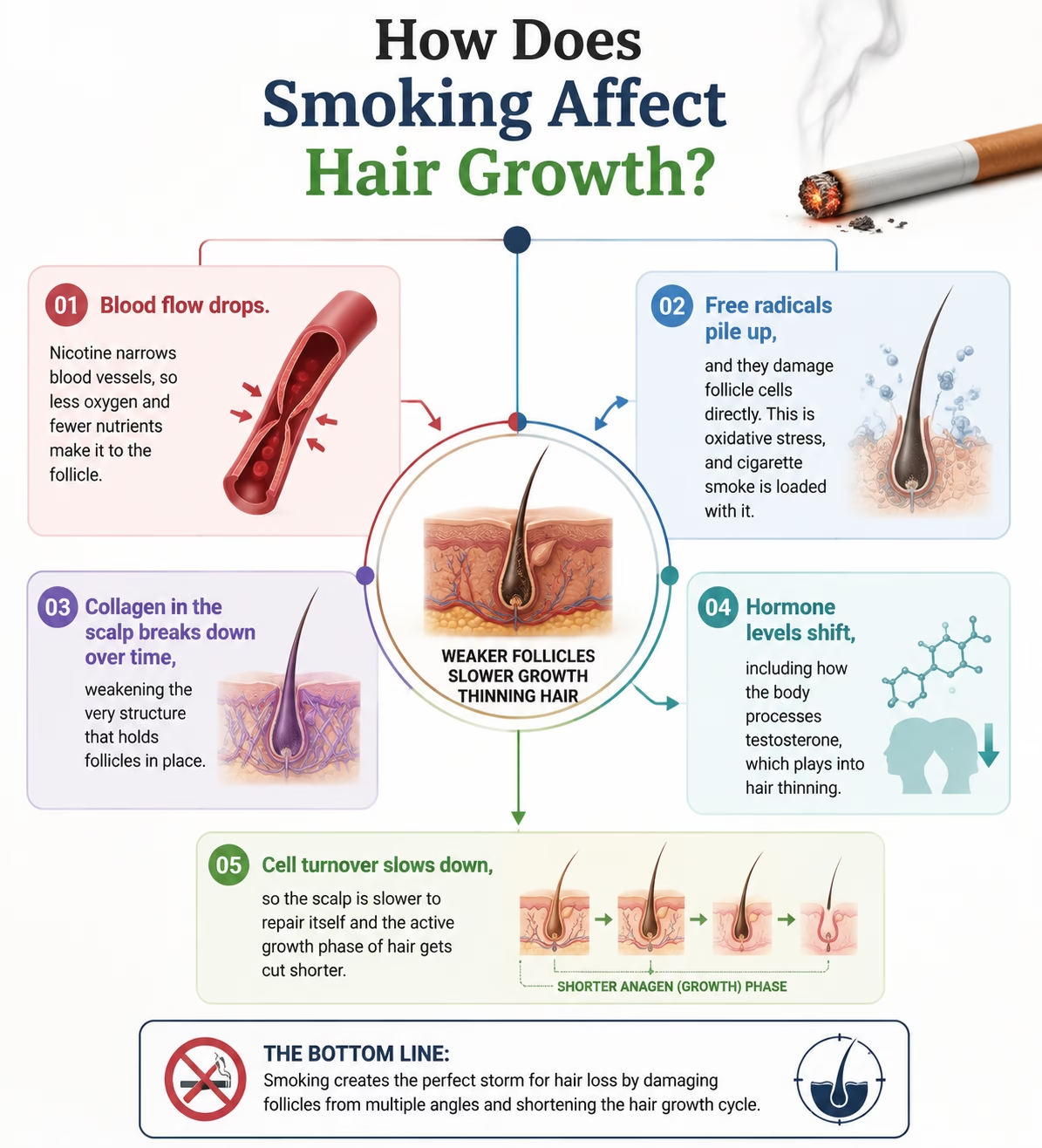
There isn’t just one mechanism at work here. A few things happen at once.
None of these effects is dramatic on its own. Together, over years, they add up to hair that’s thinner, weaker, and more likely to fall out than it would be otherwise. A lot of patients looking into hair transplant in Mumbai are honestly surprised at just how much smoking factors into both their current hair loss and how well a transplant is likely to take.
Signs That Smoking May Be Affecting Your Hair Health

A few things tend to show up together when smoking is part of the problem
Not every one of these has to show up at once. But if two or three sound familiar, it’s worth getting a proper opinion rather than chalking it up to stress and moving on.
Does Smoking Cause Male Pattern Baldness?
Not directly, no. Male pattern baldness, or androgenetic alopecia, comes down to genetics and hormones first and foremost. What smoking does is speed things along. Studies keep finding that smokers deal with moderate-to-severe hair loss more often than non-smokers, and that pattern baldness in smokers tends to progress faster once it starts. So think of smoking less as the trigger and more as the accelerator. That distinction actually matters for treatment, because a hair transplant surgeon in Mumbai needs to account for both the underlying genetic pattern and whatever’s speeding it up.
Does Quitting Smoking Help Improve Hair Health?
It does, more than most people expect. Circulation to the scalp starts picking up within weeks of quitting. Oxidative stress drops off. Collagen production slowly starts to recover. Plenty of people notice their hair feels stronger and sheds less within a few months of putting the cigarettes down, though undoing existing thinning takes longer and depends heavily on how much damage was already done. Quitting won’t bring back hair that’s genuinely gone, to be clear, but it does give whatever comes next — including hair transplant in Mumbai, if that’s the route you end up taking — a much better foundation to work with.
How to Protect Your Hair If You Smoke

When Should You Consult a Hair Specialist?
If your hairline’s receding, your parting’s widening, you can see more scalp than you used to, or the shedding just isn’t slowing down after a few months — that’s your cue. Getting evaluated early opens up more options. Some thinning responds well to non-surgical treatments, while more advanced loss might genuinely need a hair transplant surgery in Mumbai. A good hair transplant surgeon in Mumbai will be able to tell fairly quickly whether your hair loss is genetic, lifestyle-driven, or some mix of both, and map out a plan that actually fits your situation instead of a generic one.
Conclusion
Smoking probably isn’t the whole story behind your hair loss. It’s rarely helping, though. It cuts blood flow, damages follicles directly, and speeds up thinning that might already be in motion because of genetics or age. Cutting back, or quitting outright, gives your scalp a genuine shot at recovering, and pairing that with proper professional input makes a real difference over time. If things have moved further along than lifestyle changes can fix on their own, Dr Viral Desai and the team at CPLSS Mumbai offer everything from non-surgical treatments through to advanced hair transplant in Mumbai, built around your hair, your health, and what you actually want out of it.
Frequently Asked Questions
1. Can smoking cause permanent hair loss?
Not on its own, necessarily, but the follicle damage builds up over years and can make thinning much harder to reverse, especially alongside genetic hair loss.
2. How long after quitting smoking does hair improve?
Scalp circulation usually starts improving within a few weeks. Reduced shedding and stronger-feeling hair tend to show up somewhere around the three-to-six-month mark for most people.
3. Does vaping affect hair loss the same way as smoking?
It can. Vaping still delivers nicotine, which narrows blood vessels in the scalp the same way smoking does, though there’s less research specifically on vaping’s long-term effect on hair.
4. Can a hair transplant work if I still smoke?
Yes, but smoking can slow healing and reduce graft survival. Most surgeons will ask you to cut back or quit for a few weeks before and after the procedure.
5. Is hair loss from smoking reversible?
Early thinning caused mostly by poor circulation can bounce back after quitting. Follicles that have been dormant a long time usually need medical or surgical help instead.
6. What vitamins help repair hair damaged by smoking?
Vitamin C, vitamin E, biotin, iron, and zinc come up most often for supporting scalp health and countering oxidative stress, though it’s worth checking with a specialist what your body specifically needs.