

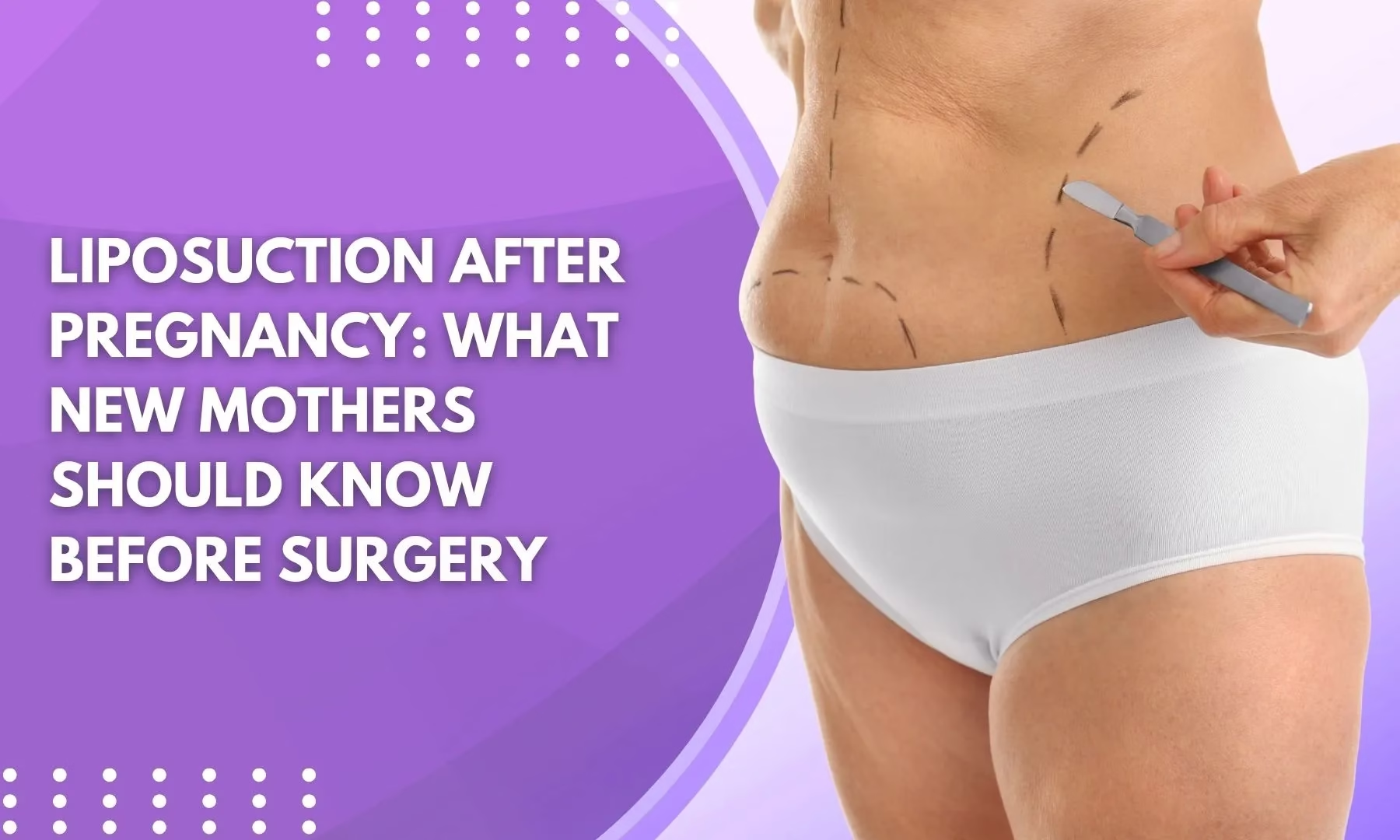
You’ve done the sleepless nights, the feeding schedules, the slow crawl back to something resembling normal life. And somewhere in there, you’ve probably caught your reflection and noticed your body just didn’t bounce back the way you expected, even though you were careful with meals and made it to the gym more often than you had energy for. That’s a normal thing to feel. It’s also why liposuction in Mumbai comes up so often in conversations among new mothers here. This isn’t about chasing some unrealistic ideal. It’s about understanding what pregnancy actually does to a body, what liposuction can genuinely fix, and what’s worth knowing before you book anything at all.
What Is Liposuction After Pregnancy?
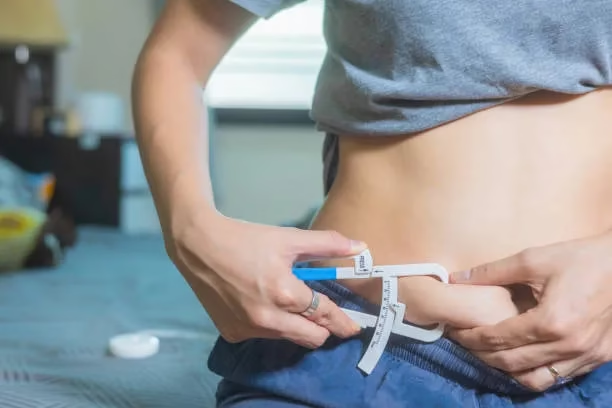
Liposuction after pregnancy is really the same procedure as liposuction done for any other reason. A surgeon removes stubborn pockets of fat using a thin cannula, usually from the abdomen, hips, thighs, or back. What makes it “after pregnancy” is mostly context. The fat being targeted is the kind pregnancy tends to leave behind, sitting in places where diet and exercise stop making much of a dent.
It’s worth saying plainly that liposuction isn’t a weight loss surgery, and it won’t tighten loose skin. If your main concern is skin that’s stretched out, or abdominal muscles that separated during pregnancy (something doctors call diastasis recti), liposuction on its own won’t solve either of those. A tummy tuck addresses that specifically, and plenty of women end up combining both procedures once they understand the difference.
How Pregnancy Changes a Woman's Body
It helps to understand what’s actually happened physically before deciding what to do about it, if anything. Pregnancy doesn’t just add weight temporarily. It changes how and where the body stores fat afterward, often shifting more of it toward the hips, thighs, and abdomen than before, partly as a hormonal response and partly as the body quietly prepares reserves for breastfeeding.
Skin stretches a great deal over nine months, and it doesn’t always spring back fully once the baby arrives, especially after a second or third pregnancy or a larger amount of weight gain. The abdominal muscles can separate down the midline to make room for the growing uterus, and in plenty of women that gap never fully closes on its own, which is part of why the belly can look different even once you’re technically back at your pre pregnancy weight. Add to that the breast tissue changes that come with breastfeeding, hormone levels that take months to settle, and the general toll of stress and interrupted sleep, and it starts to make sense why the body just doesn’t feel like it used to.
Why Do Some Women Consider Liposuction After Pregnancy?

The reasons tend to be fairly practical rather than dramatic. A lot of women reach a point, usually about a year after giving birth, where they’ve genuinely put the work in. Eating properly, exercising consistently, staying patient. And there’s still a stubborn layer of fat around the waist or thighs that simply refuses to move. That isn’t a failure of effort on their part. Certain fat deposits, particularly the kind pregnancy tends to add, are notoriously resistant to diet and exercise once they’ve settled in for good.
For some women it’s tied to one specific area, like the overhang left behind after a C section, or flanks that suddenly feel out of proportion with the rest of the body. For others, it’s simply about wanting to feel like themselves again in their own clothes, which is a perfectly good reason on its own and doesn’t need much justifying.
Benefits of Liposuction After Pregnancy
The appeal for postpartum patients specifically comes down to a handful of things:
- Targets fat precisely rather than generally, so the areas that actually bother you, usually the abdomen, hips, or thighs, see the most visible change
- Results show up in a specific area instead of fat loss spreading thin across the whole body the way ordinary dieting tends to work
- Recovery is generally shorter compared with a combined procedure like a tummy tuck, which matters when you’re also looking after a small child
- Results tend to last, since the fat cells removed during the procedure don’t come back
- Keeping your weight steady afterward helps hold onto the new shape long term
- Many women feel a genuine emotional lift from finally seeing their body respond to effort again, after months where nothing seemed to change
How Is Liposuction Performed After Pregnancy?

Timing matters more here than it does with a typical liposuction case. Most surgeons want you to be finished breastfeeding, reasonably close to a stable weight, and at least several months out from delivery, often closer to a year, so the body has had a genuine chance to settle before any surgical decision gets made.
The process usually starts with a consultation, where your surgeon examines the areas of concern, checks for any muscle separation or excess skin that liposuction alone won’t address, and talks honestly about what to expect. On the day itself, small incisions are made in the treatment area, tumescent fluid is often used to limit bleeding and bruising, and a fine cannula breaks up and suctions out the fat, sometimes assisted by ultrasound or power assisted techniques depending on the area and how much fat is involved.
Afterward you’ll wear a compression garment for a few weeks, expect some swelling and bruising in the first several days, and generally be back to light activity within about a week, with the full results becoming visible over the following months once the swelling has fully settled.
Areas Commonly Treated With Liposuction After Pregnancy
A handful of zones come up again and again in postpartum consultations:
- Lower abdomen, often the area most affected by pregnancy and the one most patients ask about first
- Flanks and love handles, where fat tends to sit stubbornly regardless of overall weight loss
- Hips and outer thighs, common trouble spots tied to pregnancy related fat redistribution
- Inner thighs, frequently treated alongside the outer thigh and hip area for a more even shape
- Back, particularly around the bra line, sometimes overlooked but a common source of discomfort with fitted clothing
- Arms, in some cases, less common than the abdomen but requested by patients bothered by upper arm fullness
Which combination actually makes sense for you depends entirely on your own body and goals, and that’s really something to work out in person rather than guess at from a list.
Conclusion
Your body did something extraordinary carrying and delivering a child, and it’s entirely fair that some of what it left behind doesn’t budge with willpower alone. Liposuction after pregnancy isn’t about erasing that chapter. It’s a targeted, well understood way of dealing with fat that genuinely won’t respond to diet and exercise, once your body has had time to recover and settle into its new normal.
The finer details matter here though. Timing, breastfeeding status, whether skin or muscle laxity is part of the picture too, and that’s exactly what a proper consultation sorts out. Dr Viral Desai, a widely respected plastic surgeon in Mumbai and cosmetic surgeon in Mumbai with two decades of body contouring experience, has guided a great many new mothers through exactly this decision, and can tell you honestly whether liposuction in Mumbai is the right fit for where your body is right now.
Frequently Asked Questions
1. How soon after pregnancy can I get liposuction?
Most surgeons recommend waiting until you’ve finished breastfeeding and your weight has settled, usually somewhere between six months and a year after delivery.
2. Can I get liposuction while breastfeeding?
It’s generally not recommended, mainly because of anaesthesia and recovery considerations. Most clinics ask patients to wait until breastfeeding has ended.
3. Does liposuction remove loose skin after pregnancy?
No. Liposuction only removes fat. If loose skin is a concern, a tummy tuck or combined procedure is usually the better option.
4. Is liposuction after a C section safe?
Yes, once the incision has fully healed and your surgeon confirms you’re ready, which is typically several months after delivery at minimum.
5. How long do liposuction results last after pregnancy?
Results are long lasting since the treated fat cells don’t return, though maintaining a stable weight afterward is important for keeping the results.
6. Is liposuction or a tummy tuck better after pregnancy?
It depends on your body. Liposuction suits stubborn fat with good skin tone. A tummy tuck works better if there’s loose skin or muscle separation. Many women end up benefiting from a combination of both.