
Hair loss can gradually change the way a person looks and feels. For individuals experiencing extensive thinning or baldness, a standard hair transplant session may not provide enough coverage. This is where a GIGA Session Hair Transplant may be considered. It is an advanced hair restoration approach that allows multiple grafts to be transplanted during a carefully planned procedure, depending on donor hair availability and scalp condition.
According to Dr. Viral Desai, a celebrated hair transplant surgeon in Mumbai with over 24 years of experience, successful hair restoration is not simply about transplanting more grafts. The focus should be on maintaining natural hair density, preserving the donor area, and planning results that complement the patient’s facial features.
For those considering a hair transplant in Mumbai, understanding the graft count, procedure, recovery timeline, and expected results can help them make an informed treatment decision.
So, how does a GIGA session help restore hair across larger bald areas? Let’s explore how this procedure works.
What Is a GIGA Session Hair Transplant?
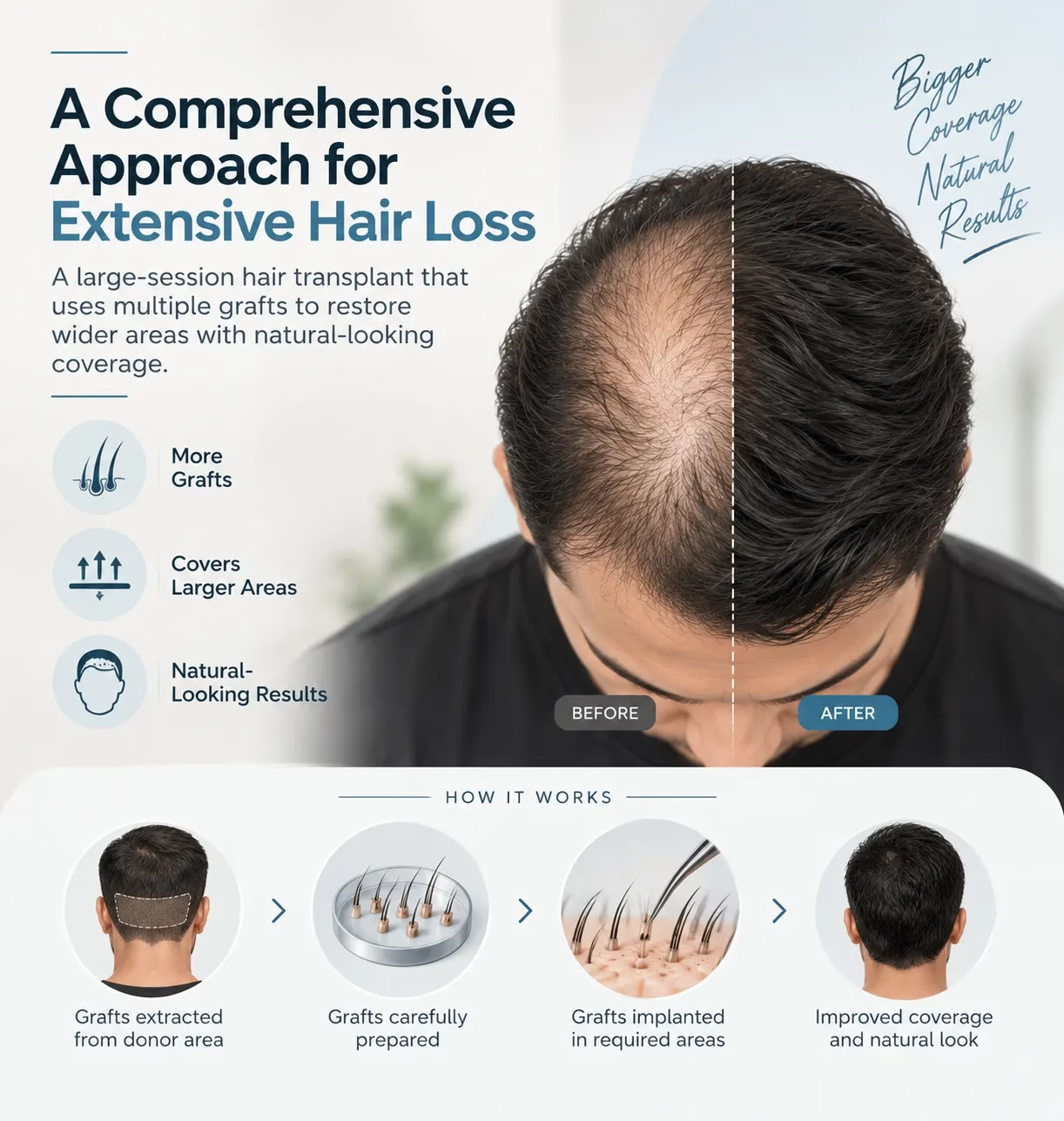
Unlike smaller sessions where only receding hairline or limited thinning is addressed, a GIGA session may focus on restoring coverage in larger areas of the scalp.
However, GIGA is not a standardised medical classification. The number of grafts associated with the term can vary between clinics.
The primary considerations include:
- Available donor hair density and quality
- Extent and pattern of baldness
- Hair thickness, texture and colour
- Scalp condition and blood supply
- Safe graft extraction and implantation
The objective is to achieve balanced coverage without compromising donor hair reserves.
How Many Grafts Are Used in a GIGA Session?
GIGA procedure is usually marketed as one that requires approximately 3,000 to 5,000 or even more grafts. However, there is no agreed upon threshold for the number of grafts required and larger numbers of grafts automatically do not make treatment safer or more efficient.
Generally, one hair graft consists of one to four hair follicles, which means that 4,000 grafts does not necessarily equate to 4,000 hair strands.
The number of grafts needed depends on extent of hair loss.
|
Area of hair loss |
Illustrative graft range |
|
Hairline and frontal region |
1,000 to 2,000 |
|
Frontal and mid-scalp thinning |
2,000 to 3,500 |
|
Extensive scalp coverage |
3,500 to 5,000+ |
It is important to note that these numbers are indicative and not obligatory. In some cases, people might need less number of grafts, while in other cases – several sessions of the procedure.
During the assessment, the doctor considers the donor density, coverage needed, and probability of future hair loss.
Over-extraction of the grafts can lead to the visible donor thinning and reduced options for future procedures.
Considering GIGA treatment in Mumbai for extensive hair loss? Connect with a hair transplant expert for a detailed scalp and donor hair assessment.
Can everyone with advanced hair loss undergo a large-session transplant? Let’s understand the factors that influence suitability.
Who Is a Good Candidate for a GIGA Session Hair Transplant?
A GIGA session may be considered for individuals experiencing substantial hair loss who have sufficient donor hair to support a larger transplantation procedure.
Suitable candidates may include people with:
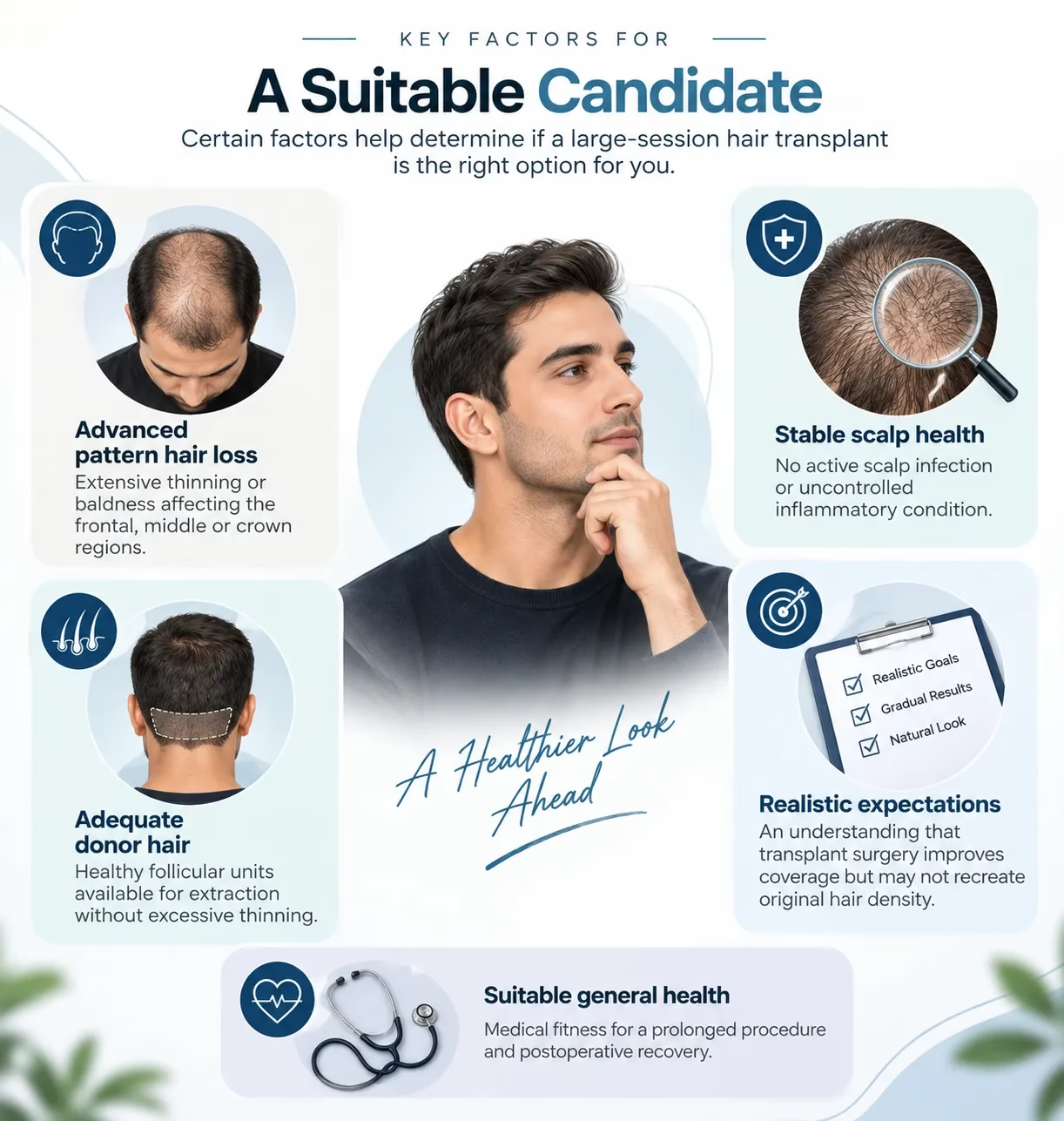
Age, family history and the likelihood of progressive hair loss also influence treatment planning.
Individuals with diffuse thinning throughout the donor area, certain scarring conditions or uncontrolled medical conditions may not be suitable candidates.
A seasoned hair transplant doctor can assess these factors before recommending an appropriate treatment plan.
What happens during a large-scale hair restoration procedure? Let’s follow the surgical process from planning to implantation.
How Is a GIGA Session Hair Transplant Performed?
The procedure takes place through several well-planned stages. Although the technique is similar to that of conventional FUE transplantation, more consideration must be taken for handling large amounts of grafts.
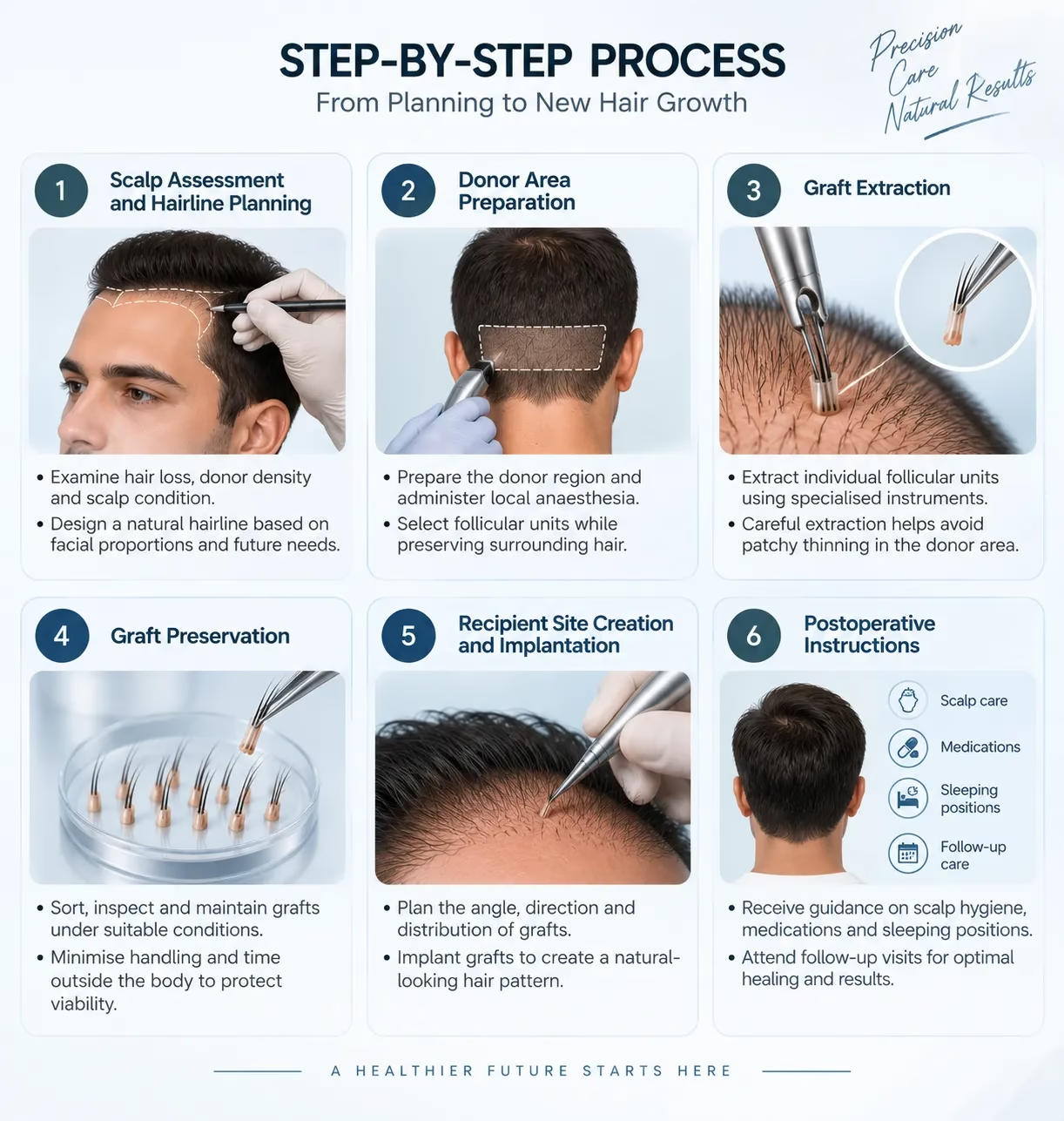
Since GIGA sessions entail large numbers of grafts, the procedure can take hours or even be done on separate surgical days when clinically appropriate.
How long does the scalp take to heal after transplantation? Let’s understand the recovery stages and what patients may experience.
GIGA Session Hair Transplant Recovery Timeline
Recovery after a GIGA Session Hair Transplant varies depending on the number of grafts, surgical technique and individual healing response.
Days 1–3
Initial healing
Mild swelling, redness, tenderness and small scabs may develop around the transplanted areas.
Days 4–10
Scab reduction
Scabs gradually loosen as healing progresses. Gentle washing should follow the surgeon’s instructions.
Weeks 2–6
Temporary shedding
Transplanted hair shafts may shed temporarily. This is commonly called shock shedding and does not necessarily indicate graft failure.
Months 3–4
Early hair growth
New hair may begin emerging, initially appearing fine or uneven.
Visible improvement
Hair growth and coverage generally become more noticeable as transplanted hair matures.
Months 12–18
Result maturation
Hair thickness and overall appearance continue developing, particularly in the crown region.
Patients should avoid scratching the recipient area and follow instructions regarding exercise, sun exposure and hair washing. Increasing pain, spreading redness, fever or unusual discharge requires prompt medical review.
Planning hair transplant surgery in Mumbai? Understand the recovery process and suitable treatment approach with an individual assessment by a hair transplant expert.
Will a higher graft count always produce thicker-looking hair? Let’s understand what influences the final appearance.
What Results Can You Expect After a GIGA Session Hair Transplant?
The patient may notice increased hair visibility across larger bald or thinning regions following the GIGA session. However, results depend on multiple factors apart from the number of grafts transplanted.

Notably, higher graft counts do not guarantee higher hair density. This is because of various other determinants.
There may also be some risks associated with the procedure such as infections, scarring, uneven growth, low graft survival rate and excessive harvesting of donors.
A customised surgical approach is more important compared to a specific number of grafts.
It’s always better to communicate openly with your surgeon to ensure everything is on track and address any concerns early on.
Conclusion
A GIGA Session Hair Transplant could be one of the choices for those who want to restore their hair in large numbers. The eligibility of this procedure would depend on various factors such as donor hair availability, healthy scalp, and extent of hair loss.
The patients should give more importance to safe hair extraction, careful implantation and long-term donor preservation rather than counting number of grafts.
Dr. Viral Desai provides individualised assessment for patients considering hair transplant in Mumbai- with treatment planning based on their hair restoration needs.
FAQs
How many grafts are required for a GIGA Session Hair Transplant?
GIGA sessions are usually described as involving around 3,000 to 5,000 grafts or more. There’s no standard definition, though. The right number depends on your donor hair availability and extent of baldness.
When will I see results after a GIGA Session Hair Transplant?
Early growth commonly begins around three to four months. More noticeable improvement develops between six and nine months, with maturation often continuing for 12 to 18 months.
Can a GIGA session provide full scalp coverage?
It may improve coverage across extensive areas, but complete restoration of original hair density is not always possible. Results depend on donor supply, scalp area and graft distribution.
Can transplanted hair fall out after surgery?
Temporary shedding of transplanted hair shafts is common during the first several weeks. New growth generally follows. Existing non-transplanted hair may continue thinning over time.
How do I choose a surgeon for GIGA treatment in Mumbai?
Consider the surgeon’s qualifications, experience with hair restoration, approach to donor preservation, surgical facilities and willingness to explain realistic outcomes and potential risks.
References:
https://pubmed.ncbi.nlm.nih.gov/36928376/
https://www.aad.org/public/diseases/hair-loss/treatment/transplant
Disclaimer: The information shared in this content is for educational purposes and not for promotional use.