“If you want healthier, stronger and thicker-looking hair, start by paying attention to what you eat. Dr. Viral Desai, a noted hair specialist & hair transplant surgeon in Mumbai, explains that adequate protein, iron, zinc and other essential nutrients support normal hair growth and follicle function. Including eggs, lentils, nuts, seeds, leafy vegetables, and other nutrient-rich foods in your daily diet can help maintain hair health, especially if your diet lacks essential nutrients. However, no single food can guarantee hair regrowth or reverse every type of hair loss.”
Hair care doesn’t begin and end with shampoos, conditioners, and serums. Your daily diet also matters.
Hair follicles require a steady supply of nutrients to support their normal growth cycle. If your diet lacks sufficient protein, iron or other essential nutrients, you may experience increased shedding or changes in hair quality.
This does not mean you need expensive superfoods or specialized hair-growth supplements. Everyday foods can provide most of the nutrients your hair needs.
Here are 12 foods worth including in your diet.
1. Eggs: A Good Source of Protein and Biotin
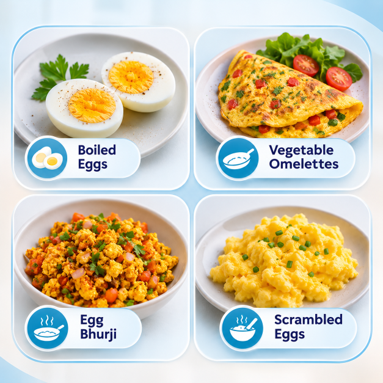
We will start with one of the simplest additions to your diet.
Eggs are rich in protein, biotin, vitamin B12 and selenium.
Hair is primarily made of a protein called keratin. Therefore, adequate protein intake is important for normal hair growth.
If you follow a vegetarian or vegan diet, lentils, soy products, beans and dairy products can help meet your protein requirements.
2. Spinach and Green Leafy Vegetables: Support Iron Intake
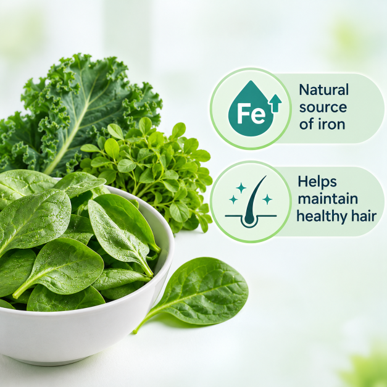
The second step you can take is to increase the amount of greens in your diet.
Spinach, fenugreek leaves (methi), amaranth leaves and other leafy vegetables provide iron, folate and vitamin A precursors.
Iron is especially important since it provides your red blood cells with enough oxygen for proper functioning of the body. Iron deficiency might cause hair shedding in some individuals.
For better iron absorption, combine plant-based iron sources with vitamin C-rich foods.
For example:
- Add lemon juice to cooked spinach.
- Mix dal with tomato-based dish.
- Add amla or guava with your meals.
Vegetarian diets can provide iron, although the body absorbs plant-based non-haem iron less efficiently than iron from animal sources.
3. Lentils and Beans: Everyday Foods for Hair Growth and Thickness
Here is another practical option for Indian households.
Dal, chickpeas, kidney beans (rajma), black gram and green gram provide plant-based protein, iron, zinc and folate.
These foods are particularly useful for people who do not consume meat or eggs.
Include different varieties throughout the week:
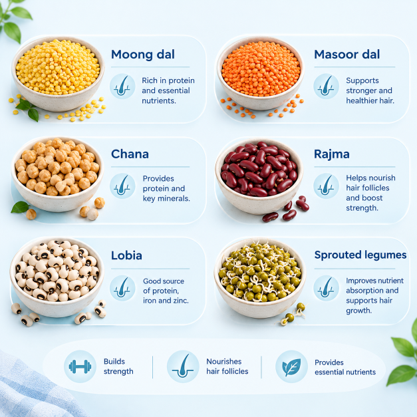
Adequate protein intake supports hair structure. However, simply increasing protein consumption will not treat hair loss caused by genetics, hormonal conditions or scalp disorders.
4. Nuts and Seeds: Add Zinc, Vitamin E and Healthy Fats
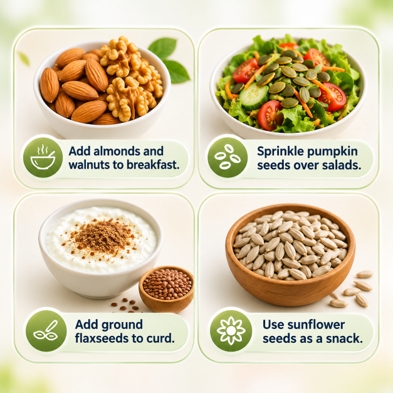
A small serving of nuts and seeds can add several useful nutrients to your diet.
Almonds, walnuts, pumpkin seeds, sunflower seeds and flaxseeds contain varying amounts of zinc, vitamin E, healthy fats and other micronutrients.
Some options to include these foods into your diet are:
Walnuts and flaxseeds also provide plant-based omega-3 fatty acids.
Do not forget that nuts and seeds are part of a balanced diet. Their high consumption will not make your hair grow faster.
5. Fatty Fish: A Source of Omega-3 and Protein
If you eat non-vegetarian food, fatty fish can be a useful addition.
Salmon, sardines, mackerel and Indian bangda provide protein and omega-3 fatty acids. Some varieties also provide vitamin D.
Proteins play important role for hair structure, while omega-3 fatty acids are important for your health in general.
You can add fish to your diet as follows:
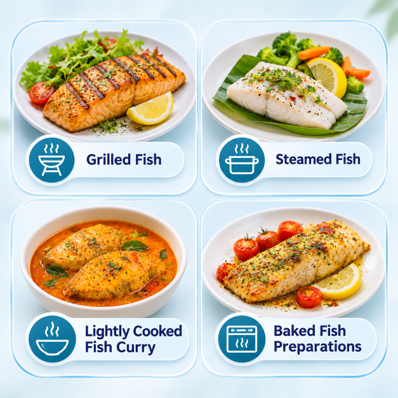
Choose the way to cook fish that does not require much oil.
6. Amla, Guava and Citrus Fruits: Support Vitamin C Intake
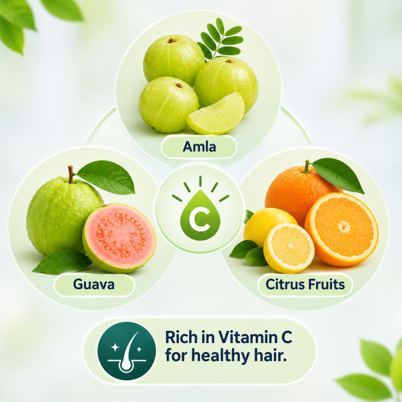
Now, do not overlook fruits.
Amla, guava, oranges, sweet lime and other vitamin C containing fruits contribute to collagen production and provide plant-based iron with better absorption.
Vitamin C is especially useful if you rely on vegetarian sources of iron.
Whole fruits are always preferable to fruit juices as they provide you with fiber and minimize the risks of consuming excess added sugar.
7. Milk, Curd and Paneer: Protein and Vitamin B12
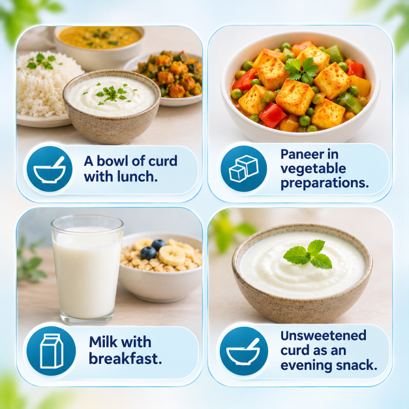
Dairy products can help meet your daily protein requirements.
Milk, curd and paneer provide protein, while dairy foods also supply nutrients such as vitamin B12 and calcium.
They are convenient options for vegetarians.
If you are lactose intolerant, choose suitable alternatives that are fortified with relevant nutrients.
8. Sweet Potatoes and Carrots: Sources of Beta-Carotene
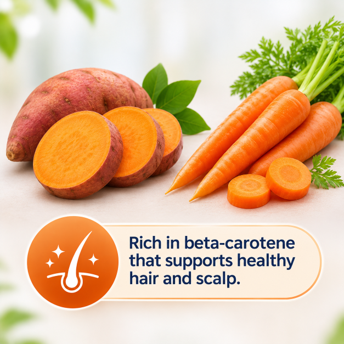
Want to add more colourful vegetables to your meals?
Sweet potatoes and carrots contain beta-carotene, which the body converts into vitamin A as needed.
Vitamin A supports normal cell growth and helps maintain healthy skin and scalp function.
However, excessive vitamin A intake can contribute to hair loss. It is better to obtain it through a balanced diet rather than taking high-dose supplements without medical advice.
Include roasted sweet potatoes, carrot salad or cooked carrots as part of your regular meals.
9. Whole Grains: Support Overall Nutritional Health
Whole grains are also a useful addition to a hair-friendly diet.
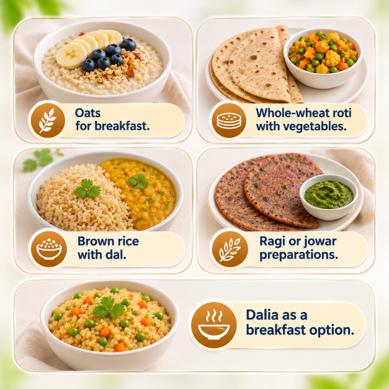
Oats, brown rice, whole wheat, millets and other whole grains contain carbohydrates, fibers and various amounts of B vitamins, iron and zinc.
They also help maintain a balanced eating pattern.
You can include:
Avoid following restrictive diets that eliminate entire food groups without a medical reason.
10. Pumpkin Seeds: A Useful Source of Zinc
It deserves to be mentioned separately as it provides you with zinc, magnesium and plant-based proteins.
Zinc is involved in normal cell growth, tissue repair and protein synthesis. Severe zinc deficiency can contribute to hair loss.
You can add pumpkin seeds to:
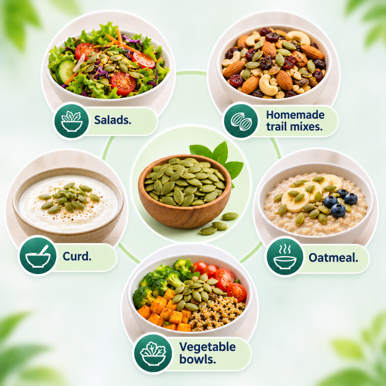
You do not have to eat large portions. A small portion can help you get additional microelements.
11. Chicken and Lean Meat: High-Quality Protein and Iron
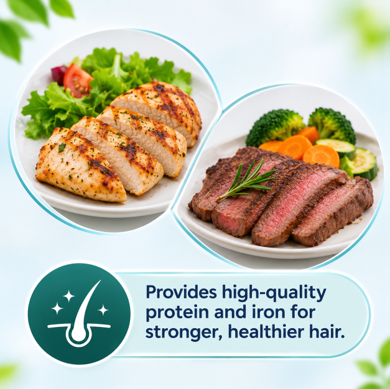
It is good source of protein and iron for people who eat non-vegetarian food.
Protein provides your hair with necessary amino acids to produce keratin. Iron is also important for your normal oxygen transport.
Include chicken, fish or lean meat as part of a balanced meal rather than relying on processed meat products.
Vegetarians can use soy, paneer, legumes and other plant-based sources of protein.
12. Soybeans and Tofu: Plant-Based Protein Options
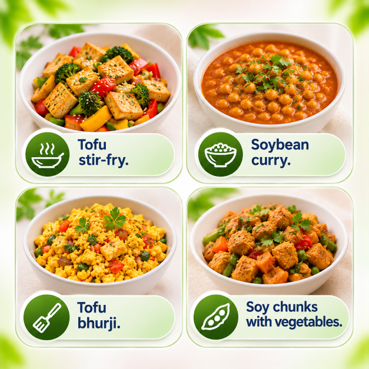
Finally, consider adding soy-based foods to your diet.
Soybeans, tofu and other minimally processed soy products contain protein, iron and other nutrients.
These foods are especially useful for vegetarians and vegans.
Having different sources of plant-based proteins throughout the day can help you obtain your nutritional requirements.
Which Nutrients Are Most Important for Hair Growth?
Choosing foods becomes easier when you understand which nutrients they provide.
Here are some important nutrients for hair growth and their dietary sources:
| Nutrient | Why It Matters? | Food Sources |
| Protein | Supports keratin and hair structure | Eggs, fish, dal, paneer, soy |
| Iron | Supports oxygen transport | Lentils, leafy greens, meat |
| Zinc | Supports normal cell growth and protein synthesis | Pumpkin seeds, nuts, legumes |
| Vitamin D | Involved in normal hair follicle cycling | Fatty fish, egg yolks, fortified foods |
| Vitamin B12 | Supports normal blood cell and nerve function | Dairy, eggs, fish, meat |
| Vitamin C | Supports collagen formation and iron absorption | Amla, guava, citrus fruits |
| Biotin | Supports normal metabolism and keratin-related processes | Eggs, nuts, legumes |
| Omega-3 | Supports overall cellular health | Fatty fish, flaxseeds, walnuts |
Not everyone needs additional supplements. The priority should be meeting nutritional requirements through a varied, balanced diet.
What Should You Avoid Eating for Healthy Hair?
There is no need to follow an extremely restrictive diet to maintain healthy hair.
However, certain dietary habits can affect overall nutritional health.
Focus on dietary variety rather than eliminating individual foods without a medical reason.
How Long Does It Take for Diet to Improve Hair Growth?
This is an important point to understand before changing your diet.
Hair growth is a biological process that takes time and cannot be improved immediately even if you start eating healthy food.
In case hair fall is caused by lack of nutrients in the body, the problem can be resolved with the help of diet and may take several months.
Nevertheless, in case hair fall is caused by androgenetic alopecia, thyroid diseases, autoimmune diseases or other problems, a new diet will not be enough.
It is necessary to consult a specialist in such a case.
Final Word
Healthy hair starts with a balanced approach to nutrition and hair care. Include protein-rich foods, iron sources, nuts, seeds, fruits and vegetables in your daily meals.
However, remember that food is only one part of hair health. If you are experiencing persistent shedding, visible thinning or bald patches, identifying the underlying cause is important.
FAQs
Which is the best food for hair growth?
There isn’t any one particular food which can be considered as the best option for everyone. Eggs, lentils, greens, nuts, seeds, fish and dairy can give you the required nutrition.
Which food is best for hair growth and thickness?
Foods which have high protein content, iron and zinc can prove to be useful in supporting hair growth in case of any deficiency. Egg, paneer, lentils, fish, pumpkin seeds and soy products can be useful in this regard.
Which fruits are good for hair growth?
Fruits which have high content of vitamin C such as amla, guavas, oranges, berries etc. can prove to be useful in this regard because it can help in production of collagen and absorption of plant-based iron.
Is it possible to promote hair growth by just taking proper diet?
It is true that you can promote hair growth through proper diet; however, there are some cases where hair loss is genetic in nature and hence, diet alone is not sufficient.
Does eating eggs daily help hair growth?
Daily consumption of eggs can help in normal body functions as they have protein and biotin content.
Which vitamins are essential for healthy hair?
Apart from vitamins, protein is also important. Along with vitamins such as vitamin D, B12 and biotin etc., other nutrients like iron and zinc are also important.
Disclaimer: This article is for general educational purposes only and should not replace individual medical or nutritional advice.