
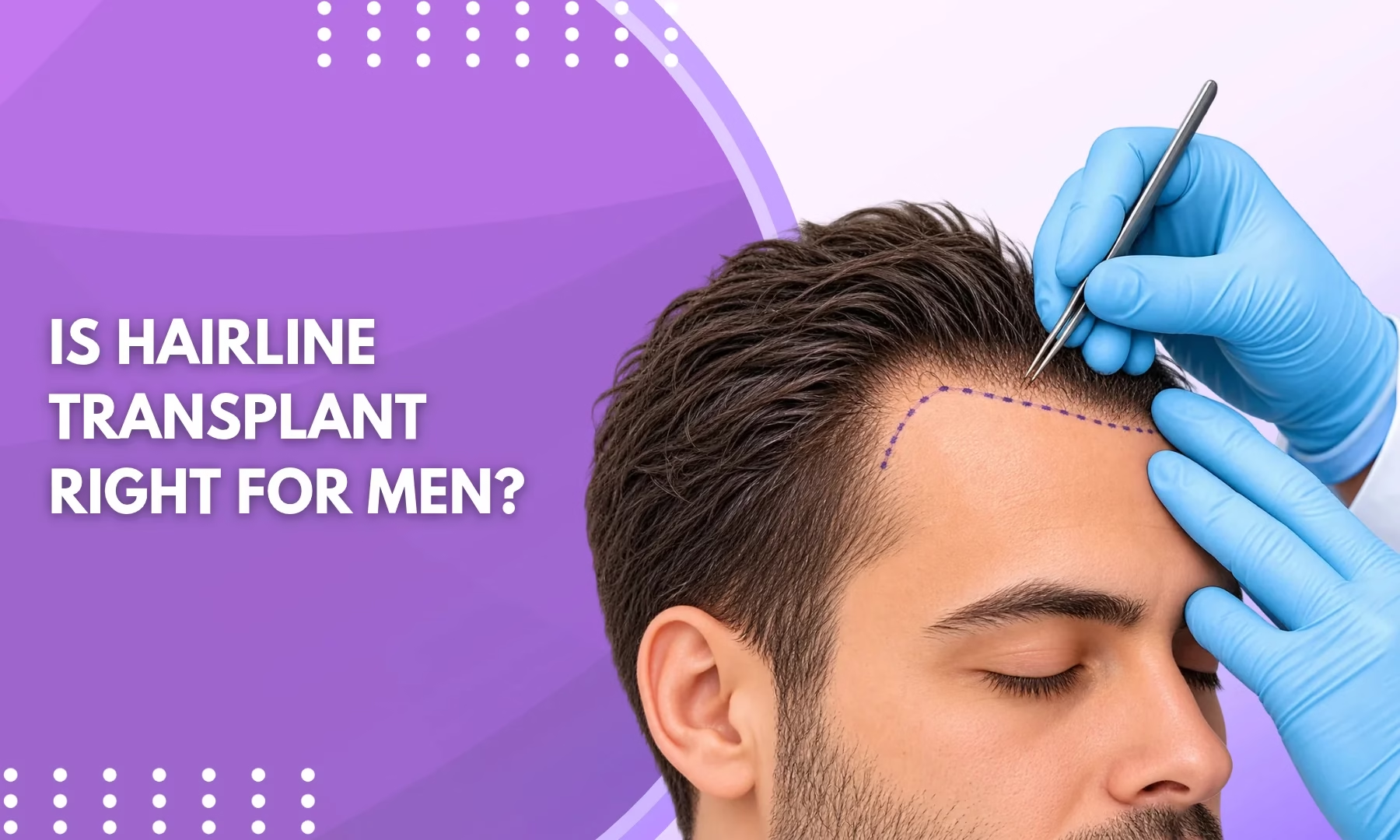
If a man has a definite pattern of baldness and sufficient dense hair on the back and sides of his head, a hairline transplant is a great option. Grafts continue to develop after being translated. However, some men are not good candidates and it is important to understand why before making a decision.
According to Dr. Viral Desai, hairline transplant surgeon in Mumbai, “Two things decide most cases: whether the loss has stabilized and how dense the donor area is. If both check out, the new hairline should still look right years from now. If one doesn’t, medical treatment and a clearer read on how the loss is progressing usually come first.”
Curious if a hairline transplant is right for the type of hair loss you have?
Who Is an Ideal Candidate for a Hairline Transplant?
There are four things that surgeons check first, and the first two are the most important.
Stable pattern of loss: Planning only works once the pattern has settled. What looks great on a 22 year old who is losing hair may not look great on a 35 year old.
Good donor hair: All grafts are taken from the back and sides, so the hair needs to be thick, dense and DHT resistant. When it’s thin or sparse the possibilities reduce.
Realistic goals: A mature hairline looks natural and is well suited to the person’s age. Attempting to recapture the teen years doesn’t always work.
General health: Scalp conditions and other health issues that might affect healing and graft survival are sorted out prior to surgery.
A scalp assessment is what determines whether a hairline transplant for men is advisable.
What Can a Hairline Transplant Do for Men?
It’s a targeted procedure, so it’s good at some things and not so good at others.
Restores the front edge: It restores the front hairline and the temple corners. In men, those tend to recede first.
Growing hair: Grafts are taken from the back and sides where hair is not sensitive to DHT, and transplanted hair will continue to grow for life.
Hairline grafts: This is typically a smaller session, and the number of grafts can range from 1,000 to 2,500, depending on the extent of the receded hairline.
Native hair remains vulnerable: A new hairline will not prevent further hair loss in surrounding areas. That is usually managed with Finasteride and/or Minoxidil.
For more on symmetry, shape and placement, read our blog on designing a new hairline with a hair transplant.
What Are the Limits and Risks to Weigh First?
Don’t confuse a good option with a risk-free one. There are some restrictions you need to be aware of before making a decision.
Progressive loss: If the hairline is set too low and the hair behind it keeps thinning, the transplanted area can end up looking like an isolated patch of hair.
Limit in hair supply: Donor hair will not regenerate once used. Grafts used for the hairline will not be available for future crown restoration.
Diffuse or unstable thinning: When thinning is happening throughout the scalp, or is rapidly progressing, surgery is usually postponed until the hair loss has stabilized.
Temporary side effects: Swelling, scabbing, and shedding of the new hairs are common in the first few weeks and clear up without treatment.
Our piece on the right age for a hair transplant explains why a stable pattern matters more than a particular birthday.
Wondering whether your hair transplant may require more than one day?
Frequently Asked Questions
Is a hairline transplant permanent for men?
Transplanted hair stays in place, but other hair nearby may keep falling out.
Who’s eligible for a hairline transplant?
Men with a stable pattern, dense donor hair, and realistic goals.
Is it possible to have a hairline transplant as a younger man?
Often too early. Surgeons typically wait to see a clearer hair loss pattern.
How many grafts does a hairline need?
Commonly 1,000 to 2,500, depending on how far the hairline has receded.
References
- Revision of the Unfavorable Result in Hair Transplantation: https://pmc.ncbi.nlm.nih.gov/articles/PMC2884704/
- Age-Related Progression of Androgenetic Alopecia: Statistical Analysis of 5372 Japanese Men: https://pmc.ncbi.nlm.nih.gov/articles/PMC11474219/
Disclaimer: This blog is for educational purposes only, not medical advice. Consult a surgeon before deciding on treatment.