
“If you are noticing more hair than usual on your pillow, in the shower or on your hairbrush, the first step is to avoid panic and identify what is causing the shedding. Dr. Viral Desai, a cosmetic and plastic surgeon in Mumbai with expertise in hair restoration, explains that while you cannot reverse hair loss overnight, you can take practical steps immediately to reduce preventable hair breakage, avoid further damage and identify the right treatment. The key is to understand whether your hair is shedding from the roots or breaking along the length, because both require different approaches.”
While people can get anxious about experiencing hair loss, it is often tempting to try a new range of shampoos, oils, masks and/or supplements in an attempt to quickly combat it. However, not all of these are suitable and could even cause a delay in properly managing your hair loss.
The good news is that some changes can help from today. You can reduce mechanical damage, improve your hair care routine and avoid habits that put unnecessary stress on your follicles.
Here is what you should do.
1. Start With These Steps to Reduce Hair Fall Today
Let’s start with the changes you can make right away.
If your hair is falling excessively, follow these simple steps:
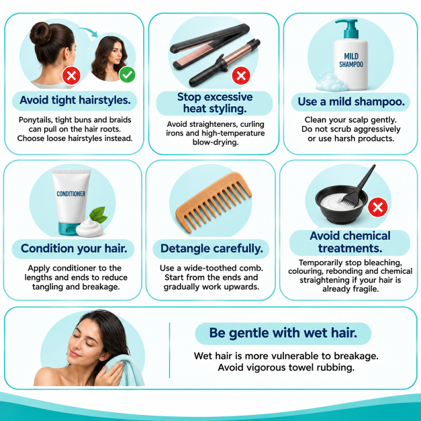
- Avoid tight hairstyles: Ponytails, tight buns and braids can pull on the hair roots. Choose loose hairstyles instead.
- Stop excessive heat styling: Avoid straighteners, curling irons and high-temperature blow-drying.
- Use a mild shampoo: Clean your scalp gently. Do not scrub aggressively or use harsh products.
- Condition your hair: Apply conditioner to the lengths and ends to reduce tangling and breakage.
- Detangle carefully: Use a wide-toothed comb. Start from the ends and gradually work upwards.
- Avoid chemical treatments: Temporarily stop bleaching, colouring, rebonding and chemical straightening if your hair is already fragile.
- Be gentle with wet hair: Wet hair is more vulnerable to breakage. Avoid vigorous towel rubbing.
These measures may reduce avoidable hair breakage. However, they will not immediately stop shedding caused by hormonal changes, nutritional deficiencies or medical conditions.
2. How to Stop Hair Fall Immediately at Home
You do not need an expensive hair-care routine. Focus on protecting your existing hair and maintaining a healthy scalp.
Follow these practical measures:
- Use a gentle hair-washing routine: Wash your hair according to your scalp’s oiliness and needs. There is no medical reason to avoid shampooing simply because you have hair fall. Washing removes loose hairs that have already completed their growth cycle.
- Avoid aggressive oil massages: If you enjoy oiling your hair, use a small quantity and apply it gently. Avoid vigorous rubbing, pulling or scratching. Oil may improve hair manageability, but it is not a proven treatment for genetic hair loss or other medical causes of shedding.
Ensure good nutrition – Hair requires sufficient protein and iron, as well as other key nutrients. Include foods such as:
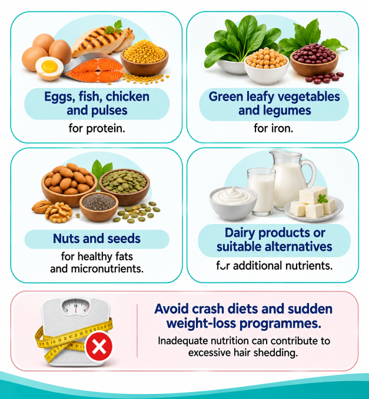
3. Understand Why Your Hair Is Falling Before Choosing a Treatment
Unfortunately, there is no ‘one-size-fits-all’ method of treating hair loss.
Generally, losing between 50-100 strands per day is deemed to be within the normal range. However, it is advisable to investigate if there is noticeable hair thinning, patchy hair loss and/or ongoing increased hair loss.
Some common reasons include:
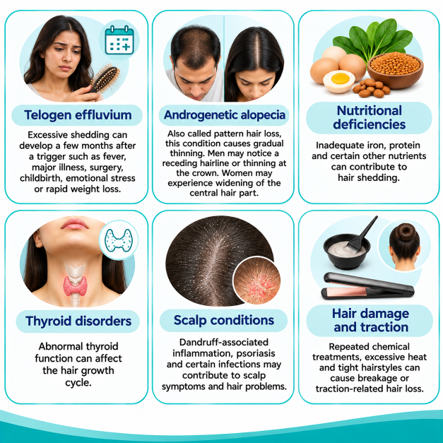
- Telogen effluvium: Excessive shedding can develop a few months after a trigger such as fever, major illness, surgery, childbirth, emotional stress or rapid weight loss.
- Androgenetic alopecia: Also called pattern hair loss, this condition causes gradual thinning. Men may notice a receding hairline or thinning at the crown. Women may experience widening of the central hair part.
- Nutritional deficiencies: Inadequate iron, protein and certain other nutrients can contribute to hair shedding.
- Thyroid disorders: Abnormal thyroid function can affect the hair growth cycle.
- Scalp conditions: Dandruff-associated inflammation, psoriasis and certain infections may contribute to scalp symptoms and hair problems.
- Hair damage and traction: Repeated chemical treatments, excessive heat and tight hairstyles can cause breakage or traction-related hair loss.
Identifying the underlying cause is more useful than repeatedly changing hair products.
4. Can You Use Minoxidil to Stop Hair Loss Immediately?
This is often a query, especially when people begin to observe their hair thinning.
Minoxidil is an established treatment for certain types of hair loss, especially androgenetic alopecia. However, it is not an instant solution.
Depending on the formulation and individual circumstances, it may take around 6–12 months to see noticeable improvement.
Key points:
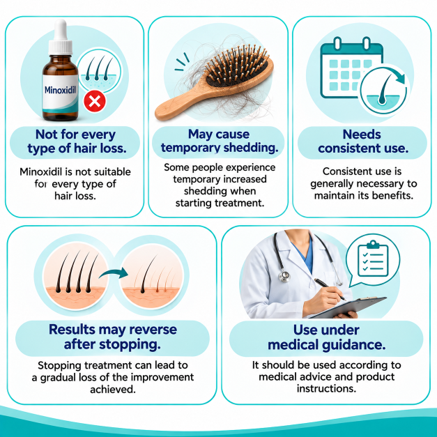
- Minoxidil is not suitable for every type of hair loss.
- Some people experience temporary increased shedding when starting treatment.
- Consistent use is generally necessary to maintain its benefits.
- Stopping treatment can lead to a gradual loss of the improvement achieved.
- It should be used according to medical advice and product instructions.
Never commence minoxidil solely because you are experiencing hair loss. Particularly, if your hair loss is both severe and/or unexplained, it is important that you first investigate likely causes.
5. What Should You Avoid If You Want to Control Hair Fall Immediately?
As previously mentioned, knowing what not to do can be as significant as knowing what to do.
Avoid the following widely advertised quick fixes:
- Excessive oiling: More oil does not mean more hair growth.
- Unverified hair-growth supplements: Supplements are useful when a deficiency or specific nutritional need is identified. Excessive intake of certain nutrients can actually worsen hair loss.
- Harsh home remedies: Applying undiluted essential oils, onion juice or irritating ingredients can cause scalp irritation.
- Frequent shampoo changes: Switching products repeatedly will not address an underlying medical cause.
- Self-prescribed medication: Avoid starting prescription medicines or combining hair-loss treatments without medical guidance.
- Stopping prescribed medicines abruptly: If you suspect a medication is contributing to hair loss, discuss it with your doctor before making changes.
Be particularly cautious of products promising guaranteed regrowth or an immediate end to hair fall.
6. When Should You Consult a Hair Specialist?
Do not wait until your scalp becomes visibly thin.
See a medical professional if you:
- Sudden or excessive hair shedding.
- Receding hairline or progressive thinning at the crown.
- Widening of the central hair part.
- Round or irregular bald patches.
- Scalp redness, itching, scaling, pain or swelling.
- Hair loss accompanied by fatigue, unexplained weight changes or other symptoms.
- Persistent shedding following an illness, surgery or childbirth.
An expert may carry out a scalp inspection, analyse your hair thickness and investigate your medical history. Further tests may also be advised to check for iron and/or thyroid issues and/or other possible causes of your hair loss. In some situations, a scalp inspection and/or biopsy may also be required.
Early assessment is particularly important when there is suspected scarring hair loss, as delayed treatment can result in permanent follicular damage.
7. What Are the Medical Treatment Options for Hair Loss?
Once the cause is established, treatment can be planned accordingly.
Depending on the diagnosis, options may include:
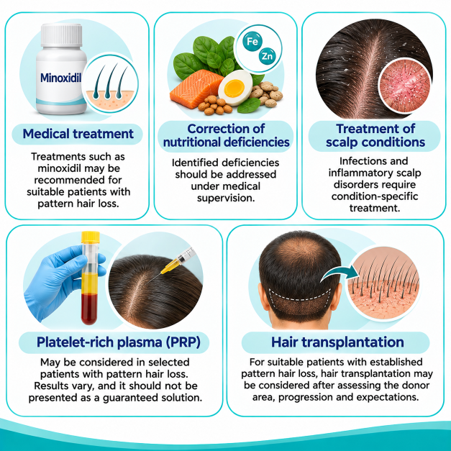
- Medical treatment: Treatments such as minoxidil may be recommended for suitable patients with pattern hair loss.
- Correction of nutritional deficiencies: Identified deficiencies should be addressed under medical supervision.
- Treatment of scalp conditions: Infections and inflammatory scalp disorders require condition-specific treatment.
- Platelet-rich plasma (PRP): May be considered in selected patients with pattern hair loss. Results vary, and it should not be presented as a guaranteed solution.
- Hair transplantation: For suitable patients with established pattern hair loss, hair transplantation may be considered after assessing the donor area, progression and expectations.
Following a personalised analysis, a range of hair restoration therapies can be discussed at Dr Viral Desai’s clinic. Again, this will be influenced by the diagnosis together with an appreciation of individual suitability and expected advantages and limitations of different treatment options.
It is important to understand that not everyone needs a procedure. Many people can be managed with medical treatment and appropriate hair-care changes.
FAQs
1. How to stop hair fall immediately?
While you cannot immediately halt hair loss, you can take action to limit preventable hair breakage. Avoid tight hairstyles, minimise exposure to high temperatures and steer clear of harsh chemicals. Additionally, ensure that you comb your hair gently. Persistent and/or sudden hair loss should be evaluated medically.
2. How to stop hair loss immediately at home?
Use a mild shampoo. Then, condition and gently detangle your hair. Avoid unnecessary exposure to high temperatures and chemicals. Ensure good nutrition and avoid restrictive dieting. Although these actions aid hair health, they will not necessarily overcome all causes of hair loss.
3. How to stop hair from falling out immediately after washing?
Do not stop washing your hair out of fear. Washing often releases loose hairs that have already entered the shedding phase. Use a gentle shampoo, avoid vigorous scrubbing and detangle carefully after washing.
4. Does oiling stop hair fall?
While hair oil can be beneficial in helping to both moisturise and make hair easier to manage, it is not a treatment for genetic hair loss, hair loss due to thyroid issues and/or poor nutrition. Gently apply oils and discontinue their use if they irritate your skin.
5. Which vitamin is best for hair fall?
There is no single vitamin that works for everyone. Iron, vitamin D, zinc and/or vitamin B12 and other vitamins and minerals may be significant for some individuals. However, the appropriateness of supplementing will depend on a person’s diet and, where appropriate, investigations.
6. How long does it take to control hair fall?
This will vary depending on the cause. Often, modifying damaging hair-care habits can assist to limit hair breakage. Usually, telogen effluvium will also improve once the trigger has been addressed; however, this can still take several months. Typically, pattern hair loss necessitates continuing treatment and monitoring.
Final Word
If you are searching for how to stop hair fall immediately, remember that the right approach is not about trying every available remedy. It is about identifying the cause and protecting your hair from further damage.
Suitable initial actions comprise employing mild hair care, ensuring good nutrition and seeking medical advice. If your hair fall is persistent, sudden and/or accompanied by visible thinning then again, it is advisable to seek advice from an expert rather than solely attempting self-treatments.
Disclaimer: The information in this article is provided for general informational purposes only. It should not be taken as a replacement for professional medical advice, diagnosis or treatment.