

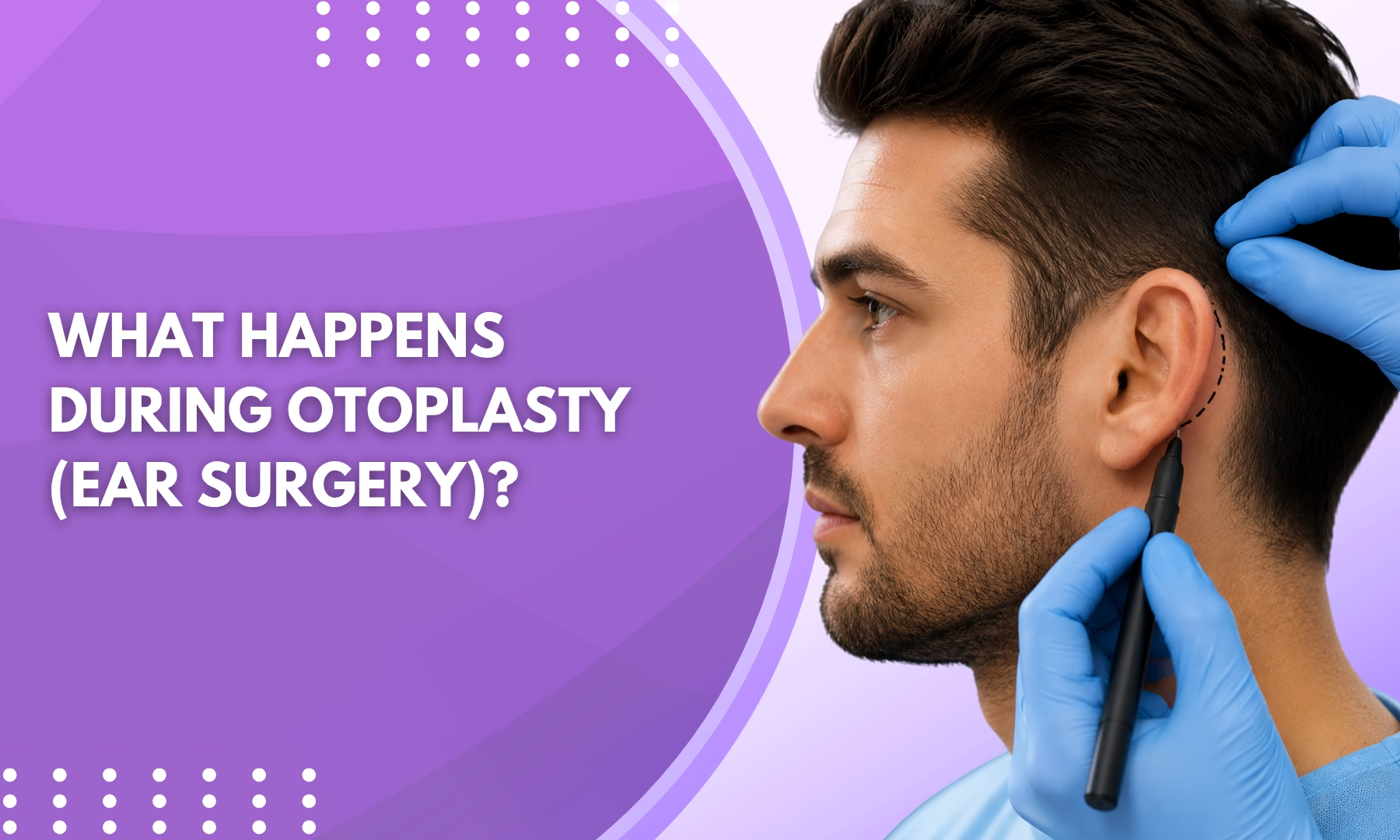
Most otoplasty procedures wrap up in 2 to 3 hours as day surgery, reshaping or repositioning the ear cartilage rather than removing it. Patients go home the same day. Anesthesia depends on the case, local with sedation for most adults, general for most children. And because the cartilage framework stays largely intact, the ear keeps its natural structure even after correction.
According to Dr. Viral Desai, otoplasty surgeon in Mumbai, “Patients often picture something far more invasive than it actually is. We’re working with the ear’s own cartilage here, not against it. Reshape it, reposition it, that’s really the whole idea. Part of why the results tend to look natural once the swelling settles.”
Curious whether otoplasty is right for you?
What Happens Step by Step During the Procedure?
The sequence stays fairly consistent whether the goal is pinning back prominent ears or correcting a deformity. Dr. Viral Desai, who performs otoplasty in Mumbai, explains what happens at each stage.
Consultation and marking: The surgeon examines the ear’s anatomy and marks out what’s planned. That one step decides both how much cartilage gets reshaped and exactly where the incisions land.
Anesthesia: Depends heavily on age. Adults usually get local anesthesia with sedation, children need general anesthesia more often than not. Either way, the point is a controlled and comfortable procedure start to finish.
Cartilage reshaping: An incision behind the ear gives access to the cartilage, which gets scored or sutured into its new shape. Not particularly dramatic, as surgeries go.
Closing and dressing: Fine sutures close things up behind the ear so scarring stays hidden. A headband or dressing then holds everything in its new position while that first stretch of healing kicks in.
That’s roughly what a session looks like from start to finish, adjusted case by case for adult versus pediatric patients.
What Does Recovery Look Like After Otoplasty?
Results are visible immediately. Full healing takes longer than most people assume, though.
First few days: Some swelling and mild discomfort are entirely normal, generally manageable with prescribed medication. Light activity is typically back on the table within days.
Headband wear: Stays on for the first week or two, with night wear often continuing for several weeks after that. Mainly to stop the ears from shifting while they settle into place.
Sensation changes: Some numbness or tingling around the ear shows up early on too. Nothing unusual, it resolves as the nerves recover over the following weeks.
Final results: Swelling keeps easing over several weeks, and the true shape usually shows itself somewhere between one and three months out.
Otoplasty is just one piece of the bigger picture, and our overview on the different types of plastic surgery procedures is worth a look if you’re weighing it alongside other facial options.
Why Choose Dr. Viral Desai for Otoplasty?
Dr. Viral Desai has treated both adult and pediatric ear concerns for years as a board-certified cosmetic and plastic surgeon. Every case begins with a proper anatomical assessment rather than a one-size-fits-all approach, because no two ears actually need the same correction.
Incision placement and cartilage handling both get real attention, aimed at results that look natural and stay symmetrical. Call +91 98338 77001 to book your consultation.
Take the next step and get your questions answered.
Frequently Asked Questions
How long does otoplasty surgery take?
Usually 2 to 3 hours, done as day surgery.
Is otoplasty painful?
Some mild discomfort, easily handled with prescribed medication.
At what age can someone get otoplasty?
Age 5 and up, once the ears are fully developed.
How long until final results are visible?
Give it one to three months, once the swelling’s gone down.
Disclaimer: This article is for educational purposes only. Surgical outcomes vary by individual anatomy, so an in-person evaluation is necessary before undergoing otoplasty.