

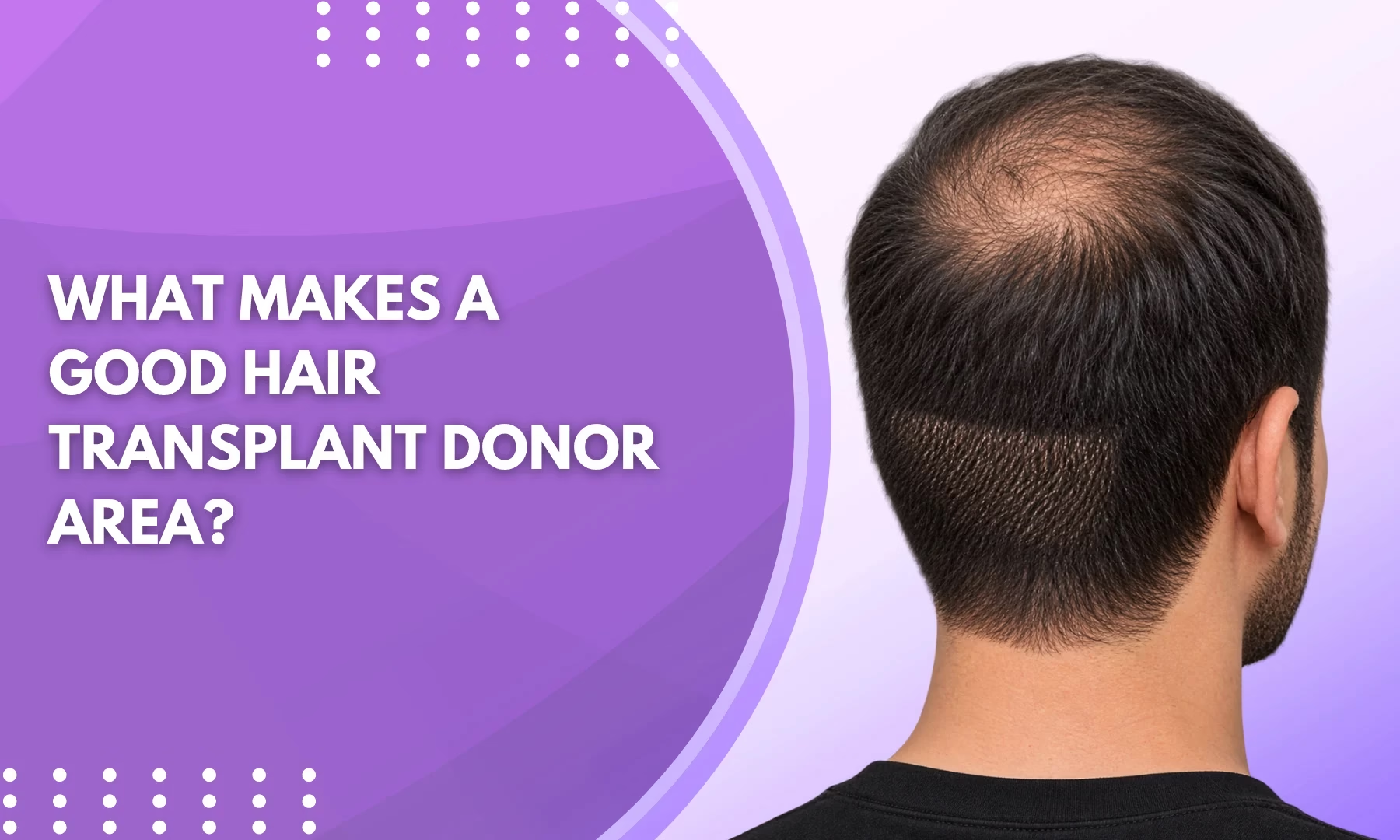
A good hair transplant donor area has thick and dense follicles that resist DHT. That’s the hormone behind most hair loss. The hair also needs to be dense enough to allow grafts to be harvested without leaving the donor area looking visibly thinner. The back and sides of the scalp usually qualify since they tend to keep their resistance to balding for life.
According to Dr. Viral Desai, hair transplant surgeon in Mumbai, “Patients assume more hair automatically means a better donor area. But density is only part of it. What matters is whether that hair stays resistant to balding for decades since grafts carry their donor site’s genetics wherever they’re placed.”
Wondering if your donor area can support the results you’re after?
What Determines If a Donor Area Is Good Enough?
Several factors get weighed together to judge donor area quality. None of them work in isolation.
Hair density: The occipital scalp typically averages 65 to 85 follicular units per cm². Most surgeons use this as a reference point when comparing other zones for extraction.
DHT resistance: Follicles in the back and sides of the scalp resist DHT-driven miniaturization genetically. Hair at the crown or temples doesn’t get that same protection and stays vulnerable to progressive thinning.
Scalp laxity and thickness: How well the scalp stretches and how thick the tissue is both affect how comfortably grafts get harvested. This matters especially for strip-based techniques.
Hair diameter and texture: Thicker hair shafts give better visual coverage per graft. Hair diameter actually ranks among the strongest predictors of how full a result ends up looking.
A hair donor assessment typically uses tools like trichoscopy or a digital trichometer to measure these factors accurately before any extraction plan gets finalized.
How Do Surgeons Protect the Donor Area From Overharvesting?
A good donor area can turn into a problem area fast if it isn’t managed carefully during planning.
Calculating the safe zone: Surgeons estimate the total permanent donor area (often around 200 square centimeters) to work out how many grafts can realistically come out without compromising the region.
Avoiding the borderline zone: Hair just outside the confirmed permanent zone can look stable at the time of surgery but may miniaturize later. That’s why experienced surgeons stay conservative with extraction boundaries.
Spacing extraction sites: In FUE follicles get harvested with deliberate spacing across the donor area rather than concentrated in one section. This helps prevent a visibly patchy or thinned look.
Ruling out other causes of thinning: Conditions like alopecia areata incognita can mimic patterned hair loss and quietly affect donor site quality. A broader scalp evaluation matters beyond just measuring density.
Our piece on how many grafts are needed for a full hair transplant connects donor area capacity directly to how graft counts actually get calculated.
Why Choose Dr. Viral Desai for Donor Area Assessment?
Dr. Viral Desai brings over 20 years of experience in hair restoration with more than 10,000 successful hair transplant procedures performed across techniques that all depend on accurate donor area evaluation.
Every case starts with a detailed look at density resistance and scalp characteristics rather than assuming a patient’s donor supply automatically fits a standard plan. Call +91 98338 77001 to book your consultation.
Curious how your own donor area measures up?
Frequently Asked Questions
What makes hair in the donor area resistant to balding?
Genetic DHT resistance, typically found in the back and sides of the scalp.
Can a thin donor area still support a hair transplant?
Yes, though it limits graft count and requires more careful planning.
How is donor area density measured?
Tools like trichoscopy or a digital trichometer assess density accurately.
Can overharvesting damage the donor area?
Yes, extracting too many grafts can leave the donor area visibly thinner.
Disclaimer: This blog is for educational purposes only. Donor area suitability varies by individual, so an in-person scalp evaluation is necessary before planning a hair transplant.