


Six months after surgery, a lot of patients start checking the mirror a little too often, comparing what they see now with what they were promised before the procedure. It’s a fair instinct, but it’s also where most of the disappointment around hair transplant surgery in Mumbai comes from. Hair simply doesn’t grow on a schedule that matches our patience. What you see at six months and what you see at a year can look like two completely different results, even though nothing went wrong in between. Here’s what actually changes across that stretch, and why the wait genuinely matters.
Understanding the Hair Transplant Growth Timeline
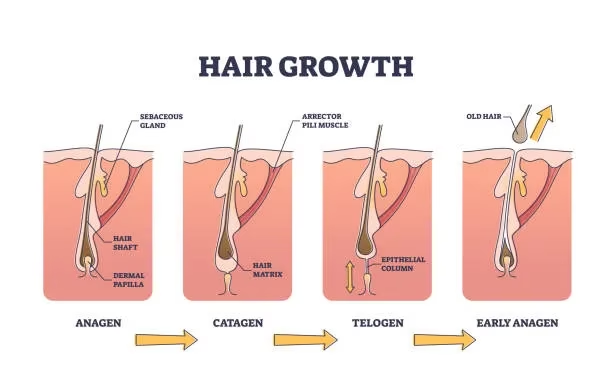
Grafted hair doesn’t grow the moment it’s placed. It goes through a fairly predictable sequence, and knowing it in advance saves a lot of unnecessary worry.
The transplanted hair starts falling off within the initial two to four weeks. This causes a great shock to almost everybody in their very first time of experiencing it. However, it is quite normal and does not indicate failure of the graft at all. Hair falls off, whereas the follicle remains implanted beneath the skin. Next comes the resting period that can last up to a few months, and during which the appearance of the scalp remains almost unchanged from how it looked post-operation.
Real growth usually starts somewhere between the third and fourth month, and from there it builds gradually rather than all at once. A hair transplant surgeon in Mumbai will typically walk you through this exact timeline during your consultation, since managing expectations early tends to matter as much as the surgery itself. For a fuller breakdown month by month, it’s worth looking at a proper hair transplant results timeline.
What Can You Expect at 6 Months After a Hair Transplant?
Six months is right in the middle of the process, not near the end of it, even though it can feel like a long time has already passed. A few things are typically true at this stage:
- New hair is visible, but it’s often thinner and finer in texture than it will eventually become
- Density is usually somewhere around 30 to 50 percent of the final result, which can look underwhelming compared to expectations
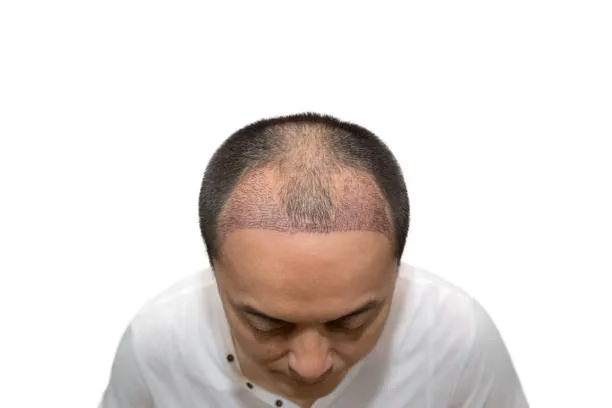
- Hair colour may appear lighter or less pigmented than the surrounding native hair for a while longer
- The hairline generally looks more defined than it did earlier, even if overall fullness still has a way to go
- Some patients notice patchy areas where growth is progressing unevenly, which usually evens out with more time
This is the stage where patience gets tested the most, mainly because six months feels like it should be enough time, when biologically it usually isn’t.
What Can You Expect at 1 Year After a Hair Transplant?

• Hair texture and colour usually match the surrounding native hair closely by now
• The hairline looks fully settled, with natural growth direction and pattern
• Styling becomes far easier, since there’s enough length and thickness to work with properly
• Any patchiness from the six month mark has generally filled in on its own
A small number of patients continue seeing subtle improvement even past the one year point, particularly in overall thickness, but for most people this is where the hair transplant in Mumbai they had done is considered complete.
Hair Transplant at 6 Months vs 1 Year: Key Differences
| Aspect | At 6 Months | At 1 Year |
| Density | Roughly 30 to 50 percent of final result | 85 to 100 percent of final result |
| Texture | Often fine or wispy | Noticeably thicker, closer to natural |
| Colour | May still look lighter or less pigmented | Usually matches native hair fully |
| Hairline definition | Reasonably clear but not fully mature | Fully settled and natural looking |
| Styling flexibility | Limited, hair is shorter and thinner | Much easier with fuller length and volume |
| Overall confidence in result | Still uncertain for most patients | Usually where patients feel satisfied |
Factors That Influence Hair Transplant Results
• Surgical technique: both FUE hair transplant and FUT hair transplant methods work well, but the specific technique, graft placement, and density planning affect how full things look at each stage
• Age: younger patients tend to see faster follicle activity than older patients
• Donor area quality: denser, healthier donor zones generally translate into better transplanted results
• Aftercare compliance: how closely instructions were followed in the early weeks after surgery makes a measurable difference
• General health: thyroid issues, iron deficiency, and chronic stress can all slow hair growth generally, transplanted or not
• Genetics: this decides a lot of the outcome before surgery even happens, which is why realistic expectations set during consultation matter so much
How Can You Support Hair Growth After a Transplant?

While the biology largely runs on its own schedule, there’s a fair bit you can do to support it along the way.
- Eat a diet with enough protein, iron, and zinc, since follicles need real nutritional support to grow properly
- Avoid smoking, or cut back significantly, since it restricts blood flow to the scalp and slows healing
- Follow your surgeon’s aftercare instructions closely, especially in the first few weeks after the procedure
- Manage stress where possible, since chronic stress is a known driver of poor hair growth generally
- Ask your surgeon about supportive treatments such as PRP hair treatment if growth seems slower than expected
- Be patient through the resting phase specifically, since this is the stage most people give up hope too early
None of these will speed up the biology dramatically, but together they give your transplant the best possible conditions to succeed within its natural timeline.
Conclusion
Comparing six month results to a one year result isn’t really a fair fight, and it was never meant to be. The transplant is still mid process at six months, and judging it as though it’s finished usually just leads to unnecessary worry. Give it the full year, follow the aftercare properly, and the difference tends to speak for itself.
If you’re somewhere in that stretch right now and want an honest opinion on how things are tracking, Dr Viral Desai and his team at CPLSS Mumbai regularly review patients at exactly this stage. Whether you’re considering hair transplant surgery in Mumbai for the first time or trying to make sense of the results from a procedure you’ve already had, a proper hair transplant in Mumbai consultation is the fastest way to get a clear answer instead of guessing from the mirror.
Frequently Asked Questions
1. Is 6 months too early to judge hair transplant results?
Yes. Most patients are only at 30 to 50 percent of their final density at this point, so it’s too early to judge the outcome fairly.
2. When will I see the final results of my hair transplant?
Final results are usually visible between twelve and fifteen months after the procedure, once density and texture have fully settled.
3. Why does transplanted hair look thin at 6 months?
Hair often grows finer and lighter before thickening and darkening over the following months, so thinness at this stage is expected.
4. Does hair transplant growth continue after 1 year?
For most patients, growth is essentially complete by one year, though some notice slight additional thickening a few months beyond that.
5. What if there's no visible growth by 6 months?
Some patients are simply slower responders, but it’s worth getting a scalp check to rule out any issue, especially if there’s been zero change since month four.
6. Can lifestyle habits affect hair transplant growth speed?
Yes. Diet, smoking, stress, and how well aftercare instructions were followed can all influence how quickly and fully transplanted hair grows in.