

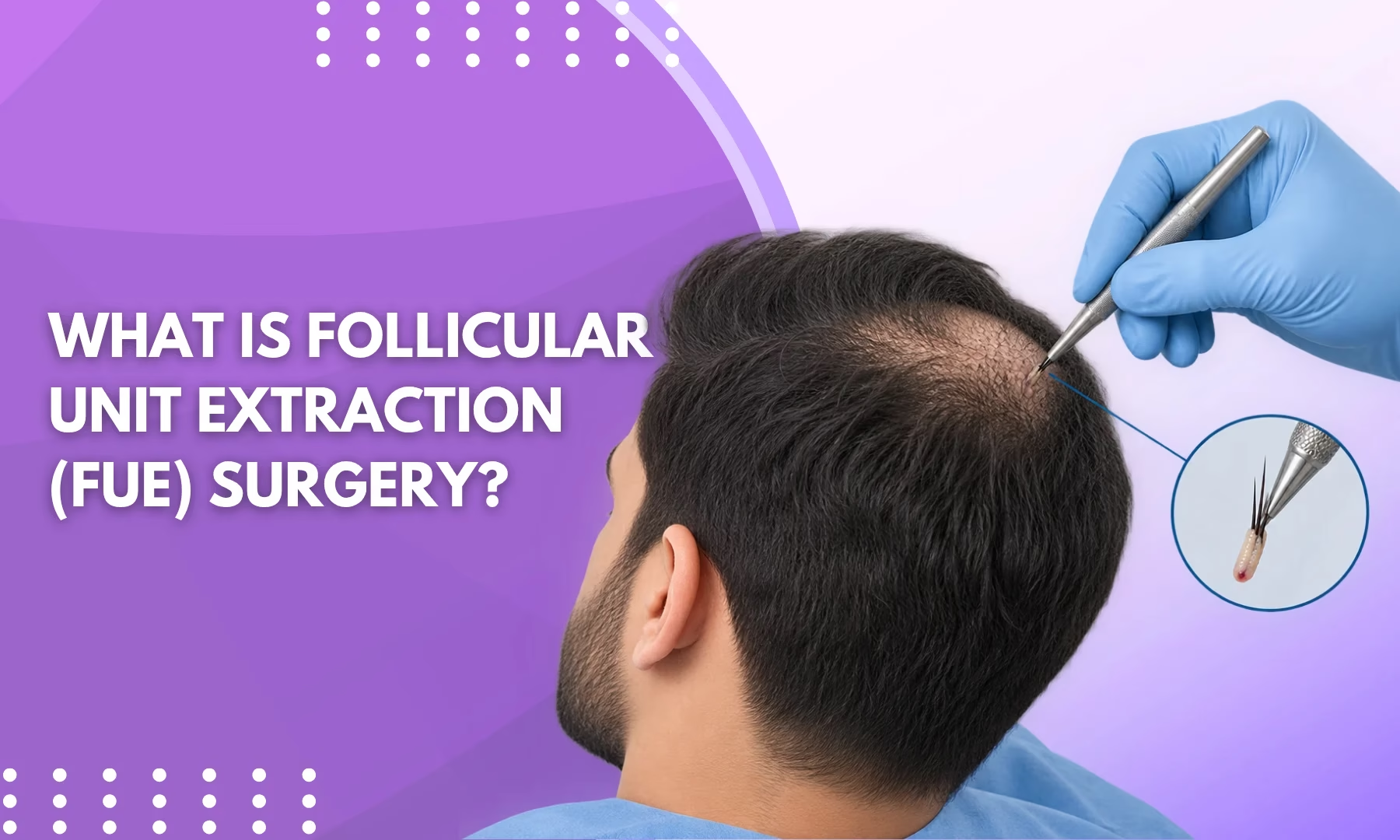
FUE is a widely used hair transplant technique that removes individual follicles one at a time from a donor area and relocates them into thinning or bald spots. Unlike older strip-based methods, it avoids a linear scar entirely, since each follicle comes out through a tiny punch rather than a surgically excised strip.
According to Dr. Viral Desai, fue hair transplant surgeon in Mumbai, “FUE removed the old trade-off patients had to accept, a visible scar in exchange for fuller hair. Extract follicles individually, and the donor area heals with marks so small most patients can wear their hair short again without worry.”
Curious whether FUE is the right technique for your hair loss?
How Does FUE Hair Transplant Surgery Actually Work?
The procedure follows a fairly consistent sequence, refined over decades of clinical use.
Donor site preparation: The donor area, usually the back or sides of the scalp, gets trimmed short and prepped under local anesthesia before extraction starts.
Follicle extraction: A small circular punch, generally under 1mm across, extracts individual follicular units one by one, leaving tiny wounds that heal without stitches.
Recipient site creation: Small incisions are made in the balding or thinning area, angled to match how hair naturally grows in that spot.
Graft placement: Extracted follicles get placed into those recipient sites, with density and spacing planned to look as natural as the surrounding hair.
A fue hair transplant consultation is where donor density, extraction planning, and expected graft yield actually get worked out for your case.
What Are the Benefits and Limitations of FUE?
FUE has become the go-to hair transplant technique for good reason. That said, it isn’t without trade-offs.
No linear scarring: Since follicles come out individually rather than as a strip, FUE leaves only tiny, scattered marks that barely show even with short hair.
Faster recovery: Recovery tends to be quicker and more comfortable than strip-based methods, since there’s no large surgical wound involved.
A longer, more technical procedure: FUE takes more time and skill than older techniques. Surgeons need real experience to do it well.
Complication rates stay low: Large clinical series put overall complication rates somewhere between 1.2% and 4.7%, with most issues being mild and short-lived, like temporary swelling or shedding.
Our comparison of NHDT vs FUT vs FUE goes deeper into how FUE stacks up against other transplant methods.
Why Choose Dr. Viral Desai for FUE Hair Transplant?
Dr. Viral Desai brings over 20 years of experience in hair restoration, with more than 10,000 successful hair transplant procedures performed using FUE and related techniques.
Extraction planning here is built around donor density and long-term hairline design, not just filling in whatever’s visibly thinning. Call +91 98338 77001 to book your consultation.
Wondering if FUE is the right fit for your hair loss pattern?
Frequently Asked Questions
Does FUE leave a scar?
Only tiny, scattered marks that are barely visible, no linear scar.
How long does FUE recovery take?
Most patients return to normal activity within about a week.
Is FUE painful?
The procedure is performed under local anesthesia, keeping it largely pain-free.
How many grafts can be extracted in one FUE session?
Typically 2,000 to 3,000, with experienced surgeons safely reaching 4,000 in extended mega sessions.
Disclaimer: This article is for educational purposes only. Suitability for FUE depends on individual scalp and donor characteristics, so an in-person evaluation is necessary before undergoing the procedure.