

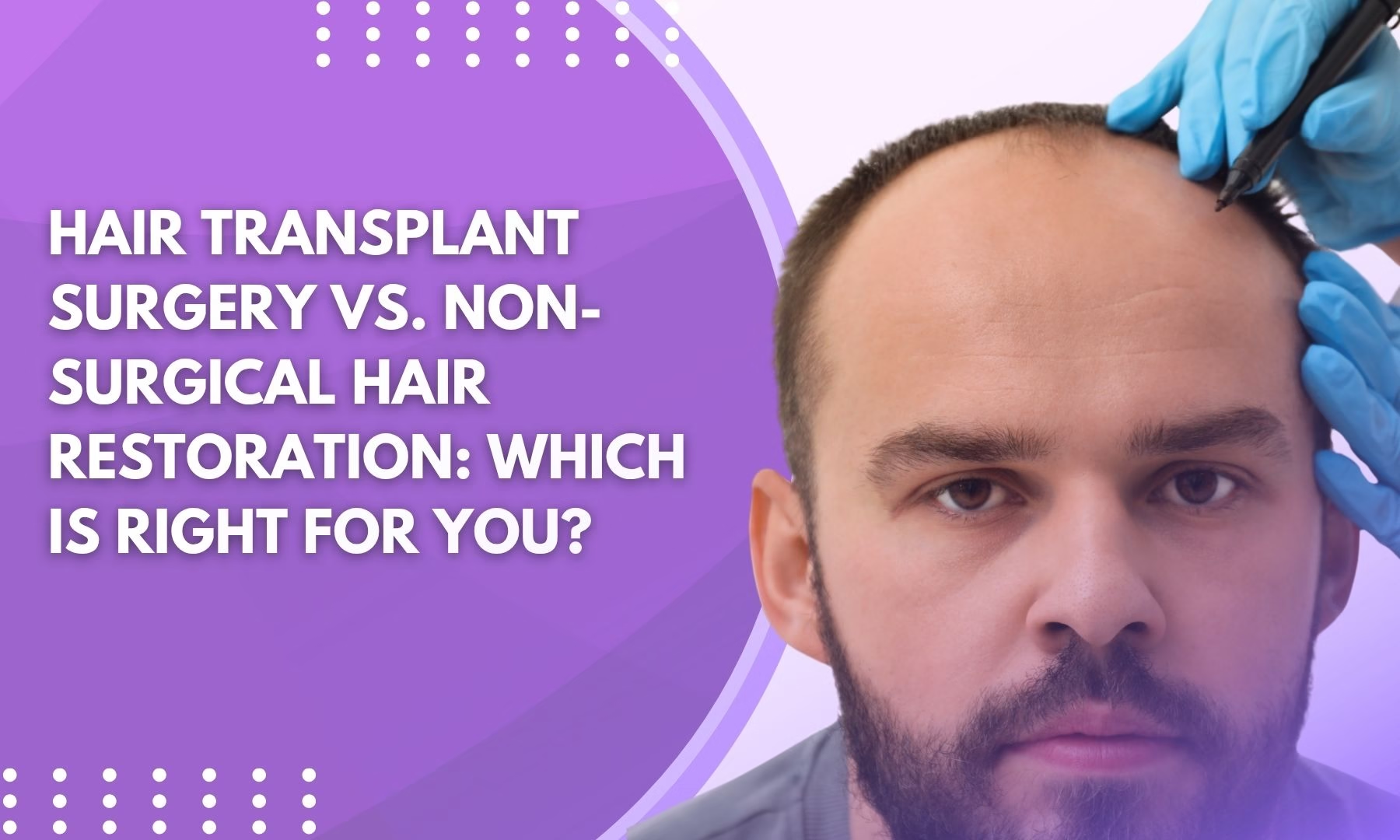
Hair loss doesn’t announce itself. It sneaks in. You notice extra strands on the pillow. Then the pillow becomes the drain. Then photos start bothering you because your hairline looks different in every one. By the time most people actually do something about it, they’ve already spent two years ignoring it.
When you finally decide to act, there’s a choice waiting. Surgery or something non-surgical. Permanent transplant or ongoing treatments. Bigger investment upfront or smaller bills spread across years. And the honest answer is that both work, but neither is right for everyone.
I asked Dr. Viral Desai, one of Mumbai’s most experienced cosmetic surgeons with 23+ years in hair restoration, how he actually helps patients decide. His answer was refreshingly simple: it comes down to how much hair you’ve already lost, how fast you want results, and what you’re willing to commit to long-term. This guide breaks it all down so you can walk into a consultation knowing what questions to ask.
What is Hair Transplant Surgery?
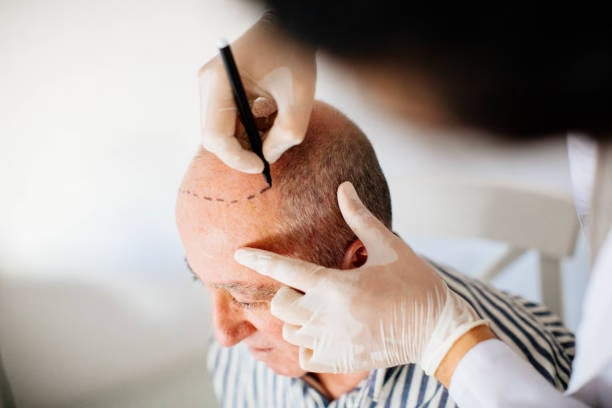
A hair transplant takes healthy hair follicles from the back of your head (the donor area, where hair is genetically programmed not to fall out) and moves them to bald or thinning patches. Once those follicles settle into their new home, they keep growing. Permanently. Because they carry the same genetic protection they had in the donor zone.
It’s a one-time surgical procedure. The transplanted hair doesn’t need ongoing treatments to stay put. You can cut it, style it, dye it, pull it into a man bun if that’s your thing. It behaves like regular hair because it is regular hair, just relocated.
At a good hair transplant clinic in Mumbai, the surgery is done under local anaesthesia. You’re awake throughout but the scalp is numb, so you feel nothing sharp. Most patients scroll their phone, watch Netflix, or chat with the team for the 4 to 8 hours it takes, depending on how many grafts you need.
Main techniques:
FUE (Follicular Unit Extraction)
Individual follicles extracted one by one. No strip, no linear scar, faster recovery. FUE hair transplant in Mumbai is the go-to for most patients today.
FUT (Follicular Unit Transplantation)
A strip of scalp is removed from the donor area and dissected into grafts. Leaves a fine linear scar. Still useful when large coverage is needed in one session. More about FUT hair transplant.
NHDT (Natural High Density Transplant)
A proprietary technique Dr. Desai brought to India in collaboration with Dr. Vekris’ Advanced Hair Clinics, Europe. Higher graft survival rates, no shaving required, single-day recovery. Exclusive to his Mumbai practice.
Results aren’t instant. New growth starts around month 3 to 4. Real thickness shows up around month 6. The full picture takes 12 months. If you want fast, this isn’t it. If you want permanent, it is.
What is Non-Surgical Hair Restoration?

Non-surgical hair restoration covers everything that stimulates existing follicles without cutting anything. No scalpel, no grafts, no surgery room. Just treatments designed to wake up dormant follicles, strengthen the ones you still have, and slow down the rate of loss.
These treatments work best when hair loss is early or moderate. If your follicles have already shut down completely and the scalp is slick bald, no injection or laser will bring them back. But if there’s life left in them, a lot of these options can genuinely push the needle. Dr. Viral Desai offers the full range at his Mumbai clinic.
Most common options:
PRP therapy
Platelets from your own blood are injected into the scalp to stimulate growth factors. PRP hair treatment is one of the most researched non-surgical options, with real results for early-stage thinning.
GFC (Growth Factor Concentrate)
Next-generation upgrade on PRP, with higher concentrations of growth factors. Faster results in many cases. Learn more about GFC hair treatment.
Exosome therapy
Cutting-edge cellular signals from stem cells that reactivate dormant follicles. Genuinely promising tech. See exosome for hair loss.
Mesotherapy
Micro-injections of vitamins, minerals, and amino acids directly into the scalp. Good for nutritional-deficiency-driven loss. Check mesotherapy for hair.
Laser therapy (LLLT)
Low-level light stimulates cellular energy in follicles. Painless and non-invasive. More on laser therapy for hair loss.
Cyclical medical therapy
Minoxidil, finasteride where appropriate, nutritional support, cycled to match the hair growth calendar. Learn about cyclical medicine for hair loss.
Not Sure Which Option Fits Your Hair Loss Stage?
Book a one-on-one consultation with Dr. Viral Desai. He’ll assess your donor area, hair loss pattern, and lifestyle to recommend the right path — surgical, non-surgical, or a combination.
Pros and Cons of Hair Transplant Surgery
Let’s be blunt. Surgery has obvious advantages but it’s not a free lunch. Here’s the honest breakdown.
The Good
- Once the transplanted hair settles, it stays. No ongoing sessions, no monthly maintenance.
- Natural-looking. A skilled hair transplant surgeon in Mumbai can rebuild a hairline that looks like it was always there. Nobody has to know.
- One-time cost. Yes, it’s higher upfront. But you pay once. Done.
- Works for advanced loss. Non-surgical options can’t rebuild what’s already gone. A transplant can.
- No daily pills or routines. Once you’ve healed, you just live your life. Wash, dry, style. Same as before you lost hair.
The Not-So-Good
- Higher upfront cost. Typical hair transplant cost in Mumbai ranges from ₹60,000 to ₹3,50,000 depending on graft count and technique. It’s an investment, not an impulse buy.
- Recovery time. Back to desk work in 3 to 5 days, but no gym, sun, or swimming for a few weeks.
- Shock loss phase. Transplanted hair falls out around weeks 3 to 6 before new growth kicks in. It’s normal, but it unsettles people who weren’t warned.
- Results take time. 12 months for the full picture. If you need hair before a wedding next month, surgery won’t get you there.
- You need a good donor area. If the back of your head is also thinning, there’s less to work with. Not everyone’s a surgical candidate.
Pros and Cons of Non-Surgical Hair Restoration
The Good
- No surgery, no scars. No recovery room, no bandages, no time off work. Walk in, get treated, walk out.
- Lower starting cost. Each session is a fraction of transplant cost. Easier on the wallet if you’re not ready for a big commitment.
- Great for early-stage loss. If you caught the thinning early, non-surgical treatments can slow or reverse it without ever needing surgery.
- Minimal downtime. Most clients walk out and return to their day. A bit of redness or tenderness for a few hours, then nothing.
- Combines with surgery. Not an either-or. Many patients use non-surgical treatments to maintain results after a transplant.
The Not-So-Good
- Not permanent. Stop the treatments and the improvement often slows or reverses. Maintenance is part of the deal.
- Multiple sessions needed. 4 to 6 sessions upfront, then regular maintenance. Costs add up over years.
- Limited for advanced loss. Shiny bald patches won’t respond. If the follicle is dead, no injection revives it.
- Results build slowly. Expect 3 to 6 months before real difference is visible. Patience required.
- Variable results. Some patients respond beautifully. Others, less so. It depends on the cause of loss and how advanced it is.
Which Option is Right for You?

Here’s how an experienced hair transplant doctor in Mumbai actually thinks about this decision. It’s not about which option is better in general. It’s about which one is better for your specific situation.
Choose Hair Transplant Surgery If…
- Your hair loss is moderate to advanced (Norwood 3 and above)
- You have a healthy donor area at the back and sides
- You want permanent results, not ongoing maintenance
- You can commit to 12 months for full results
- You’re financially ready for a one-time investment
- Previous non-surgical treatments haven’t worked enough
Choose Non-Surgical Hair Restoration If…
- Hair loss is early-stage (Norwood 1 to 2, or diffuse thinning)
- You’re not ready for surgery yet, emotionally or financially
- You want to preserve what you have and slow the loss
- You’re postpartum or recovering from a specific triggering event
- You’re okay with maintenance sessions over time
- You need results for a specific event but surgery isn’t realistic
A proper consultation matters more than any blog post can cover. Dr. Desai’s team at the best hair transplant clinic in Mumbai starts every consultation with a trichoscopy (scalp analysis at microscope level), blood work when needed, and a donor area assessment before recommending anything. No pressure, no pre-packaged pitch. Just what actually fits your case.
If you want to see potential outcomes before deciding, the clinic also offers a 3D hair transplant simulation — augmented reality tech that lets you visualise your hairline and density on your own face before any procedure.
Conclusion
Hair transplant surgery and non-surgical hair restoration aren’t rivals. They’re different tools for different stages of the same problem. Surgery wins on permanence and density. Non-surgical options win on cost, accessibility, and early intervention. The right choice depends entirely on where you are in your hair loss journey.
Whichever route you take, the surgeon matters more than the technique. Look for credentials. Look for reviews. Ask to see real before-and-after results. Mumbai has some of India’s best cosmetic surgeons, and Dr. Viral Desai has spent two decades earning his reputation with patients who drive across cities and fly across oceans for his work. Celebrity testimonials, published media coverage, and international training credentials back that up.
For hair restoration in Mumbai that genuinely fits your situation — not a generic package — book a consultation. Ask hard questions. Take notes. Then decide with your eyes open.