

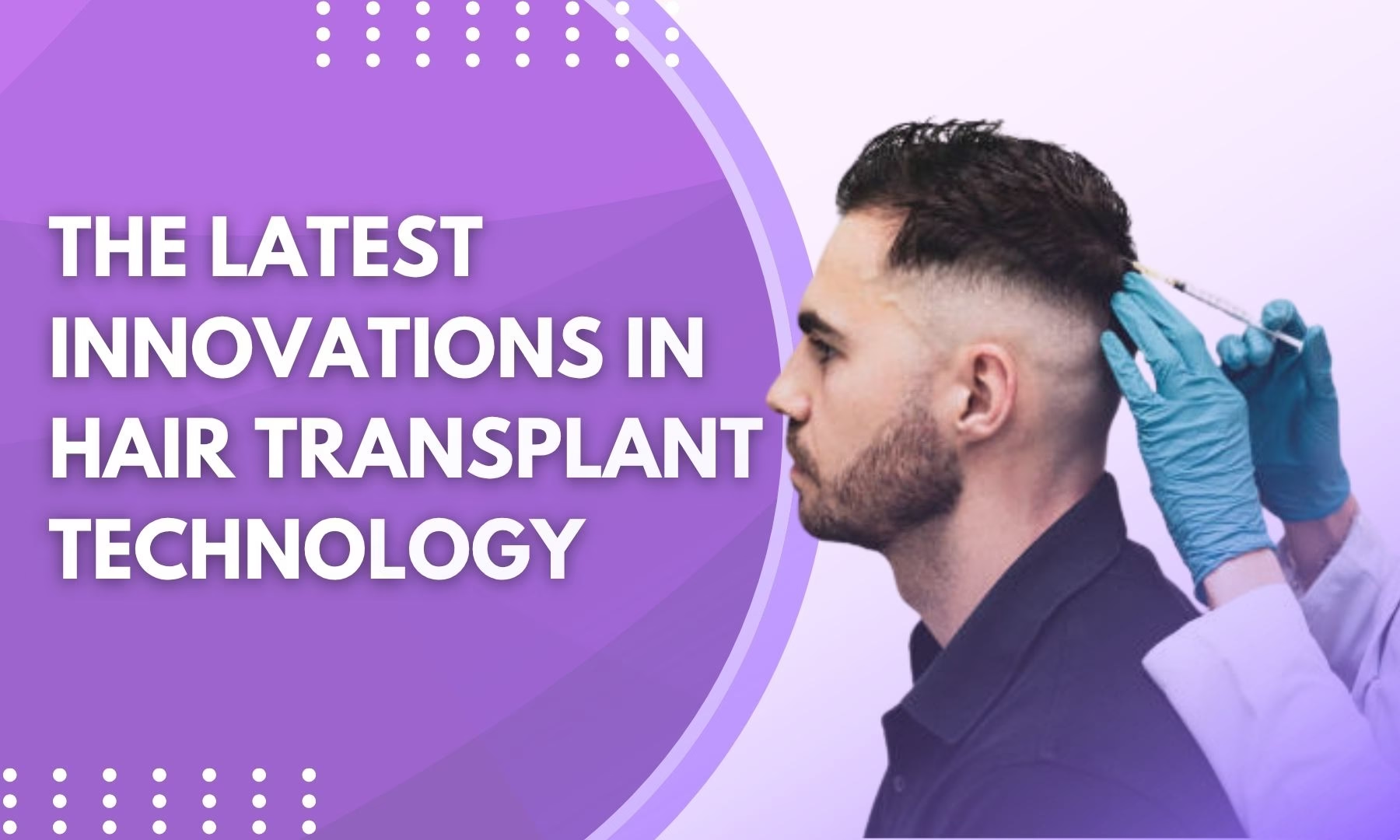
Hair transplants today look almost nothing like they did even ten years ago. The clunky, painful, obviously-fake-looking results that gave the procedure a bad name decades ago have been replaced by something far more refined. AI is involved. So are robots, sapphire-tipped blades, stem cells, and 3D imaging tools that let patients preview their own results before anyone touches a scalpel.
If you’ve been keeping an eye on the field, or even just casually scrolling through before-and-after photos online, you’ve probably noticed the shift. The results are denser, more natural, and far easier to live with. If you’re considering a hair transplant in Mumbai, knowing what technology your clinic actually uses can be the difference between a good result and a great one. Here’s a look at everything that’s changed, explained by Dr. Viral Desai, a celebrity hair transplant surgeon in Mumbai whose clinic has stayed at the front of the innovation curve.
Evolution of Hair Transplant Procedures
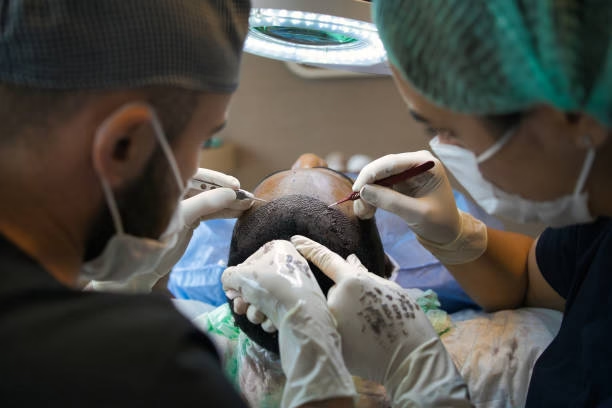
To appreciate where the field is now, it helps to look at how far it has come. The earliest hair transplants in the 1950s and 60s involved transplanting large “plugs” of hair — sometimes 15 to 20 follicles in one chunk. The results were obvious from across the room and usually regretted within a year.
Things began to improve in the 1990s with the development of follicular unit transplantation (FUT), where natural groupings of 1 to 4 hairs were used instead of plugs. Then, in the early 2000s, follicular unit extraction (FUE) emerged — extracting individual follicles one at a time, with no linear scar. That’s when the field really turned a corner.
Today, FUE hair transplant and FUT hair transplant remain the foundation of most procedures, but they’ve been refined and combined with newer technologies that make them safer, faster, and more precise than ever before. At clinics like CPLSS, these older techniques have been enhanced with proprietary methods like NHDT (Natural Hair Density Transplant) for results that look completely natural.
AI and Digital Hairline Designing

This is one of the most exciting developments in recent years. Designing a hairline used to depend entirely on the surgeon’s experience and aesthetic eye. While skill still matters enormously, artificial intelligence has stepped in to make the process more precise.
AI-driven mapping tools can analyse facial proportions, age, gender, ethnic features, and existing hair patterns to suggest hairline designs that suit each individual. The surgeon then reviews and refines the suggestions, ensuring the final design is both aesthetically pleasing and technically achievable.
Dr. Viral Desai uses 3D hair transplant simulation to take this a step further. Patients can actually see their proposed hairline and density rendered onto their own face before the surgery begins. No more guessing, no more nasty surprises. You walk into the procedure knowing exactly what to expect.
This combination of AI insight and human judgement is changing the way hair restoration is planned — and the difference shows in the final result.
Want to see your future hairline in 3D before the surgery? Book a consultation with Dr. Viral Desai today.
Robotic Hair Transplant Systems
Robotic hair transplant systems have been one of the most talked-about innovations in the past few years. Machines like the ARTAS robot use AI-guided imaging and robotic arms to extract follicles with extraordinary precision. The robot identifies the strongest, healthiest follicles in the donor area and removes them with consistent depth, angle, and pressure — something even the steadiest human hand has limits with after long hours of surgery.
That said, robotic systems aren’t a replacement for a skilled surgeon. They’re a tool. The artistry of designing a hairline, planning graft placement, and ensuring natural density still depends entirely on the surgeon behind the machine. Robots can extract follicles beautifully, but they can’t decide what your final result should look like. That’s still very much a human job.
This is why choosing the right hair transplant surgeon in Mumbai matters more than choosing a particular machine. Technology supports good surgeons. It doesn’t replace bad ones.
Direct Hair Implantation (DHI) Technique

Two patients can have the same surgery on the same day and end up with very different results. Why? Because outcomes depend on a mix of biological, medical, and practical factors. Knowing what affects success helps you stack the odds in your favour.
- Donor area quality. The denser and healthier your donor hair, the better the result. A poor donor area limits how much can be transplanted.
- Stage of hair loss. Catching hair loss at the right stage — not too early, not too late — gives the best long-term result. Active, fast-progressing loss is usually treated medically first.
- Skill of the surgeon. This is the single biggest variable. Graft placement, angle, density planning, and aesthetic judgement all depend on the surgeon’s experience.
- Technique chosen. FUE, FUT, and NHDT each have specific cases where they perform best. Picking the right one matters.
- Post-surgery care. Following aftercare instructions, attending follow-ups, and avoiding harmful habits like smoking directly affect how well the grafts survive.
- Lifestyle and overall health. Nutrition, stress levels, sleep, and general health influence healing and hair growth.
- Maintenance treatments. Combining surgery with ongoing care like mesotherapy for hair, laser therapy for hair loss, or exosome therapy for hair loss can significantly improve and extend results.
For women, hair loss biology works a little differently, which is why hair restoration for women follows a slightly different protocol. Understanding these differences is part of what makes a surgeon’s expertise so important.
Sapphire Blade Technology
The instruments used to create recipient sites have evolved too. Traditionally, surgeons used steel blades to make the tiny incisions where follicles are implanted. Sapphire blades — made from real sapphire crystal — are the next-generation alternative, and they’ve quietly become a game-changer.
Why does the blade material matter? Because sapphire is sharper, smoother, and far less traumatic to the tissue. The incisions made with sapphire blades are smaller, more uniform, and heal faster. There’s less swelling, less risk of infection, and a denser final result because more follicles can be placed in a given area without overcrowding.
For patients with sensitive skin or those concerned about scarring, sapphire blade technology offers a noticeably gentler experience. It pairs well with techniques like FUE and NHDT, which are already focused on minimising trauma to the scalp.
Looking for the most advanced hair transplant techniques? Speak directly with a celebrity hair transplant surgeon in Mumbai.
Stem Cell & Regenerative Hair Treatments
Regenerative medicine is one of the most rapidly evolving fields in hair restoration, and it’s blurring the line between surgical and non-surgical care. Instead of just transplanting existing follicles, these treatments aim to revive dormant ones and stimulate new growth from within.
Some of the most promising regenerative options available today include:
- PRP hair treatment — uses your own platelet-rich plasma to stimulate growth factors in the scalp.
- GFC hair treatment — a next-generation growth factor concentrate that delivers higher concentrations of bioactive proteins than traditional PRP.
- Exosome therapy for hair loss — uses cellular messengers to signal follicles to grow, repair, and regenerate.
- Mesotherapy for hair — delivers vitamins, minerals, and growth factors directly into the scalp via microinjections.
These aren’t just standalone treatments. They’re often combined with transplants to improve graft survival, accelerate healing, and extend the long-term result. Many patients also use them to slow native hair loss before and after surgery, keeping the overall look consistent over time. Treatments like laser therapy for hair loss and cyclical medicine for hair loss can complement these regenerative options too.
Improved Graft Preservation Techniques
Here’s something most patients never think about, but it makes a huge difference in the final result: what happens to the follicles between extraction and implantation.
Once a follicle is removed from the donor area, it’s essentially a tiny living tissue without its blood supply. Every minute it spends outside the body, its chance of surviving the transplant drops. Old methods kept grafts in basic saline solution. Modern clinics use advanced preservation solutions — like HypoThermosol or ATP-enriched media — that keep grafts hydrated, cooled, and nutritionally supported throughout the procedure.
This single change in protocol has dramatically improved graft survival rates. Combined with techniques like DHI that reduce out-of-body time, the difference is visible in the density and consistency of the final result. It’s the kind of behind-the-scenes detail that separates premium clinics from average ones.
Combined with quality post-op care, you can expect a far better outcome — the hair transplant results timeline shows exactly how new growth unfolds month by month when these protocols are followed
Curious which technique is right for you? Get a personalised treatment plan from Dr. Viral Desai.
Benefits of Modern Hair Transplant Innovations

Put all of these innovations together and the patient experience today is significantly better than it was even a few years ago. Some of the biggest practical benefits include:
- Higher graft survival rates — meaning denser, fuller results.
- Faster recovery — most patients return to work within 3 to 5 days.
- Less scarring — minimally invasive techniques leave behind little to no visible trace.
- More natural-looking hairlines — thanks to AI design and meticulous follicle placement.
- Reduced procedure time — though some long sessions remain, technology has streamlined many steps.
- Better outcomes for sensitive skin — with gentler instruments and refined protocols.
- Improved options for women — hair restoration for women benefits enormously from precision techniques like DHI.
- Complementary regenerative care — surgery and non-surgical treatments work together for longer-lasting results.
For patients who aren’t surgical candidates or want to enhance density without going under, options like scalp micropigmentation also offer modern, refined alternatives that didn’t exist in this form a decade ago.
Conclusion
The world of hair restoration has come a long way from those obvious plug transplants of the past. What we have today is genuinely impressive — a mix of artificial intelligence, robotics, smarter blades, regenerative medicine, and improved protocols that together deliver results most patients couldn’t have imagined a generation ago.
But here’s the catch. Technology is only as good as the surgeon wielding it. A robot doesn’t know your face. A sapphire blade doesn’t know what hairline will suit your age in fifteen years. The newest tools matter, but the experience and aesthetic judgement of your surgeon matter even more.
If you’re exploring your options, Dr. Viral Desai, a leading celebrity hair transplant surgeon in Mumbai, brings over 20 years of experience together with the latest innovations in the field. The combination is what produces results worth showing off — and worth keeping for life.
Frequently Asked Questions
Q1. What is the most advanced hair transplant technique today?
Modern techniques like FUE, DHI, and NHDT, often combined with sapphire blades and AI hairline design, offer the most advanced results.
Q2. Is a robotic hair transplant better than manual FUE?
Robotic systems improve precision in graft extraction, but the surgeon’s skill and aesthetic judgement remain the most important factors.
Q3. What is DHI hair transplant?
DHI uses a specialised Choi pen to extract and implant follicles in a single step, offering better control and improved graft survival.
Q4. Are sapphire blades safer than steel blades?
Yes. Sapphire blades cause less tissue trauma, lead to smaller incisions, and result in faster healing with less scarring.
Q5. Do stem cell or PRP treatments replace hair transplants?
Not always. They work best as complementary treatments to improve graft survival and slow native hair thinning.
Q6. How do I choose the best hair transplant clinic in Mumbai?
Look for an experienced surgeon, advanced technology, transparent consultations, and proven before-and-after results.