

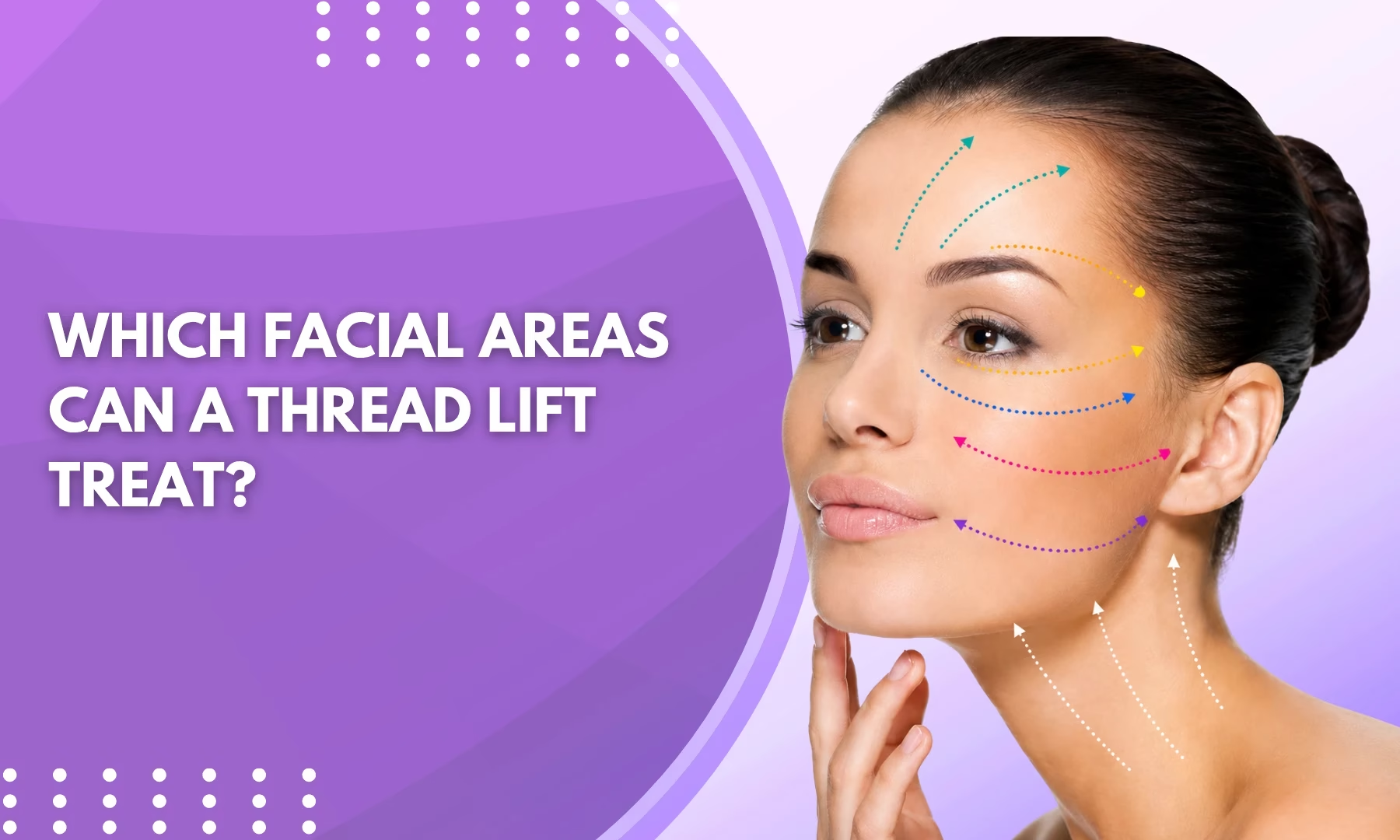
A thread lift isn’t a single-spot treatment. It works across several areas dealing with mild-to-moderate skin laxity: the mid-face and cheeks, jawline and jowls, brow line, neck, and lower facial folds such as nasolabial folds and marionette lines. Response varies by zone, largely tied to how the tissue has aged and where volume has shifted. A thread face lift plan, as a result, usually covers more than one area rather than just the one a patient first noticed.
According to Dr. Viral Desai, thread lift specialist in Mumbai, “Patients often walk in focused on a single line or area of sagging. Facial aging, though, rarely stays contained that way. The jawline, cheeks, and folds near the mouth tend to be connected in how they’ve changed, so treating one in isolation can leave the result looking slightly off. A proper assessment maps out which zones genuinely need attention together.”
Wondering which areas of your face would benefit most?
Which Facial Zones Respond Best to a Thread Lift?
Different zones call for different thread types and techniques, based on how that specific area has aged.
Cheeks and mid-face: One of the most commonly treated zones. Volume loss here tends to show up early, and threads reposition the mid-face fat pad to soften hollowing or a drooping appearance.
Jawline and jowls: This area responds particularly well to barbed thread techniques, which lift jowl fat and restore definition along the lower face contour.
Brow line: A subtle lift here opens the eye area without the downtime a surgical brow lift requires, useful especially for mild sagging at the outer corners.
Neck: Threads angled along the neck and jawline border can lift and smooth loose skin, often combined with jawline treatment rather than handled on its own.
Nasolabial folds and marionette lines: These respond to specific thread vectors aimed at the fat compartments driving their depth, not the surface line itself.
A thread lift consultation is where these zones get mapped against your specific pattern of aging.
How Do Surgeons Decide Which Areas to Treat Together?
Treating the right combination matters more than simply treating more areas.
Connected fat compartments: Jowls and marionette lines, for instance, share underlying fat structures. Addressing both together tends to give a more cohesive result than either alone.
Severity of laxity: Mild sagging in one zone alongside more advanced laxity in another can call for different thread types within the same session, rather than a single uniform approach.
Patient goals: A tired-looking lower face calls for a different combination than concerns centered mainly on brow position or neck laxity.
Realistic limits: A thread face lift suits mild-to-moderate laxity well, but more advanced sagging across several zones may point toward a surgical option instead, worth confirming early rather than later.
Our piece on how a non-surgical thread lift works covers the mechanics behind the lift and the collagen response in more detail.
Why Choose Dr. Viral Desai for a Thread Face Lift?
Dr. Viral Desai brings over 20 years of experience in advanced aesthetic procedures. Each thread face lift plan is built around which areas are genuinely aging together, not around treating a single line in isolation.
Thread selection, vector direction, and the combination of zones treated are all planned specifically for the patient’s facial anatomy. Call +91 98338 77001 to book your consultation.
Not sure which areas would make the biggest difference for you?
Frequently Asked Questions
Can a thread lift treat more than one facial area at once?
Yes, most treatment plans address multiple connected zones together.
Does a thread lift work on the neck?
Yes, it can lift and smooth loose skin along the jawline and neck.
Are nasolabial folds treatable with a thread lift?
Yes, specific thread vectors target the fat compartments behind them.
Is a thread lift suitable for severe sagging?
Not usually, it works best for mild-to-moderate skin laxity.
Disclaimer: This blog is for educational purposes only. Suitable treatment areas depend on individual facial anatomy, so an in-person evaluation is necessary before undergoing a thread lift.